California Governor Candidates Clash in First Major Debate as Race Remains Wide Open
California Governor Candidates Clash in First Debate, No Clear Frontrunner

California Governor Candidates Clash in First Major Debate as Race Remains Wide Open

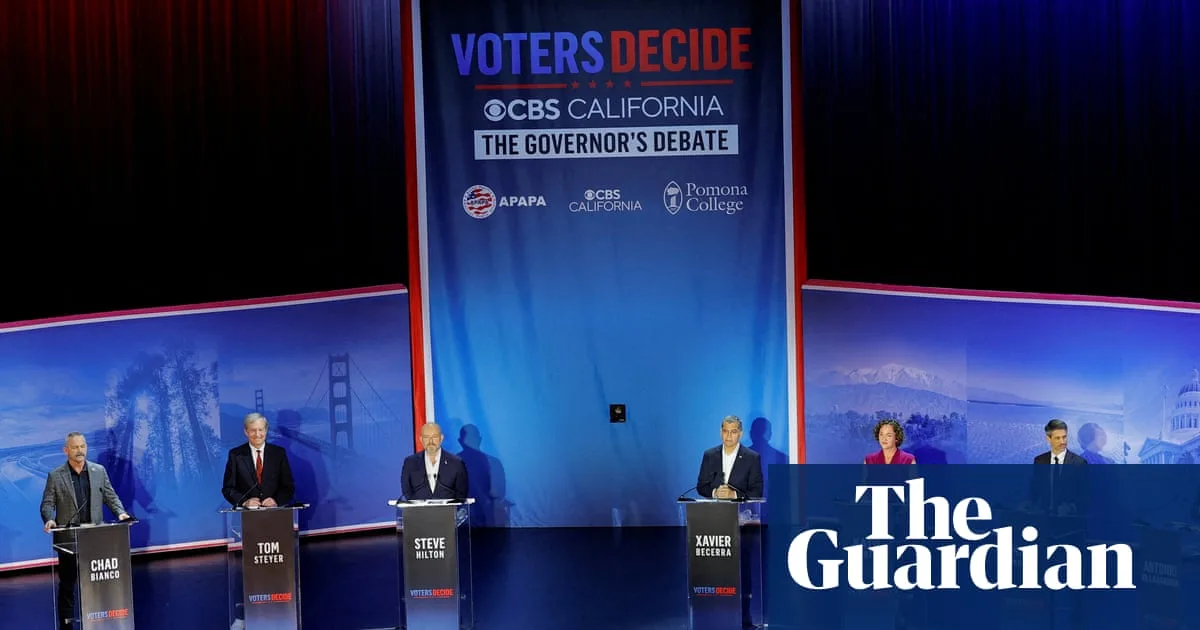
The six leading candidates for California governor faced off in the first major televised debate on Wednesday, a pivotal moment in the topsy-turvy race to replace outgoing Governor Gavin Newsom. With the June 2 primary elections fast approaching, the debate highlighted sharp divisions over critical issues like homelessness, the cost of living crisis, and artificial intelligence, yet failed to produce a clear frontrunner in this unusually competitive contest.

A Race in Upheaval After Swalwell's Exit

The debate marked the first major event since the campaign was plunged into upheaval by the sudden collapse of former Congressman Eric Swalwell's bid, following sexual assault and misconduct allegations. Swalwell, who has vigorously denied the accusations, resigned from Congress last week, leaving a void in the Democratic field. This disruption has left nearly a quarter of California voters undecided, according to recent polls, with ballots set to arrive in mailboxes in less than two weeks.

The primetime showdown, hosted by Nexstar Media Group, featured two Republicans: Steve Hilton, the former Fox News host and strategy director for ex-UK Prime Minister David Cameron, and Chad Bianco, the sheriff of Riverside County. On the Democratic side, the stage included billionaire Tom Steyer, former Health Secretary Xavier Becerra, former Congresswoman Katie Porter, and San Jose Mayor Matt Mahan.

Wide Pickt banner — collaborative shopping lists app for Telegram, phone mockup with grocery list

Policy Clashes and Political Jabs

While the Democrats largely agreed on broad policy goals, they jostled over the best approaches to tackle California's pressing challenges. The Republicans, meanwhile, blamed the state's woes on 16 years of what they called "failed" Democratic governance. Steve Hilton, who has consistently led in polling and recently earned Donald Trump's endorsement, asserted, "The system is not working," criticizing the current administration's handling of issues like homelessness.

On homelessness, most Democrats gave Governor Newsom a passing grade, with Porter awarding him a "B" for recognizing housing as a root cause. Hilton retorted sharply, quipping, "Wow. I'd love to take your class, Katie, if you get a B for what Gavin Newsom's done on homelessness." He said he would give Newsom an "F," highlighting the partisan divide on this long-running crisis.

Candidate Introductions and Distinctions

The debate offered a platform for candidates to introduce themselves to Californians just beginning to tune into the race. Xavier Becerra touted his experience, stating, "We need someone who knows how to govern in a crisis, not someone who's going to need training wheels the moment they walk into the governor's office." He emphasized his record of clashing with Trump during his tenure as California attorney general.

Tom Steyer, leveraging his personal fortune to dominate airwaves, positioned himself as a progressive, calling himself "the billionaire who wants to tax other billionaires." Katie Porter, a protege of progressive Senator Elizabeth Warren, argued she uniquely understood financial strains, saying, "I'm not like them. I'm like you – a mom fighting for a better future for California."

Matt Mahan defended his tech ties, noting his role as mayor of Silicon Valley's largest city gives him insight into AI's promise and perils. He vowed to be an independent voice, ready to "take on the establishment within my own party." Chad Bianco faced questions about his investigation into election ballots, insisting it was a "very very basic, normal investigation" and expressing concerns over election security.

Underlying Tensions and Party Dynamics

The debate lacked a standout moment that could jolt the contest, but it revealed underlying tensions. Several Democrats took shots at Steyer, with Mahan remarking that the "only housing Tom Steyer's built has been private prisons and ICE detention centers," referencing past business criticisms. Steyer acknowledged remorse over his hedge fund's investments but highlighted opposition from Silicon Valley billionaires backing Mahan.

Pickt after-article banner — collaborative shopping lists app with family illustration

Becerra was asked about his role in addressing rumors regarding Swalwell's behavior, responding, "Rumors are not facts," and applauding the women who came forward. Hilton defended Trump's endorsement, arguing it would benefit Californians to have a governor partnering with the president, despite Trump's low approval in the state.

Challenges Ahead in a Blue State

The next governor will confront an increasingly pessimistic electorate, concerned about affordability and economic future, as noted by the Public Policy Institute of California. Bianco attributed high costs to "one party Democrat, progressive rule for decades that is destroying the state." However, Republicans face an uphill battle in California, where Democrats outnumber them two to one.

Democrats fear that a fragmented field could lead to two Republicans advancing to the November general election under California's "jungle primary" system, where the top two vote-getters proceed regardless of party. Bianco expressed confidence both Republicans would advance, while other candidates pledged support for their party's nominee.

State party chair Rusty Hicks has urged low-polling Democrats to exit, though names like Swalwell's will remain on the June ballot. Recently, former State Controller Betty Yee suspended her campaign and endorsed Steyer, adding to the race's fluid dynamics. Former Los Angeles Mayor Antonio Villaraigosa and State Supt Tony Thurmond failed to qualify for the debate, underscoring the competitive nature of this wide-open contest.




