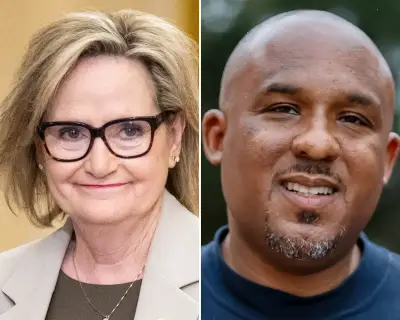
US-mediated peace talks between Moscow and Ukraine are overshadowed by suspicions of corruption and foul dealing, centring on behind-the-scenes horse-trading over the Donbas, Ukraine's eastern region bordering Russia and its industrial heartland.
US President Donald Trump, who has insisted he wants the conflict to end as quickly as possible, has consistently blamed Volodymyr Zelensky for not doing more to end the war and for standing in the way of peace, while avoiding the same criticism for Putin, the actual aggressor. Critics describe this as an extreme twisting of the truth that is hard to make sense of even by Trump's standards.
Donbas demographics and Ukraine's stance
To a short-sighted Trump, it would be expedient for Zelensky to simply give up the Donbas, drawing a line across occupied territory. But for Ukraine, that would mean giving up territory populated pre-war by roughly 58% ethnic Ukrainians and 38% ethnic Russians who lived in Ukraine. Ukraine has always said it will not give up an inch of territory, not even Crimea, which Russia has occupied since its illegal invasion in 2014.
Many have fled the fighting, making it hard to know exactly who remains, but the situation must be judged on what was happening before Russia's full-scale 2022 invasion. Russia's GRU military intelligence agency had spent preceding years campaigning to gradually take over the region, feeding loyalists with weaponry and propaganda. Small statelets were created by pro-Russian forces in preparation for the full-scale invasion in 2022.
Putin's narrative and the Donbas reality
Putin paints his war as one of emancipation, freeing Russians and those who want to be Russian from persecution in Ukraine. He has made unsubstantiated claims of Ukraine performing genocide against pro-Russians in the region. The Donbas is Ukraine's historical, cultural and industrial heartland, serving it and elsewhere with a huge coal and steel enterprise. More than 80% of inhabitants, surveyed shortly after war broke out in the region, hate the Russian occupation, which has been marred by murder, disappearances, kidnapping and torture.
Russia is not winning this war, even though Putin appears to believe his generals, who are too scared to tell him the truth, when they say their soldiers are winning. Putin does not want to end this war, and nor will he even if a settlement is reached in which part of the Donbas is given up to Russia.
Signals from the negotiating table
Witness who he sent to the recent negotiations in Abu Dhabi: hardliner historian Vladimir Medinsky, who does not believe in ending the war, and among others, Dmitry Minaev, head of counter-intelligence in Putin's FSB spy agency, who plotted in 2019 to kill Zelensky adviser Kyryllo Budanov when he was an intelligence officer. Budanov was at the meeting facing the very enemy who made a bungled attempt to kill him with a car bomb. This was a clear message from Putin that there will be no peace, and that deadly force and espionage will continue against Ukraine.
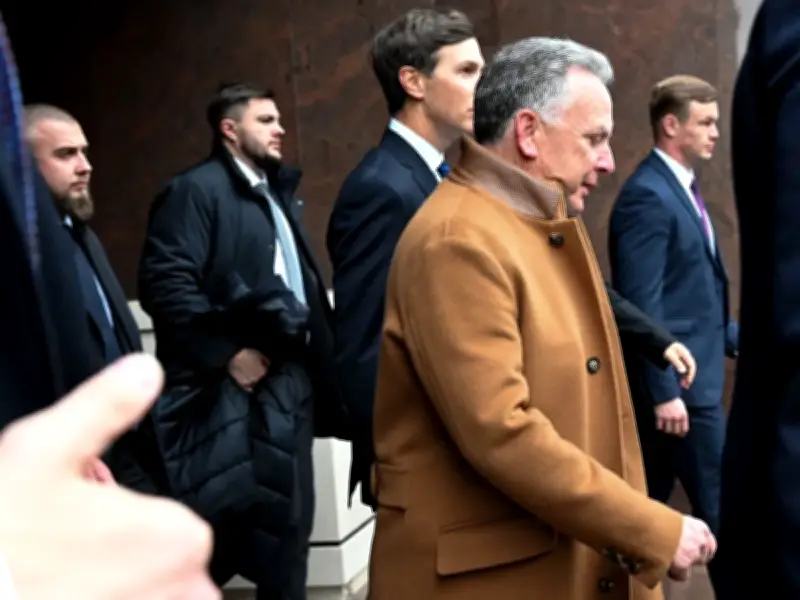
US peace envoys Kushner and Witkoff may seem like hapless go-betweens, but Trump must surely know what is being played out. It is entirely possible they are carrying a message to Putin and his people, and that Trump wants to make an agreement with Russia on the Donbas, possibly a US-Russia carve-up. Zelensky knows it, visible in the contempt on his face when he underlines that there will be no giving up of Ukraine territory.
Witkoff has made ten trips to Russia since Trump came into power again in 2025, and one trip to Ukraine with Kushner in September this year, a trip that was preceded with attacks on Kyiv. However it is viewed, Kushner and Witkoff are carrying Trump's goodwill towards Putin, and what messages they carry in Trump's personal interest may never be known.