
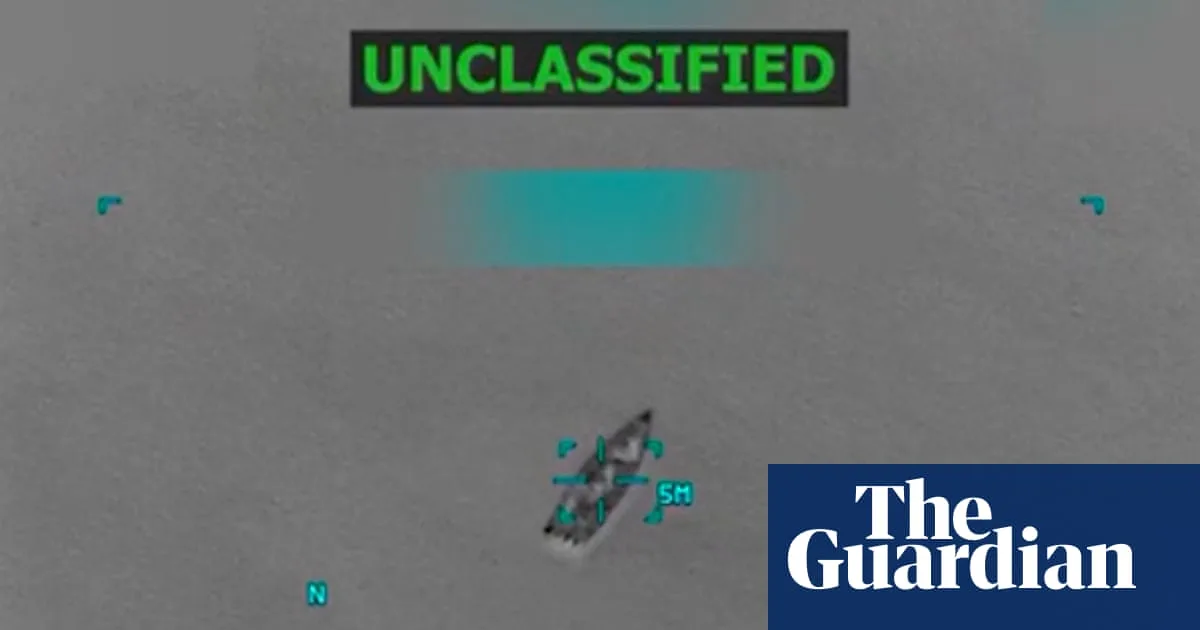
A US military strike on a Venezuelan fishing boat in the Caribbean has ignited controversy after reports emerged that survivors were killed in a follow-up attack. The incident, which occurred on 2 September, involved a vessel carrying 11 people suspected of drug trafficking. According to a Washington Post report, a second strike was ordered to ensure no one survived, killing two individuals clinging to the wreckage.
The Trump administration has defended the strikes as part of an armed conflict against 'narco-terrorists' linked to Venezuela's President Nicolás Maduro. However, legal experts widely reject this rationale, noting that the US is not engaged in an armed conflict with a group attacking its territory. The Pentagon's own Law of War manual explicitly prohibits targeting shipwrecked or incapacitated individuals, stating they are 'hors de combat' and must be protected.
The alleged order from Defence Secretary Pete Hegseth to 'kill everybody' onboard has raised concerns of potential war crimes. The manual also addresses illegal orders, requiring service members to refuse commands that are clearly unlawful, such as firing on the shipwrecked. This principle is reinforced by the Nuremberg principles and US military law, including the Uniform Code of Military Justice.
Republican-led armed service committees in Congress have vowed to investigate the incident. The controversy has been further fuelled by Hegseth's recent threat to court-martial Senator Mark Kelly for advising troops to disobey illegal orders. Legal analysts emphasise that even if the US were at war, killing incapacitated combatants would violate long-established laws of armed conflict.




