
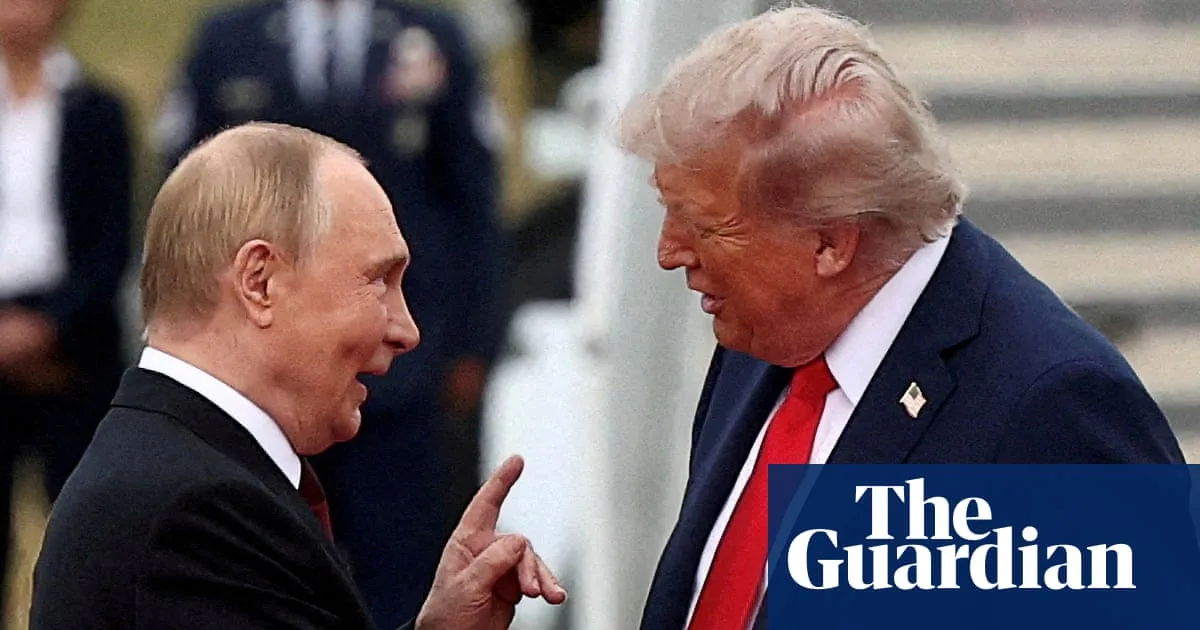
The White House has confirmed that plans for a summit between US President Donald Trump and Russian President Vladimir Putin in Budapest have been shelved, as diplomatic efforts to end the war in Ukraine falter. A White House spokesperson stated there are "no plans" for a meeting "in the immediate future," following a round of diplomacy last week that failed to yield significant progress.
The decision came after a phone call on Monday between US Secretary of State Marco Rubio and Russian Foreign Minister Sergei Lavrov, during which Lavrov reiterated that Russia's negotiating position remains unchanged. Lavrov referenced understandings reached during the Alaska summit, indicating no shift in Moscow's stance. Trump later told reporters he did not want a "wasted meeting" with Putin, adding, "I don't want to have a waste of time, so I'll see what happens."
The shelved summit marks the end of a brief diplomatic cycle that began with a Trump-Putin call last Thursday. During that call, Putin reportedly proposed exchanging occupied parts of Kherson and Zaporizhzhia for all of Donetsk, a heavily fortified area sought by Moscow. Trump initially appeared to consider the proposal but rejected it on Sunday, suggesting the frontline should be frozen. "They can negotiate something later on down the line. But I said cut and stop at the battle line," Trump told reporters.
Ukrainian President Volodymyr Zelenskyy said he believed Ukraine and its Western allies were on "the same page" but cautioned that Russia had become "less interested" in serious negotiations after Trump delayed a decision on supplying Tomahawk cruise missiles to Ukraine. Kyiv views the missiles as crucial for striking Russian military sites and oil refineries deep inside Russia, a move the Kremlin has warned would be escalatory.
On Tuesday, Zelenskyy and leaders from the UK, France, Germany, Italy, Poland, Finland, Norway, Denmark, and the European Commission endorsed Trump's call for a ceasefire along current frontlines. Their joint statement emphasised that "the current line of contact should be the starting point of negotiations." While Ukraine has not agreed to recognise Russian annexation of occupied territory, it has indicated willingness to accept a ceasefire on existing frontlines, effectively acknowledging Moscow's de facto control of about a fifth of the country.
Reports emerged late Tuesday that Ukraine and its European allies are working on a 12-point ceasefire proposal, echoing the US proposal for Gaza. A peace board chaired by Trump would oversee implementation, according to Bloomberg. Ukraine has also called for the return of children taken into Russia and the exchange of prisoners of war as part of any initial ceasefire. Thirty Western countries, led by the UK and France, have agreed to provide a multinational stabilisation force to prevent future conflict.




