
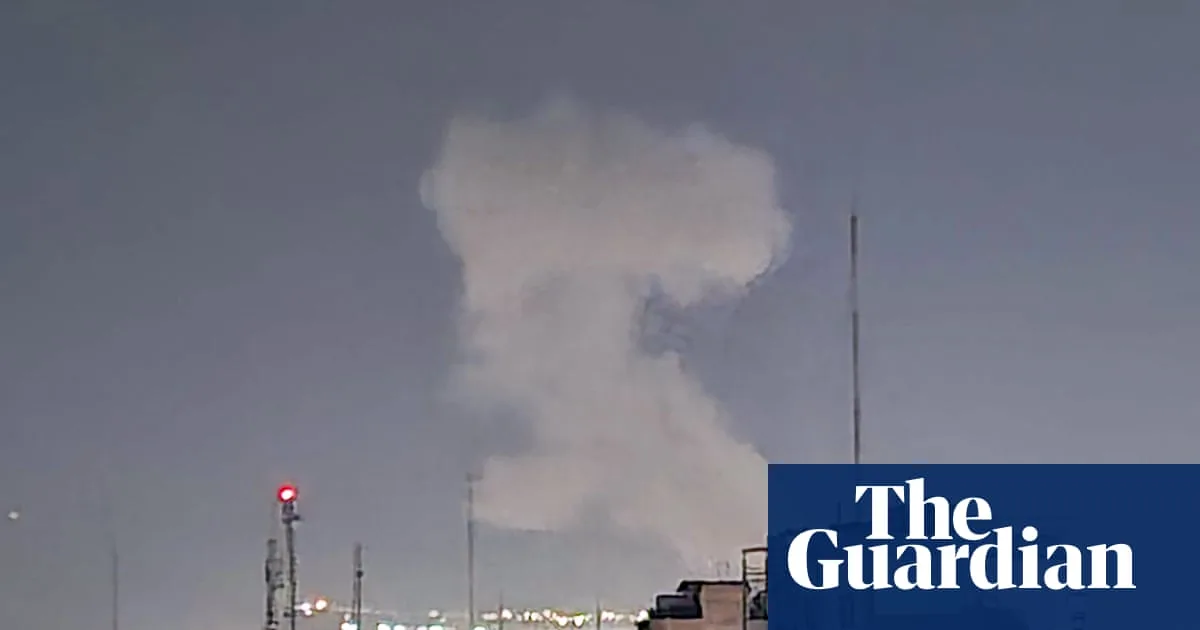
Iran has warned it will “irreversibly destroy” vital infrastructure across the Middle East, including water and energy facilities, if the United States follows through on President Donald Trump’s threat to “obliterate” Iranian power plants. The warning came as Iranian missiles struck two southern Israeli cities, injuring dozens, and Tehran deployed long-range missiles for the first time since the conflict began.
The speaker of the Iranian parliament, Mohammad Bagher Ghalibaf, said on Sunday that infrastructure such as energy and desalination plants would be considered legitimate targets if Iran’s own infrastructure is attacked. The Iranian military’s operational command added that it would strike “all energy, information technology and desalination infrastructure” belonging to the US and Israel in the region. It also stated that the Strait of Hormuz would be “completely closed” until Iran’s destroyed power plants are rebuilt.
President Trump gave Iran 48 hours until Monday night to reopen the Strait of Hormuz, a vital pathway for global oil flows, or face strikes on its power plants. The US ambassador to the UN, Mike Waltz, defended the threat, saying the Islamic Revolutionary Guard Corps (IRGC) controls much of Iran’s infrastructure. UK Prime Minister Keir Starmer spoke to Trump on Sunday evening about the need to reopen the strait.
Iran’s representative to the International Maritime Organisation said the strait is open to shipping except vessels linked to “Iran’s enemies”, but in practice only about 5% of pre-war traffic is passing. The closure has caused the worst oil crisis since the 1970s, with European gas prices surging by up to 35% last week.
More than 2,000 people have been killed in Iran since the US and Israel began attacks on 28 February. Air raid sirens sounded across Israel early Sunday after missile attacks on Arad and Dimona injured dozens. The Israeli army said it would strike Tehran in retaliation, and Prime Minister Benjamin Netanyahu vowed to pursue senior IRGC commanders personally.




