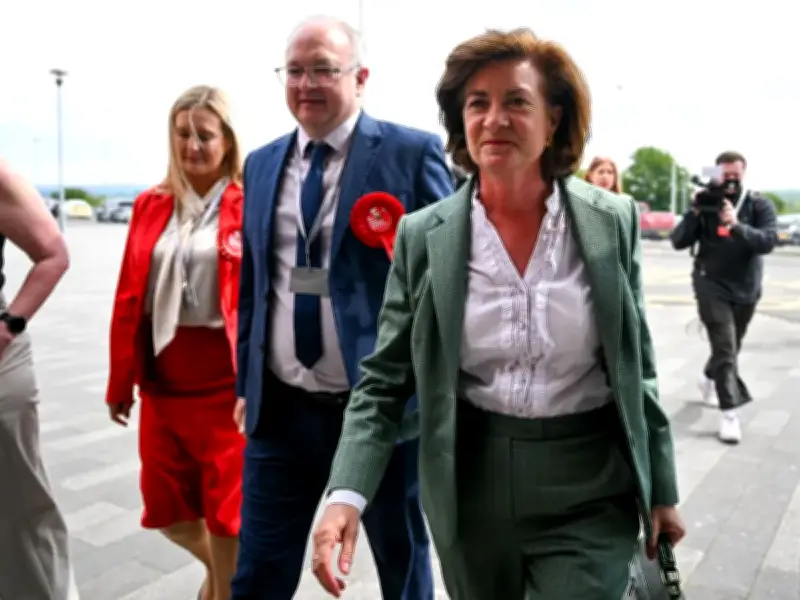
An independent review commissioned by Welsh Labour has identified three fundamental reasons for the party's heavy defeat in the 2026 Senedd election, in which its number of seats fell from 30 to just nine despite the chamber expanding from 60 to 96 members. The defeat ended Welsh Labour's 27-year rule of the Welsh parliament and prompted a change of leader, with Eluned Morgan among the casualties in May.
The review, carried out by Professor Anand Menon, Professor of European Politics and Foreign Affairs at King's College London, was delivered at the party's conference at Venue Cymru in Llandudno on Saturday. It sets out three reasons for the defeat and five recommendations to turn the party's fortunes around.
Three Reasons for Defeat
The first reason identified is a long-term progressive drift. Over the past decade, Welsh Labour has retained its traditional supporters at Senedd elections but steadily lost progressive voters to other left-wing parties. Those who back Labour at Westminster but not in the Senedd tend to be younger, female, on lower incomes, living outside the Valleys and more Welsh than British, mirroring Labour's losses to the Greens in England.
The second reason is delivery over identity. Voters who left Labour in 2026 said the party had not delivered on the NHS, the economy and the cost of living, despite governing in both Cardiff Bay and Westminster, with Welsh Labour sharing a brand with a historically unpopular UK Government for the first time in over a decade. While those leaving reported somewhat stronger Welsh identities, for most voters, 'standing up for Wales' still means getting those everyday, left-of-centre priorities right, and Welsh Labour was seen to have fallen short.
The third reason is a campaign in a difficult climate. After the Caerphilly by-election, voters saw the Senedd election as a contest between Plaid Cymru and Reform, and many Labour voters switched to Plaid to stop Reform. Welsh Labour's campaign broadly resembled those of previous years but failed to persuade these voters to return, struggling to shake the sense that Welsh Labour was already on the back foot.
As poll ratings and volunteer numbers fell, voter contact dropped below any recent election outside the pandemic. Candidates felt the selection timetable left them little time to build a profile, and digital output had less cut-through.
Survey Findings and Recommendations
Survey work showed that half (46%) of Welsh adults would consider voting for Welsh Labour again in the future, even if only 12% say they definitely would. Nearly three-quarters (74%) of those who stopped voting for the party in May do not rule out returning.
The review makes five recommendations. First, define a clearer relationship with UK Labour, including joint action where objectives align, as well as the ability to make a distinct Welsh case where priorities differ. Second, rebuild the base with an understanding of who left, and why, seeking to rebuild a rapport with progressive voters who have left the party over shared values.
Third, be Welsh on Labour's terms, prioritising what voters in Wales value most: the NHS, the economy, and cost of living. Arguments for more devolved powers should be made when there is a clear case that they would improve those everyday priorities. Fourth, define the party's leader and offer early, introducing new message carriers and a policy agenda before opponents can define them.
Fifth, strengthen the campaign machine for a new electoral era. Closed lists make candidates harder to know, so select them earlier and promote them alongside the leader, with clear ownership of digital and more capacity where list seats are now winnable.
Leader's Response
Welsh Labour leader Ken Skates said: "We commissioned this independent review because rebuilding trust begins with understanding why it was lost. I thank Professor Anand Menon and his team, and everyone who contributed their experiences and views. Their findings demand serious reflection and action across our party."
"The message running through this report is clear. People want a Welsh Labour Party that understands their lives, stands up for their communities and delivers on what matters: an NHS they can rely on, secure jobs, decent homes and relief from the cost of living."
"Our task is to show how our values can meet those needs today. We should be proud of what Labour has achieved for Wales, while being honest about where we fell short and ambitious about what must change."
"Under my leadership, Welsh Labour will fight relentlessly in the pursuit of health and wealth for all in Wales. We will work with colleagues across Britain wherever we can advance our shared ambitions and speak plainly where Welsh interests require a different approach. Our commitment to devolution must mean bringing power closer to people and making government more accountable for results."
"We will be a constructive, challenging opposition, scrutinising the Welsh Government and developing a credible alternative rooted in communities across Wales."
"This review also offers grounds for hope. Many who left us remain willing to listen. We must earn that hearing through our conduct, our priorities and the strength of our offer."