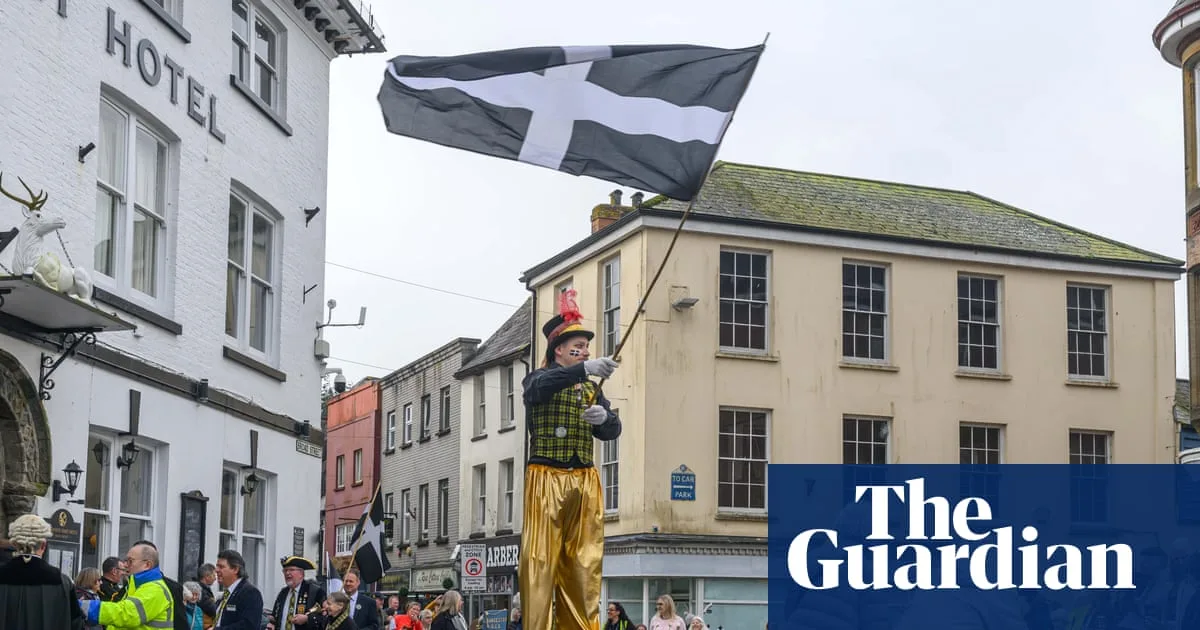
In Launceston, a crisp morning saw St Piran’s Day celebrations in full swing, with children parading, dancing, and singing. The event, which has become a spring highlight in Cornwall, is a chance to celebrate the patron saint and reflect on Cornish identity in the 21st century.
“It’s a brilliant day,” said Launceston mayor Nicola Gilbert. “We’re very patriotic here, proud of who we are. We tend to get forgotten – we’re at the other end of the country. But we don’t forget who we are.”
Celebrations took place across Cornwall, including in Bodmin, Truro, and Falmouth, as well as a new two-day festival in St Austell marking cultural connections with Wales. Seamas Carey, a Cornish artist and commentator, noted a resurgence in Cornish culture, saying, “It’s like a blank canvas. People are doing whatever they want and calling it a St Piran’s Day activity.”

The rise of St Piran’s Day has been linked to the late 1990s, when the 500th anniversary of the Cornish rebellion and EU funding applications boosted Cornish identity, according to Joanie Willett of the Institute of Cornish Studies. In January, the Cornish language Kernewek was officially recognised under the European charter for minority languages, and the UK government has indicated it will explore a devolution deal for Cornwall.
MP Perran Moon, hosting an event in the House of Commons with Global Cornish, emphasised Cornwall’s broader significance: “When people think of Cornwall, they think of beaches and pasties... there’s so much more in terms of our culture, our language, our heritage.” He noted that St Piran’s events are now held internationally, from Toronto to Australia.