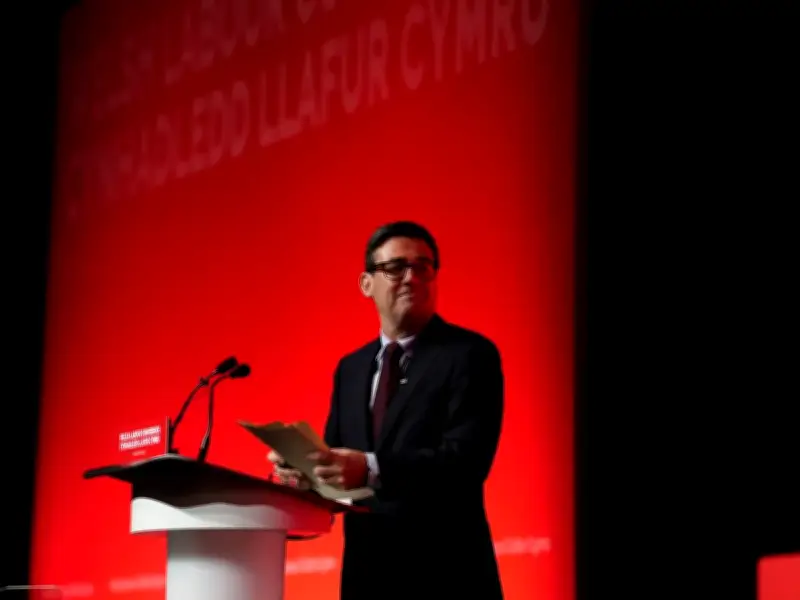
Andy Burnham's 'devolution revolution' is reshaping territorial politics across the UK, with the English north now driving change and Celtic nations seeking similar powers, according to academics Kevin Morgan and John Tomaney.
The UK's territorial integrity has endured since 1922, when Ireland was partitioned, because the state devolved power to Celtic nations that had become intolerant of 'distant government'. This left England exposed as the most centralised nation in Europe, a situation historian Christopher Harvie described as "the dog that never barked".
That narrative is now changing. The new strategy was outlined in a cabinet statement from July 2026 called Rewiring the State. Research suggests northern grievance is re-shaping English politics, with resentment of the south emerging as the most politically consequential form of territorial politics in England today.
Three Territorial Challenges
As a vision for devolution in England, the cabinet statement has the potential to be among the most significant proposals ever issued by a UK government. But it faces three territorial challenges: for the central state, the devolved polities in England, and the three Celtic nations.
The UK is an international outlier with pronounced regional inequalities and one of the most centralised governance systems in the industrialised world. Devolving power could be a positive-sum game, relieving the micromanagement burden on central government and allowing it to become more agile and strategic.
Equalisation measures will be needed to address the spatially uneven impacts of fiscal devolution, without neutering the growth incentives for more dynamic places. The capacity challenge is a chicken-and-egg problem: powers cannot be devolved unless authorities have the absorptive capacity, but they cannot develop that capacity without exercising the powers.
Celtic Nations and the Politics of Place
City regionalism has spawned a new subnational model of devolution, triggering tensions between the Celtic nations and the UK government. For the first time in history, all three Celtic nations are led by First Ministers formally committed to leaving the UK.
The Cardiff Capital Region said it planned to work alongside Scottish and Northern Irish counterparts to address the threat of "a growing empowerment gap across UK City Regions".
In his memoir Head North, Burnham treats 'the north' as a political subject with a distinctive historical experience and a strong tradition of collective action. But the north contains its own rivalries, and a southern backlash against preferential treatment of the north is in the making.
The First Minister of Wales, Rhun ap Iorwerth, has promised to publish a Green Paper before the end of this Senedd term on a new regional map for Wales. The academics conclude that this moment could be a potential historical turning point, but success is hardly a foregone conclusion. As Niccolo Machiavelli advised: "It should be borne in mind that there is nothing more difficult to handle, more doubtful of success, and more dangerous to carry through than initiating changes in a state's constitution."