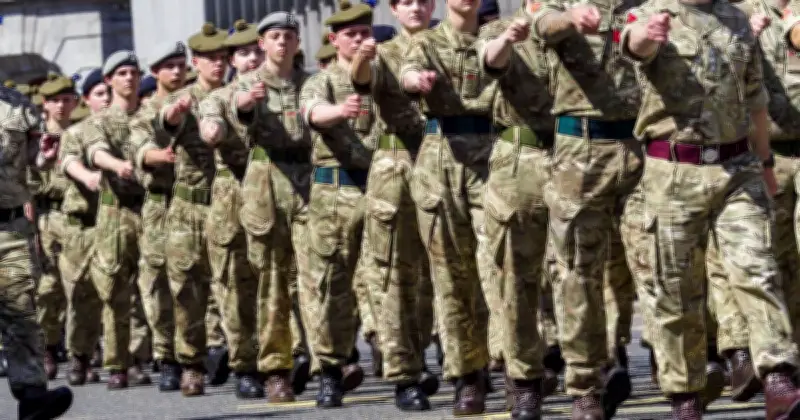
If World War 3 breaks out, British citizens who refuse conscription could face public shaming and be sent to tribunals, according to historical precedent. The prospect of a full-scale global conflict has escalated following Prime Minister Andy Burnham's backing for Ukraine, with warnings that Britain faces an “inevitable” Russian attack over its support for Kyiv.
Conscription and Tribunals
While conscription is not a certainty, historical precedent suggests it could be used again in the UK if a World War 3-scale situation were to occur. In World War 2, those who called themselves 'conscientious objectors' were sent to tribunals to hear their case. They had to go to court to argue their reasons for refusing to join up, and if their cases were not dismissed, they were granted a category of exemption and given a non-combat job to help the war effort.
The Parliament website explains: "Conscientious objectors had to appear before a tribunal to argue their reasons for refusing to join-up. If their cases were not dismissed, they were granted one of several categories of exemption, and were given non-combatant jobs."

White Feather Shaming
Regardless of the court outcome, there is the prospect of public humiliation. Back in World War One, people used to wave white feathers at men in the streets as a mark of shaming those who refused to stand up and fight for their country. These 'conscientious objectors' had refused to fight for the UK in the 1914-1918 conflict against Germany, often for moral reasons. As a result, 'The White Feather Campaign' was organised by women to publicly present men not in uniform with a white feather, as a mark of cowardice.
As explained by the Peace Museum via the University of St Andrews: "The women of the ‘White Feather Campaign’ were militant in more ways than one: with passive aggression, they tried to shame men into signing up and fighting in the war, believing that military involvement was necessary and right."
Modern Recognition of Objector Rights
Today, the rights of conscientious objectors have been recognised by European courts. A report on conscription issued in March 2025 by the UK government explains how it works in other European countries as regards national service today. It says: "Most countries obligate men to serve, offering opportunities for women to volunteer if they wish. Many also offer an alternative civilian option for conscientious objectors. Some use a lottery model, meaning that only a small proportion of eligible men are required to serve."
It adds: "The European Parliament’s research service briefing on mandatory military service says all EU Member States with an active conscription system have recognised the rights of conscientious objectors through national law." For example, in Finland, males are mandated to serve by law, but non-military service can be given to conscientious objectors. In Greece, it's similar, with minimum terms of "Less than 12 months military or 15 months civilian service for conscientious objectors."
While you may be granted the chance to take up a non-combat role in the event of World War 3 breaking out, it won't stop people waving a white feather at you in the street. The symbol used by the White Feather Campaign took some well-known peace imagery – the classic white dove – and twisted it to fit their public campaign. Many of these women felt that joining the ‘war effort’ was the best way to bring the First World War to an end, standing in stark contrast to the moral pacifism of conscientious objectors.