Europe is pouring billions of pounds into space defence mechanisms after a Russian Cosmos 'inspector' satellite came within metres of a Finnish satellite sending military data to Ukrainian forces last month. The incident has sharpened focus on a new battlefront in space, with Russia now routinely interfering with observation satellites and navigation signals, probing software for weaknesses and identifying points of penetration.
Experts say Europe is waking up from its 'space blindness' amid the realisation that the US cannot be relied upon to protect the continent's orbital infrastructure. As space warfare increases, specialists warn that the lines between military and civilian systems, the latter critical for day-to-day life, are gradually being erased.
Concerns over US reliance
The debate comes a week after Ukrainian president Volodymyr Zelensky questioned who controls 'the on and off buttons' after SpaceX Starshield throttling limited the speed of his country's drones. A Nato commander told the Times that Europe's intelligence, surveillance and reconnaissance (ISR) capabilities are 'not a whole lot – almost zero without the US'.
With the White House seen as less dependable and more unpredictable, some ten European Nato members are beginning to pump funds into their space capabilities, including the UK.
New satellite projects
A firm in Reading is currently developing 'very low Earth orbit' satellites which will circle the planet at up to 200 miles above ground to take high-resolution images. These will be available at five per cent of their current cost, NewOrbit Space's CEO Anatolii Papulov has promised.
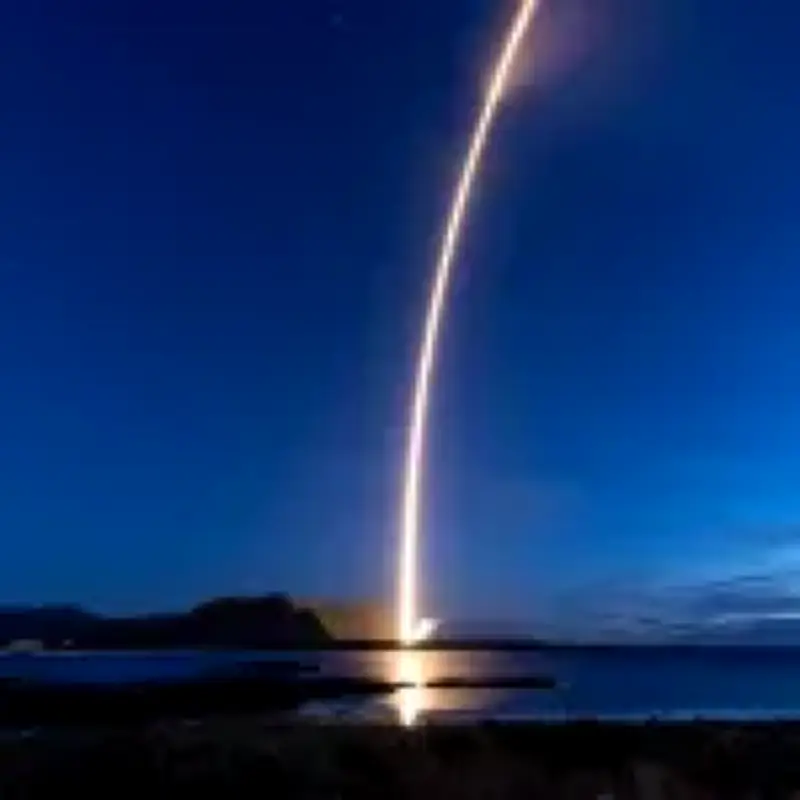
Efforts are also underway to provide competition to US firms such as SpaceX, which dominate satellite launch capacity, sending three Falcon 9 rockets into orbit every week. This year, German company Isar Aerospace started launches from the island of Andoya, situated in the Arctic Circle north of Norway. It is a step forward for a continent whose sole spaceport until recently was on the other side of the Atlantic, in French Guiana. Other spaceport projects are currently under development in the Shetland Islands and in the Azores.
Assessing the threat
Not all experts believe Russia is light years ahead in space technology. Mart Noorma, a professor of space and defence technology at Tartu University in Estonia, said it was important not to overestimate Putin's capabilities in the area, with Russia having no successful innovations for 'decades'. She pointed to Rassvet, the Kremlin's answer to Musk's Starlink, which has severe limitations and has missed many operational targets. 'They really struggle to scale anything up', she said.
Threats are also coming from elsewhere. China has boosted its fleet of military-capable satellites more than sixfold, from 80 to 520. By comparison, the US currently has 600, and Europe just 70.