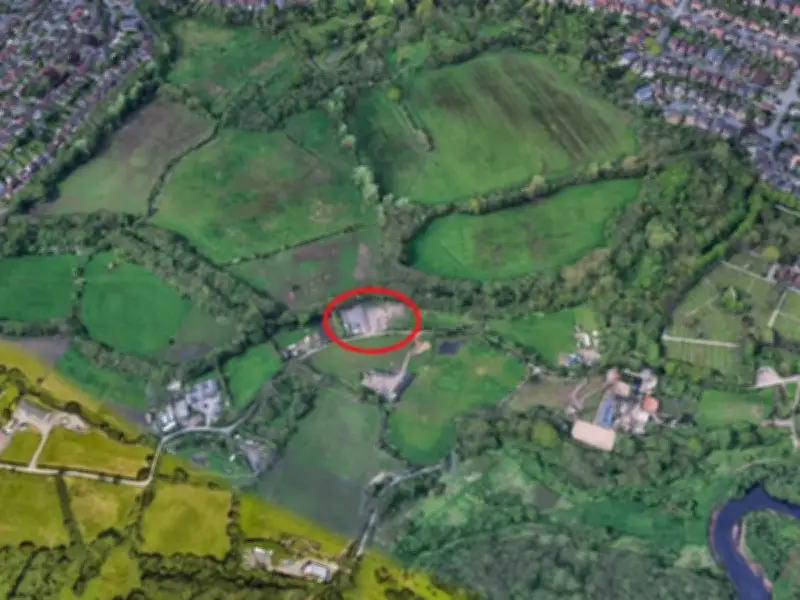
Five Traveller pitches set up without permission look set to stay as Trafford council says there is nowhere else for them in the borough.
A number of families are currently living on the land, known as Philomenas Court, near Urmston, despite permission for Traveller pitches there having been refused in 2025. They are now looking for retroactive approval to use the land as their permanent place of residence.
Applicant cites cultural needs
The applicant, who lives on the site off Eeasbrook, has argued they have 'no alternative or suitable accommodation that would support their cultural heritage or nomadic lifestyle'. Planning documents argue the 'needs of the family and their children' should be of 'primary importance in the decision-making process so that they can have access to the same life chances and opportunities as those children in the settled community'.
They add: “Given that there are no available council sites for the families to accommodate, [...] The only alternative for families is to live on the roadside, which is not considered to be suitable accommodation – it would lead to a prolonged absence of a settled site, which would lead to serious disruption to access to education, health and other services for the children, and adults within these gypsy/traveller families.”
Community objections
However, the proposal has proven unpopular in the local community, with 114 letters of objection submitted to the town hall. Opponents have raised concerns over the impact on the surrounding greenbelt, flooding, road safety, waste disposal, noise and alleged burning of materials on the site.
Trafford council officers accept that the proposals come with a number of planning 'harms', including on ecology, landscape and the greenbelt. They further recognised the unauthorised nature of the development as a 'substantial' harm.
However, they believe the need to provide Gypsy and Traveller pitches in the area outweighs those concerns. The council currently cannot demonstrate that it has suitable provision for this community in the borough, and the site is allocated for this use in the current draft of the authority's local plan.
A local plan is a document that sets out where development can take place and is intended to protect communities from speculative – unplanned – development.
Officers weigh family needs
Council officers also believe that the needs of the families should be factored into the planning decision. Denying permission for the scheme would require those living on the site to leave, they said.
They added: “[This] would have particular consequences for their traditional way of life, access to education, healthcare and family support networks, all of which would be weighed in the planning balance.”
Officers also do not believe there is a suitable alternative site within the borough. They said three other sites had been considered and discounted either because the landowners were 'unwilling' or because of 'site-specific restrictions'.
“There are no alternative, deliverable sites available in the borough,” they concluded.
The 2025 application was refused for a number of reasons, including its location in the borough's green belt, impact on the area's landscape, flooding risks and ecological harm.
Grey belt designation
Trafford has now judged the site to fall into the grey belt category – land which is not felt to 'strongly contribute' to green belt purposes such as checking urban sprawl or preventing neighbouring towns from merging – and officers feel the development would not undermine the wider countryside.
Additionally, they said any harm to the greenbelt would be 'moderate' as the scheme does not include any 'substantial permanent structures' and modifications have been agreed to soften the landscaping at the site.
While the site is considered to be at medium risk of flooding, the latest application includes a flood escape emergency plan which officers believe shows the development to be safe, documents continue. Officers also felt the development will not increase flood risks elsewhere as the scheme includes permeable gravel which can filter any surface water, as well as a 'soakaway' area for each pitch.
Further site clearance has taken place since the 2025 rejection, documents show. This includes vegetation, with officers saying this was 'regrettable'. However, the latest application includes an area of land set aside for 'ecological compensation'.
While the impact of the development on local biodiversity is considered to be of 'significant' harm, officers judged this was outweighed by the benefits. Those benefits include providing for the Traveller community and the creation of a 'secure base' for the families living there.
Permitting the development would also allow it to be regulated through planning conditions. Officers recommend that conditions be attached to any approval, including controls on the number of caravans on the site, prevention of commercial activities taking place there and to agree a waste management strategy.
They concluded: “The personal circumstances of the families carry significant weight in the consideration of the proposal which would provide a settled base and enable access to local services [...] It is considered that the best interests of the children would be served by establishing a secure permanent home at the application site; particularly given the lack of suitable alternative sites.
“It is recognised that if planning permission was refused this would have a substantial negative impact on the children's education and well-being along with the loss of the mutual support provided by the extended families within the site.”
The planning committee will meet this week to discuss the scheme.