London Pub Owner Defies Council Over £260 Advertising Board Fee
Pub Owner Refuses Council's £260 Advertising Board Charge

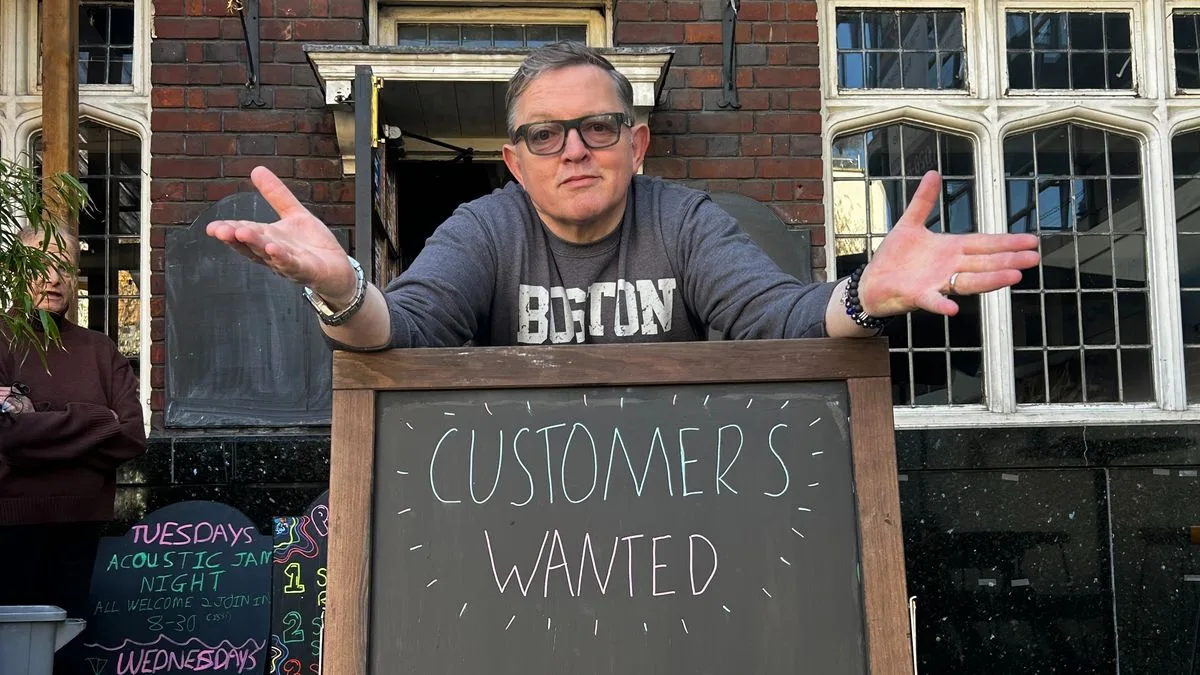
A West London publican is taking a defiant stand against what he describes as a 'ridiculous' council charge for placing advertising boards outside his own establishment. Scott Illman, the 51-year-old landlord of the Magpie and Crown in Brentford, has declared there is 'no way on God's Earth' he will pay the £260 annual fee demanded by Hounslow Council.

Council Notice Sparks Controversy

The dispute began when Hounslow Council issued a notice on February 23 stating that any business located within seven metres of a public highway requires a street trading licence for 'commercial activities,' including marketing displays. Mr Illman's pub sits approximately 6.8 metres from the road, placing it just within the council's jurisdiction.

'I am having to lie my advertising boards against my building and nobody has fined me yet,' Mr Illman stated. 'That's 6.8 metres away from the road. To send a letter saying, 'We are going to charge you for an advertising board'... It's ridiculous.'

Wide Pickt banner — collaborative shopping lists app for Telegram, phone mockup with grocery list

A Defiant Stance Against Authority

The pub owner, who describes himself as an 'antagonistic old git,' believes the council won't dare approach him with enforcement action. 'I know the council have been fining others. But I don't think the council are going to come anywhere near me,' he asserted. 'If they did start a fine, I would start a petition, 100 per cent.'

Mr Illman, who has operated the Magpie and Crown since 2019, argues that the fee is particularly unfair given his advertising boards are positioned on private land he leases from developer Barrymore. 'I understand if the board were on the footpath, but when it's on private land and nowhere near the footpath, you should have nothing to do with it - unless the signs are abusive, racist or homophobic.'

High Street Struggles Amplify Dispute

The publican's defiance comes against a backdrop of significant challenges facing traditional pubs and high street businesses. Mr Illman revealed that advertising boards have become increasingly crucial for his establishment as footfall has declined in recent years, partly due to major developments in the area.

'My advertising boards are to try desperately to get people off the streets with an offer or to make them smile with a joke,' he explained. 'I have dealt with all the hoardings going up around us, losing access to the rear of the pub. Never have the council said: 'We will discount your business rates,' but now they're trying to come at me for money for advertising boards.'

Broader Context of Pub Closures

Mr Illman's concerns reflect wider national trends affecting the hospitality sector. Recent analysis from the Centre for Social Justice has revealed alarming statistics about the changing face of Britain's high streets:

  • Nearly 1,800 pubs and bars have closed across Britain in the past decade
  • Only 245 vape shops have opened during the same period
  • Barbers, nail salons and beauty outlets have increased by 22% since 2015
  • Compared to 2010, beauty-related businesses have surged by 91%

The CSJ has urged government intervention, warning that these changes are 'doing irreparable harm to the social fabric' of communities.

Government Response and Business Rates

In January, Chancellor Rachel Reeves announced a £300 million support package to help pubs struggling with rising business rates. This followed predictions from the British Beer and Pub Association that without urgent government intervention, approximately 2,000 pubs could face closure this year.

From April, pubs and music venues will receive a 15% discount on business rates, though this relief doesn't extend to advertising board fees like the one challenging Mr Illman.

Council's Position on the Matter

A spokesperson for Hounslow Council defended the policy, stating: 'Any business located within seven metres from the public highway will need a street trading licence for commercial activities which can include outdoor customer seating or marketing materials, including A boards.'

Pickt after-article banner — collaborative shopping lists app with family illustration

The council emphasized that 'Even if the land is privately owned, if the public can freely access it and it lies within seven metres of the highway, a licence would usually be required.' They added that this rule is applied consistently across London to prevent obstructions and ensure public safety.

Despite the council's stance, Mr Illman remains resolute in his opposition. 'If they come at me, I will defend it to the hilt. There's no way on God's Earth I shall be paying for a licence,' he declared, highlighting the tension between local authorities and struggling businesses on Britain's changing high streets.