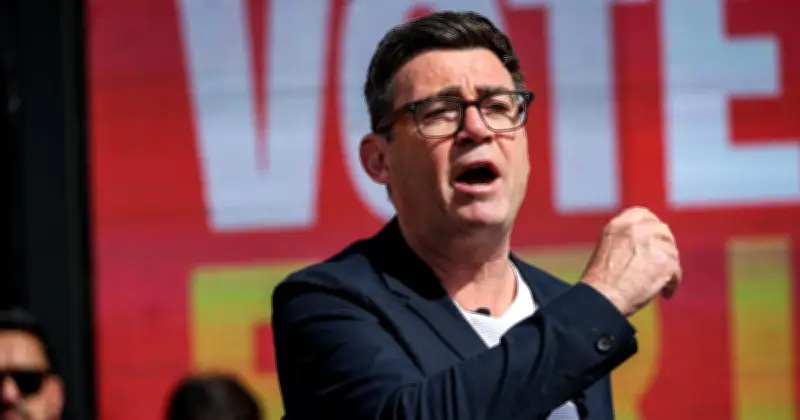
Andy Burnham could prove to be the greatest ally to the cause of Scottish independence in Britain today, according to a new analysis. Successive prime ministers have slammed the door on a re-run of the 2014 referendum. But by suggesting that Brexit could be reversed just a decade after the 2016 vote, the Labour leader has made it exponentially harder to refuse Scots a vote on taking back control of their nation.
If it is no longer anathema to contemplate overturning a decision taken 10 years ago on Europe, why should it be heretical to ask citizens a question about continued membership of the United Kingdom 12 years later? As Scottish First Minister John Swinney put it: "I think it's an interesting precedent that if we can reopen an issue that's been decided by a referendum, then we can also reopen Scottish independence."
SNP plans for a new referendum
The SNP wants a referendum by 2031 and is planning an advertising blitz and an independence survey involving nearly 1.5million people. Consciously or not, the new Labour prime minister seems intent on clearing away obstacles to independence.
Mr Burnham has great hopes of striking a deal that will deliver a closer relationship with the EU this year – he has signalled that returning as a member state is a long-term option (and admitted this is his personal hope). The prospect of Scottish independence would be considerably less daunting if the UK was back in the EU. The divorce process would be infinitely easier if Brussels allowed Scotland to simultaneously take its place in the EU as a fully fledged member state.
Border and economic concerns
Years of heated arguments over the land border in Northern Ireland demonstrated the difficulty of ensuring that goods can flow freely between a territory in the bloc and one that stands outside it. Such acrimony and disruption would be minimised if an independent Scotland and the rest of the UK were EU member states – or at least full participants in the European Economic Area.
At present, many Scots who have watched years of negotiations to avoid customs posts between Northern Ireland and the Republic – and have clear memories of the torturous Brexit negotiations between the UK Government and the EU – will groan at the thought of trudging through a diplomatic quagmire when there is an urgent need to grow the economy and protect living standards. Even if the UK and Scotland were in the EU, years of battles between Westminster and Holyrood over future welfare and defence responsibilities would await.
Polling and political outlook
But the SNP’s traditional goal of independence within the EU would seem a dream within closer reach if the Brexit era ends. The big challenge for the party is persuading the people of Scotland they will be better off outside the UK. A mere 17% of Scots mentioned independence when asked by YouGov to name up to three of the most important issues facing their nation. The economy (48%), health (39%) and immigration (33%) topped the list.
When asked how they would vote in a referendum, 53% said they would oppose independence. And while Mr Burnham has a favourability rating of +9, Mr Swinney is in negative territory at -19. Mr Swinney declared that Mr Burnham will be the "last prime minister of the United Kingdom", and the PM said in his conference speech he is "utterly determined to prove him wrong" as he spoke of a "country of solidarity, not separation". Champions of independence have an epic struggle ahead to win over their fellow countrymen and women, but if Mr Burnham continues his pro-EU push, they may feel the wind is at their back.