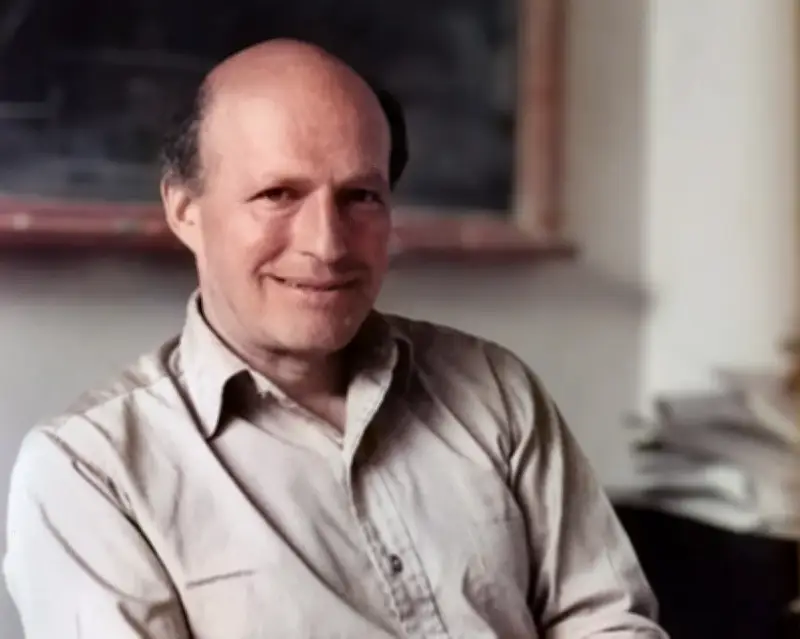
Alex Ungar, a senior lecturer in pharmacology at Edinburgh University for more than 20 years and a former editor of the British Journal of Pharmacology, has died aged 91.
Early life and escape from Prague
Born in Prague to Malvina (nee Bojko), a paediatrician, and Josef Ungar, a doctor and research microbiologist, Alex was a happy child until, aged four, his world turned upside down when Germany invaded Czechoslovakia; he never forgot the sight of the tanks rolling through the streets. Two weeks later, his family travelled to London as refugees on a Quaker transport by train via Germany and the Netherlands.
After being temporarily housed in a Quaker community in the village of Jordans, Buckinghamshire, they settled in Pinner, north-west London, where Alex attended Little St John’s prep (now St John’s prep) and Merchant Taylors’ school in Northwood. As a teenager he embarked on lifelong passions for sailing and horse-riding.

Medical training and academic career
He studied medicine at St John’s College, Oxford, and completed his medical training at University College hospital in London in 1962. That year he married Rosalind Stanford, later a teacher, whom he had known since childhood through their shared love of horse-riding, and they settled in Islington, north London.
Alex taught physiology at St Bartholomew’s hospital, then developed his interest in pharmacology at the school of pharmacy (now part of University College London), before moving to Edinburgh in 1969 to take up a lectureship, specialising in cardiac pharmacology. Passionate about his work, he supervised a string of PhD students, and also ran the pharmacology honours programme, which combined medical and science undergraduate students.
Contributions to pharmacology
He published more than 60 journal articles during his career, collaborating with colleagues worldwide. At the British Journal of Pharmacology from 1973 to 1984, he supported many younger colleagues in publishing their research. Resolutely anti-hierarchical, he led by example and was an inspiration for many.
From 1962 to 2014, Alex was also the chief medical adviser to the pharmaceutical company Norgine. He was elected as an honorary fellow of the British Pharmacological Society in 2006.
Personal life and legacy
Alex’s intellect was prodigious and his thirst for knowledge and skills insatiable and wide-ranging. His conversation was scintillating, peppered with witty anecdotes. He read widely, in philosophy, history and literature, while maintaining a penchant for classic thrillers. He was a polyglot and a passionate European, who recently delighted in regaining his Czech citizenship. A wine connoisseur, he was wine-buyer for Edinburgh University’s staff club for many years. Friends and family also benefited from his superb culinary skills, ranging from full-blown cordon bleu menus to the perfect omelette.
After Alex retired from Edinburgh in 1991, he and Rosalind moved to Cumbria, where they continued to walk with their dogs, sail, travel and attend concerts and especially operas.
Alex is survived by Rosalind, their three children, Jonah, Pippa and me, three grandchildren and two great-grandchildren.