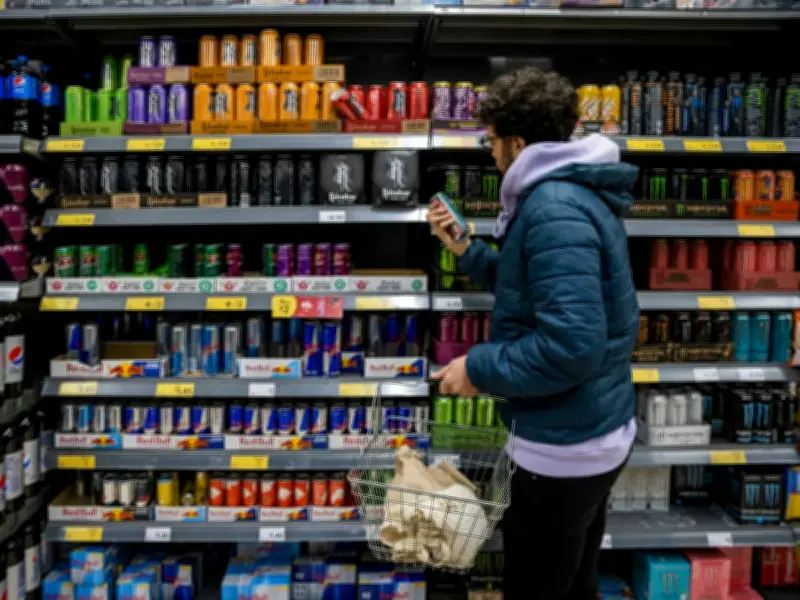
The Welsh Government is proceeding with proposals to ban under-16s from purchasing high-caffeine energy drinks in Wales. The previous government consulted on plans to introduce legislation under the Food Safety Act 1990 to ban the sale of such drinks to young people.
In 2022, the previous Welsh Government consulted on these proposals and undertook further evidence gathering through the 2024 Call for Evidence. The evidence revealed links between children's consumption of these drinks and a range of negative health, wellbeing, sleep, behavioural and educational outcomes.
The current Welsh Government believes there is sufficient justification to pursue legislative action and is inviting views on implementation and enforcement proposals to ensure any legislation is effective, proportionate and practical to implement.
Which drinks will be covered?
The restriction will apply to any drink containing more than 150 milligrams of caffeine per litre, though there are some exemptions. This limit is in line with Regulation (EU) No 1169/2011 on food information to consumers, which requires that products exceeding this threshold display a warning stating they have a high caffeine content and are not recommended for children or pregnant or breastfeeding women.
The restriction is not designed to cover other caffeine-containing products that are not beverages, such as caffeine pouches, caffeine gums or similar items. It also exempts tea and coffee, which are the most widely consumed caffeinated beverages in Wales.
The government said: "While tea and coffee can contain caffeine, these products (high energy drinks) are typically marketed, presented and consumed differently from traditional tea and coffee products. The available evidence and stakeholder engagement have primarily identified concerns relating to children's consumption of high-caffeine energy drinks."
"In considering the scope of the restriction, the Welsh Government has taken account of the available evidence, consumption patterns and stakeholder views. We consider focusing the restriction on high-caffeine energy drinks, excluding tea and coffee, a targeted and proportionate approach, based on the available evidence and concerns."
Why is the age limit set at 16 years old?
The Welsh Government said it had examined other thresholds, including the age of 18. However, weighing up the available evidence, stakeholder opinions and practical implementation factors, the government believes that a restriction applicable to those aged under 16 represents a proportionate approach.
It stated this targets the age group for whom the public health concerns are most directly relevant while limiting unnecessary impacts on older consumers and businesses.
Which sellers and enforcement measures?
After reviewing the responses and available evidence, the restriction will apply to all sellers, retailers and businesses selling to consumers regardless of their size, including the out-of-home sector and shops whose primary business is not food and drink (such as clothing shops and newsagents), as well as online sales to consumers in Wales.
Vending machines are also being incorporated into the legislation, and in this instance the government is considering a complete ban at all vending machines. It explained: "This reflects concerns about the practical difficulties of restricting access to high-caffeine energy drinks through vending machine sales."
"We have considered using a settings-based approach, for example, by exempting locations that are predominantly adult. Such an approach may be more complex to implement and enforce, particularly if settings are mixed or their use varies over time and between businesses. This could lead to variations in how a restriction is applied."
"We have also considered the use of age verification systems. From the evidence provided, it's considered unclear whether this would be sufficient and reliable to prevent underage sales. On the basis of the evidence considered, we therefore consider a complete ban would provide the desirability of a clear and consistent approach across all vending machine settings."
The intention is to use enforcement powers outlined in the Food Safety Act 1990 and the Regulatory Enforcement and Sanctions Act 2008. Underage sales of high-caffeine energy drinks would constitute a criminal offence, liable on summary conviction to a fine not exceeding level 4 on the standard scale (£2,500). It is proposed that local authority food authorities would be responsible for enforcing the restriction.
To support this, the Welsh Government proposes to grant local authorities the power to impose a fixed monetary penalty (a fine) as an alternative option to a criminal penalty. This would apply where the local authority is satisfied beyond reasonable doubt that an offence has been committed. It stated that a civil sanction would ensure a more "appropriate and proportionate response" to enforcement to the circumstances of the offence.
It is proposed that the fixed monetary penalty would be set at £1,500 for an individual, micro-business or small business (employing fewer than 50 people), and £2,500 for a medium-sized or large business (employing 50 or more people). Prosecution would, however, remain a viable enforcement option, particularly in cases involving serious, deliberate or repeated non-compliance.
How will checks be made and who would be liable?
To ensure compliance, local authorities may examine relevant records and sales arrangements or conduct test purchasing operations. In certain circumstances, such enforcement measures may require authorisation under Part 2 of the Regulation of Investigatory Powers Act 2000 (RIPA), particularly where directed surveillance is involved or it involves the use or conduct of a covert human intelligence source.
For local authorities to employ these methods to assess compliance and support effective enforcement of the restriction in appropriate circumstances, amendments to secondary legislation underpinning RIPA would be necessary. The Welsh Government is weighing up the suitability and proportionality of using these covert surveillance powers to assess compliance for a ban on the sale of energy drinks to under 16s.
Retailers would be accountable for taking reasonable steps to prevent the sale of energy drinks to children under the age of 16. The regulations would not stipulate a particular age-verification method. Businesses would be free to adopt arrangements they consider proportionate and appropriate to their sales model. Examples of reasonable steps may include operating a Challenge 25 policy, requesting recognised photographic identification where age is in doubt, and using appropriate electronic age-assurance systems.
Recognising concerns about the practical challenge of age verification for online sales, the government said that they are seeking further views on this. The Welsh Government also proposes to provide a defence where a person can demonstrate that they took all reasonable steps to prevent the offence from occurring.
It's understood the government aims to mirror the start date for comparable legislation in England, which is set for April 1, 2027. However, the government in Wales is proposing a six-month transition period between the regulations being approved and taking effect. Officials stated this would strike a balance between achieving the public health advantages of the restriction promptly while allowing sufficient time for businesses and enforcement bodies to make necessary preparations.