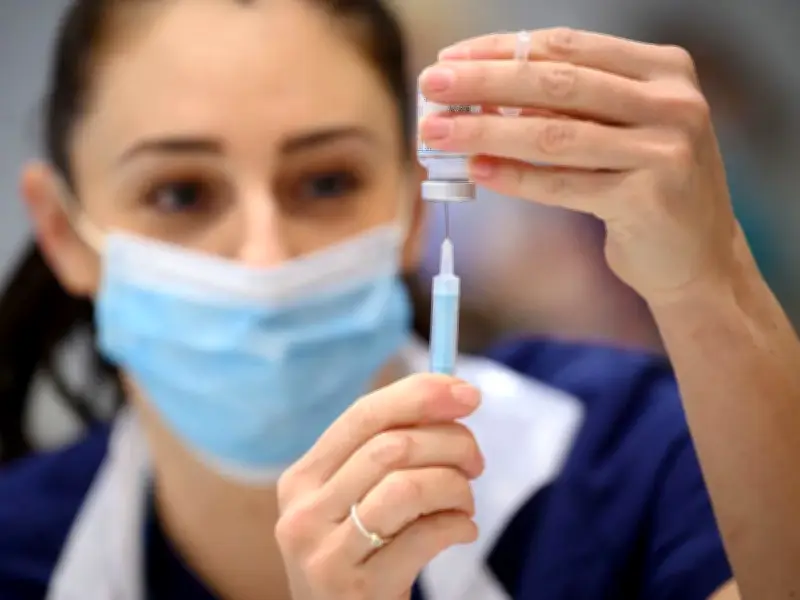
Covid-19 levels across the North East continue to fall following an autumn spike in cases of so-called 'American Covid', but NHS leaders in the region say they are not complacent and are stressing the need to focus on prevention.
NHS leaders highlight prevention and vaccination progress
Samantha Allen, chief executive of the North East and North Cumbria NHS Integrated Care Board (ICB), wrote in her weekly public update about efforts to combat winter respiratory viruses such as flu and Covid-19. She said: "Prevention is a key part of our approach, particularly through respiratory health programmes such as OPTIMISE, which supports people with COPD to better manage their condition, alongside our efforts to increase vaccination uptake."
She added: "It's fantastic to see that teams across the region have already delivered 739,367 flu vaccinations and 193,127 Covid-19 vaccinations, a remarkable achievement in just over a month. That's more than 932,000 vaccinations, and we're hopeful we'll reach the one million milestone next week!"
Strengthening care to avoid hospital admissions
Allen said the NHS was working with partners to strengthen care, including by focusing on "same day emergency care" and avoiding the need for a hospital admission where possible. She added: "Plans also include services such as urgent community response teams, which provide rapid care at home when someone's health worsens, and virtual wards, which offer hospital-level care at home. A network of acute respiratory infection (ARI) hubs will provide expert care close to home for people with breathing infections, with appointments arranged through NHS 111 or GP practices. Together, these services help avoid unnecessary hospital stays and keep beds available for those who need them most."
Regional and national trends in Covid-19 cases
In the North East as a whole, the rate of Covid cases per 100,000 people over the seven days to November 4 was 4.53, down from a peak of 8.53 on October 23. While the UK Health Security Agency (UKHSA) warns that data from the last seven days is subject to change, this shows a significant falling trend in cases, though places such as Newcastle and Gateshead still have above-average levels of illness.
Nationally, cases are also falling. The UKHSA's weekly surveillance report found: "Covid-19 activity decreased and is circulating at low levels. Emergency Department attendances for Covid-19-like illness remained stable. The number of Covid-19 confirmed acute respiratory infections (ARI) incidents decreased compared with the previous week."
The autumn has already seen two NHS trusts in the region - Gateshead Health and South Tyneside and Sunderland - bring in mask wearing rules. These see staff mandated to wear facemasks in clinical areas while patients and visitors are encouraged to follow suit. This follows what the South Tyneside and Sunderland NHS Trust described as an 80% jump in respiratory illness-caused admissions from one week to the next in the days to October 23.
Area-by-area breakdown of Covid-19 rates
On November 4 2026, the seven-day average rate of Covid-19 cases per 100,000 people in County Durham was 1.53, down from a high of 5.75 during October. In Gateshead, the rate remains higher at 7.65, though it has fallen by half in less than a week from a high of 14.78. In Newcastle, the rate was 7.04, compared with the city's October high of 11.4 on October 25.
North Tyneside's rate was 4.78, a significant fall from 13.39 on October 25. Northumberland saw a rate of 5.6, again significantly lower than its October high of 13.13. Further south, South Tyneside had a rate of 6.08, down from 14.2 on October 30. Sunderland's rate was 5.11, down from 11.67 at the height of the most recent spike last month.