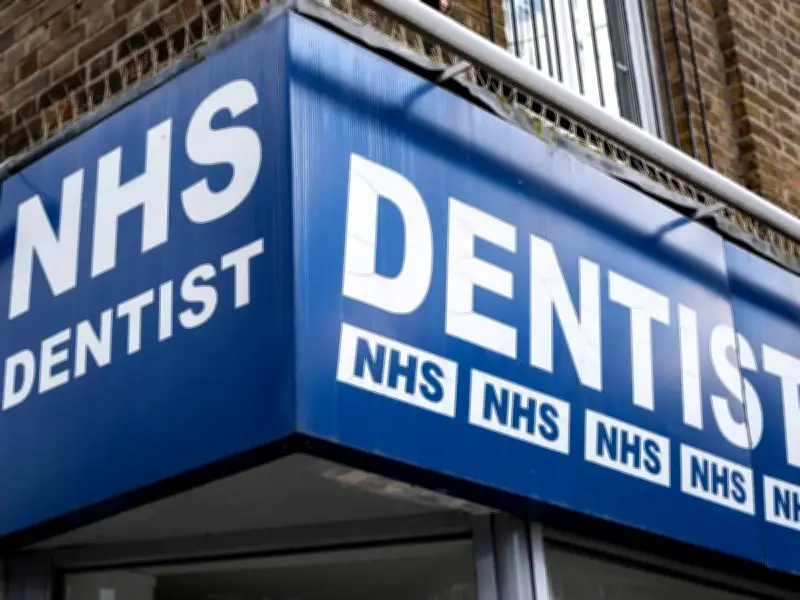
More than 200,000 penalty charge notices were issued for NHS dental treatment in 2025, a rise of over 40 per cent compared to two years earlier, according to figures from the NHS Business Services Authority (NHSBSA) obtained via a Freedom of Information request. The increase has prompted calls for patients to check whether they qualify for free care before attending an appointment.
Almost half of people in the UK qualify for free NHS dental treatment, based on age, health status and receipt of certain means-tested benefits. However, millions still have to pay for treatment costing up to £332.10 for the most extensive levels of care.
Fine rise and eligibility confusion
The Freedom of Information data revealed that 148,405 penalty charge notices were issued in 2023. The following year, this figure climbed to 189,757, and by 2025 had reached 212,143.
Dr Andrej Bozic, an oral surgeon at private clinic Dentum, said people ought to be aware of their entitlement before attending a dental appointment, as getting it wrong can mean a penalty of up to £100. He said: "If you are entitled to free NHS dental treatment you will be asked to show proof of eligibility and sign a document. It's so important that you are clear on what you are and aren't entitled to because incorrect claims, even if they are made by mistake, can result in fines of £100."
Dr Bozic added: "It's extremely concerning to see more than 200,000 fines last year for people incorrectly claiming for free treatment they are not entitled to. There is clearly an element of some people not understanding the complex eligibility criteria."
Treatment costs and access issues
For those not entitled to free NHS dental treatment, costs are divided into three bands. The first, which covers examinations, assessments and straightforward procedures such as scaling, comes in at £29.70. The second band, priced at £76.60, includes treatments such as root canals and fillings. The third pays for more complex procedures, such as orthodontic treatment and replacing missing teeth, costing £332.10.
Accessing NHS dental care isn't always straightforward, with patients in certain parts of the country facing a significant shortage of available appointments, commonly referred to as "dental deserts". This scarcity drives many towards private dental care or, in some instances, travelling overseas for treatment — such as to the Dentum private dental clinic in Croatia, which welcomes around 1,500 UK patients annually for both complex and cosmetic procedures.
Who can get free NHS care
According to the NHS, some people can get free NHS dental appointments and treatment, or only need to pay part of the cost. In England, you can get free NHS dental appointments and treatment if you're aged under 18, or under 19 and in full-time education; you're pregnant or have had a baby in the last 12 months; you've had a stillbirth in the past 12 months; you're getting treatment in an NHS hospital from a hospital dentist (but you may still need to pay for dentures or bridges); or you receive War Pension Scheme payments, or Armed Forces Compensation Scheme payments and the treatment is for your accepted disability.
You can also get free NHS dental treatment if you or your partner receive certain benefits including Income-related Employment and Support Allowance, Pension Credit Guarantee Credit, Pension Credit Guarantee Credit with Savings Credit, or Universal Credit – but only if your income is below a certain amount. If you or your partner receive benefits that mean you can get free dental treatment from the NHS, your dependents aged under 20 can also get free dental treatment.
How to get free NHS dental treatment
Those people who are eligible can get free NHS dental treatment, however any private dental treatment will not be covered. Depending on the reason, you'll need to give your dentist proof that you can get free NHS dental treatment. Examples of proof include a valid HC2 certificate – available for people on a low income; your birth certificate; a valid maternity exemption certificate; a maternity certificate (MatB1); a notification of birth form, or your baby's birth certificate; or a stillbirth certificate. If you receive War Pension Scheme or Armed Forces Compensation Scheme payments and get free dental treatment, you'll usually need to pay for it yourself first and claim the money back from Veterans UK.