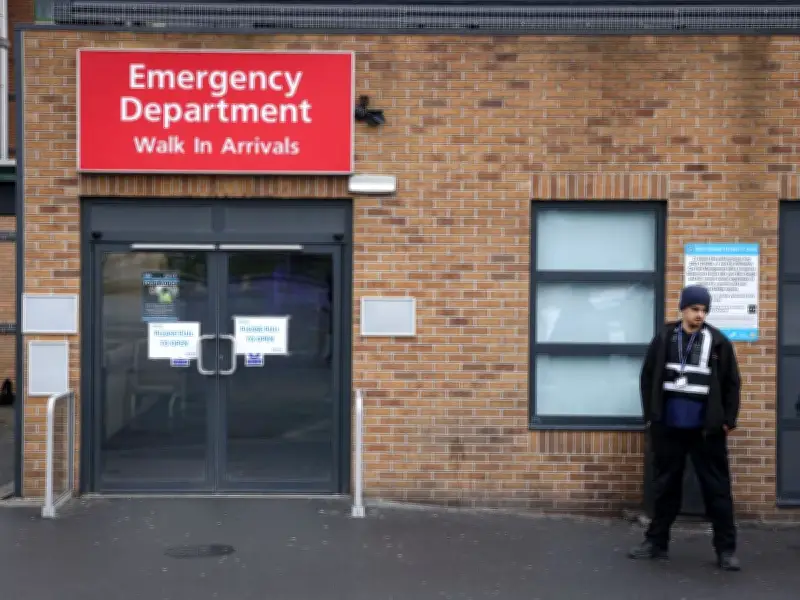
Every A&E department in England will be required to give patients, families, and healthcare staff 24/7 access to an urgent second opinion under an expansion of Martha’s Rule, NHS England has announced.
The initiative enables people in emergency departments to call a dedicated phone line to trigger an immediate clinical review if a patient’s condition is deteriorating and they feel their concerns are being ignored.
Pilot results and rollout
The expansion follows an eight-month pilot across seven hospital trusts where 69 calls were made to Martha’s Rule phone numbers in emergency settings. In several instances, those calls led directly to patients undergoing urgent surgery or being transferred to intensive care units.

The phased rollout is expected to be completed by March 2028.
Background and campaign
The policy was created following the death of 13-year-old Martha Mills, who developed sepsis while under the care of King’s College Hospital NHS Foundation Trust in south London in 2021. A coroner subsequently ruled that Martha would have survived had medical staff transferred her to intensive care earlier.
Martha’s parents, Merope Mills and Paul Laity, campaigned tirelessly for the change after stating that their repeated warnings about their daughter's worsening health were dismissed by medical staff.
Official responses
Professor Aidan Fowler, national director of patient safety at NHS England, said: "A&Es see some of our most vulnerable patients, so the ability to raise concerns about deterioration quickly and trigger a rapid review of care is essential."
"Martha’s Rule is already having a transformative effect in making our acute care even safer, and by expanding Martha’s Rule into A&Es, we are giving even more patients, their families and NHS staff a critical new lifeline to help improve care and save more lives," he added.
Prof Fowler also said: "Early testing has shown that Martha’s Rule can work well in busy A&Es and builds on the evidence from our adult and children’s wards, where thousands of calls have been made by patients, families and staff to date – with many leading to changes in treatment and potentially life-saving interventions."
Health minister Baroness Merron said: "Martha’s Rule is about making sure patients and their loved ones are heard when they raise concerns about their care."
"Expanding it to A&E will give patients, families and staff another way to speak up when they are worried that someone’s condition is getting worse, ensuring concerns are acted on quickly," she added. "This is part of our wider efforts to put patient safety at the heart of the NHS."
Further expansion and context
Hospitals are also expected to extend Martha’s Rule to maternity and neonatal units by March 2028. Latest figures for July 2026 show the highest-ever monthly total of calls made via Martha’s Rule (1,678).
In January, a report found the UK could be trailing countries such as Norway, Switzerland, Japan, Spain and Italy when it comes to patient safety.
A chart of the safest places to receive care from 38 countries in the Organisation for Economic Co-operation and Development (OECD) ranked the UK in 21st place, but this was based on 2021 data. The global state of patient safety 2025 study, from Imperial College London, included key aspects of patient safety, one of which was deaths from treatable causes, such as from sepsis and blood clots like venous thromboembolism.