Health agencies are urging Brits to handle and cook eggs correctly amid a salmonella outbreak announced by the UK Health Security Agency (UKHSA). Over 200 people have fallen ill across the UK, and one person has died in connection with the outbreak. Six cases are currently confirmed in Scotland.
Outbreak linked to imported eggs
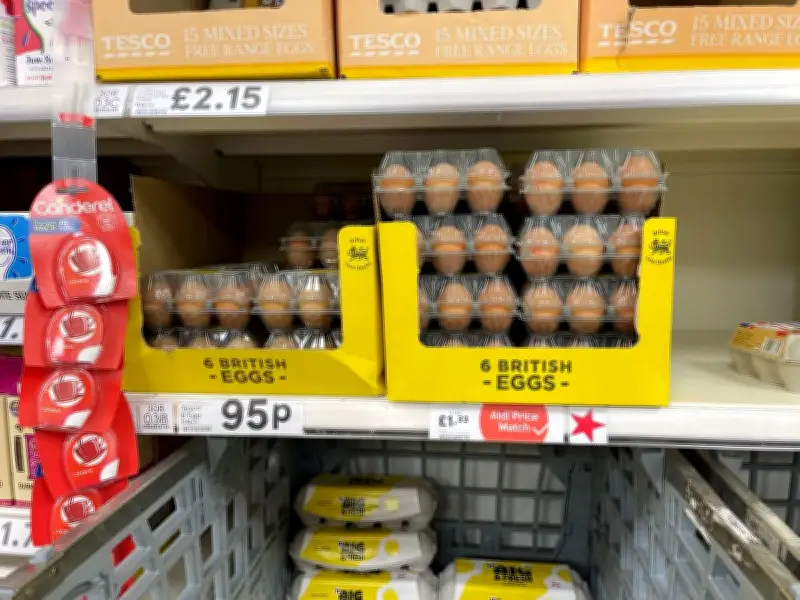
The UKHSA believes the spread "may be linked to eggs imported from outside of the UK". This does not mean shoppers should not proceed with caution if they exclusively buy eggs produced in the UK, as failing to check eggs correctly could lead to bad cases of food poisoning.
According to Milk and More, you can perform a freshness test to confirm if your eggs are still safe to eat. For the egg float test, you need an egg, cold water, and a bowl deep enough to submerge the egg. Fill the bowl and gently place the egg inside.

How to test egg freshness
If the egg sinks and lays flat at the bottom, it is still fresh. If it sinks but stands upright, it is still good to eat but should be used soon, as it is nearing the end of its freshness. However, if the egg floats to the top, it is old and should be thrown away. While this test helps clarify freshness, it does not guarantee the egg is salmonella-free.
The Food Standards Agency (FSA) has also issued advice on storing, handling, and cooking eggs amid the outbreak. The FSA warns that salmonella bacteria can be found inside eggs or on their shells, so it is important to be careful when handling and using them. Two main rules are advised: make sure eggs are thoroughly cooked and handled hygienically.
Who is at risk and safety steps
Salmonella can cause serious illness, particularly in pregnant women, young children, older adults, and those with underlying health conditions such as cancer, diabetes, or liver and kidney disease. Symptoms can include stomach cramps, diarrhoea, fever, and vomiting. In severe cases, salmonella food poisoning can cause death.
The FSA warns that infants, young children, pregnant people, those who are unwell, and older people should only eat raw or lightly cooked hen eggs if they have a British Lion mark on the packaging. Alternatively, they are safe to consume if produced under the Laid in Britain egg assurance scheme.
Jacquelyn McCormick, Head of Incidents at the FSA, added: "This advice does not apply to those who are severely immunocompromised and require medically supervised diets." She also said: "We continue to advise people who are handling eggs, eggshells or egg packaging to always wash their hands thoroughly with warm water and soap and dry them properly afterwards."
Preventing cross-contamination
The FSA has shared advice on handling and storing eggs safely, as bacteria may be present on shells and inside eggs, potentially spreading to other foods, utensils, worktops, and hands. Steps to reduce risk include: washing and drying hands thoroughly before and after handling eggs, eggshells, and packaging; cleaning and disinfecting surfaces and equipment after handling eggs; keeping eggs away from other foods, both in the shell and when cracked open; storing eggs in a cool, dry place, ideally refrigerated; keeping storage areas clean; not using eggs beyond their best before date; not using cracked, damaged, or dirty eggs; disposing of eggshells promptly and cleaning surfaces thoroughly; being careful not to splash raw egg onto other foods, surfaces, or dishes; carrying out all work with raw eggs at one time; and serving egg dishes straight away, or cooling them quickly and keeping chilled.