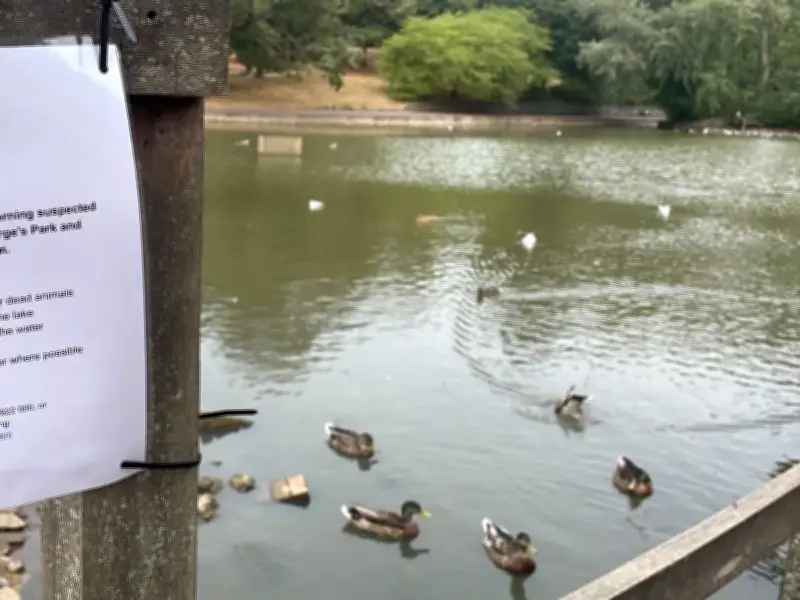
People are being urged to avoid contact with sick animals or the water at a Bristol lake following a suspected outbreak of a potentially deadly illness. Bristol City Council has launched an investigation into a suspected botulism outbreak at a lake in St George's Park, where locals have reported that wildlife has been sick or dying.
What is botulism?
According to the NHS, botulism can be life-threatening and needs immediate treatment in hospital. It is caused by a paralysing neurotoxin produced by Clostridium botulinum bacteria. Animals and humans can become sick by ingesting the toxin or the bacteria that produce it.
Residents' concerns
One local resident said it was "heartbreaking" to see the "devastating impact" on wildlife. "Local residents are extremely concerned and distressed by the number of animals that have reportedly become sick or died," they said. "There is a genuine sense of sadness, frustration and anger among people who care deeply about St George Park and its wildlife."

"Residents want to understand what is happening, what is being done about it, and whether everything possible is being done to prevent further suffering," they added.
Council advice
Bristol City Council is actively investigating reports of an outbreak and has urged members of the public not to touch injured animals and to avoid people and dogs coming into contact with the water in the meantime. A spokesperson stated: "We are aware of reports concerning suspected botulism in the lake at St George Park and are actively investigating them."
The council reminds people: do not touch sick, injured, or dead animals; keep dogs on a lead near the lake; do not allow dogs to enter the water; do not feed wild birds; avoid contact with the water where possible. If you find a sick or dead bird, phone Bristol City Council on 0117 922 000.
Volunteer efforts and aerator concerns
A resident told BristolLive: "Bath Swan Rescue are doing an incredible job responding to the outbreak, voluntarily rescuing and caring for affected wildlife. They are taking on an enormous amount of work and are understandably under considerable pressure. As volunteers, they need appropriate financial, practical and organisational support to continue responding to this situation."
They continued: "I have raised concerns with Bristol City Council and other relevant organisations, including the Animal Health Team and RSPCA. However, I feel that greater public awareness and scrutiny may now be needed to ensure that this situation receives the urgent attention it deserves."
Locals say they have reported a broken aerator in the lake. "Residents are understandably concerned that inadequate aeration could potentially be contributing to environmental conditions associated with botulism," a resident said. "I appreciate that this cannot be assumed to be the cause of the outbreak, but given the circumstances, many residents feel that it warrants urgent investigation."