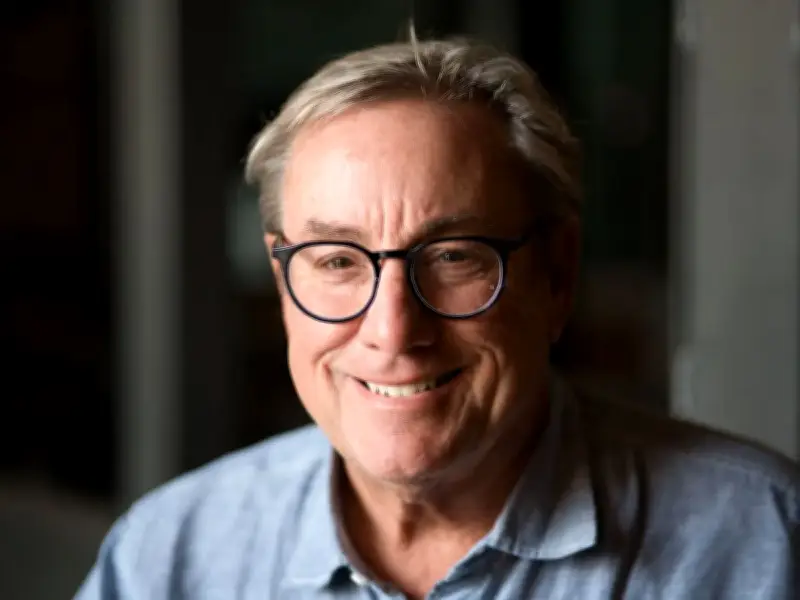
A grandfather from Idaho is among more than 200 people taking legal action against the maker of Ozempic, claiming the weight-loss and diabetes injections left him partially blind. Jay Vandegriff, 70, was prescribed the GLP-1 medication in 2023 to manage his blood sugar levels as part of his type 2 diabetes treatment and initially found the injections helpful. On Christmas Day 2024, he noticed a “smudge” in his left eye and saw an ophthalmologist the following day.
Diagnosis of optic nerve stroke
After a “barrage of tests,” Vandegriff was diagnosed with non-arteritic anterior ischemic optic neuropathy (NAION) — an optic nerve stroke caused by reduced blood flow that can lead to sudden and irreversible vision loss. The risk of NAION was not listed as a side effect on the US label for Ozempic, manufactured by Danish pharmaceutical company Novo Nordisk, when he was taking it.
Vandegriff, from Coeur d’Alene, Idaho, said the ophthalmologist advised him to stop taking the medication because it could be the cause. However, his eyesight continued to worsen after he stopped. The financial software worker said: “I first thought it was a smear on my glasses, but I took them off, cleaned them, and realised it was still there. It was like an opaque smudge, and the next day, it was a lot darker and bigger. I was told nothing would bring the vision back, and it continued to get worse for another six weeks.”
Legal action and impact on daily life
Vandegriff is one of more than 100 people who have filed lawsuits against Novo Nordisk through law firm Weitz & Luxenberg, alleging they suffered vision loss and were not warned of the risk. His lawyer said more than 100 further cases involving similar eyesight problems, brought by other law firms, were pending in New Jersey Superior Court.
He says he has just 33% of his vision left in one eye and has lost most of his depth perception. He can no longer enjoy fishing as he used to, or go skiing safely, having moved to Coeur d’Alene specifically due to its proximity to a ski resort. Vandegriff explained: “My vision loss was a sudden event, there wasn’t any graduality to it. I felt great on Christmas Day and then all of a sudden there was this smudge on my eye, like when you stare at the sun too long.
“It got worse for about six weeks before it stopped, and it took over two thirds of the bottom portion of my eye. It has been pretty frustrating, devastating really. I've had to buy a bigger screen to work because I start seeing double and I need to take breaks. I'm not restricted on when I can go skiing and can't go if it's cloudy or fogs, because I worry about my safety.”
He added: “I often get bruises because I end up walking into things. The other day I walked into my two-year-old grandchild because I didn't see him. And even things like reading labels on food jars is impossible. I feel depression and anger, because if I had been warned it could affect my vision I wouldn't have taken Ozempic in the first place.”
Regulatory warnings and company response
His wife Susie, 69, helps the grandfather-of-three and father-of-two with day-to-day tasks. He said: “I walk through a grocery store and bump into people because I don’t see them coming. Sometimes they get mad, like ‘what’s wrong with you?’. People said my brain would adjust but it never has. The little things add up, like I can’t even use a Phillips screwdriver now.”
On Monday, November 9, the US Food and Drug Administration (FDA) announced that GLP-1 medicines must carry a warning about a potential increased risk of NAION. It came months after the UK’s Medicines and Healthcare products Regulatory Agency (MHRA) issued a safety update in February about the very rare risk of NAION in people taking semaglutide medicines, including Ozempic and Wegovy. The MHRA advised patients to go urgently to eye casualty or A&E if they suddenly lose vision or their eyesight gets worse quickly in one or both eyes. Other countries have also issued warnings.
Danielle Gold, an attorney at Weitz & Luxenberg who represents Vandegriff, said: “We filed Jay’s case a few months ago and we now have over 100 cases we’ve filed with around another 100 to 150 pending in the New Jersey Superior Court in Bergen County. This is obviously a very serious and life-altering injury. It’s not transient, and there is no treatment.”
She added: “We are seeking compensation because this injury will not improve and has impacted Jay’s ability to work and his independence. US companies have an obligation to adequately warn people on the risks of their medications, and the injuries resulted, in this case, from a failure to warn.”
Speaking about this week’s FDA announcement, Danielle added: “A label change does not end the litigation, but it is certainly positive news for us and helps with our failure to warn claim.” Vandegriff added: “I look at myself in the mirror and I don’t look dismembered, but I feel dismembered.
“It’s made me do this because I want to help other people, to let them know that there are potential side effects beyond what is currently being warned against. It’s confounding to me how immensely popular these drugs have become. I don’t want anyone else to go through what I’ve gone through.”
The next step in the case is a hearing on Novo Nordisk’s motion to dismiss. Gold said the legal team expects to win at the hearing and defeat the motion, saying they “anticipate prevailing and defeating.” A Novo Nordisk spokesperson said the personal injury lawsuits are “without merit” and they're “vigorously defending them.”
They said: “Novo is aware of reports and epidemiological data concerning non-arteritic anterior ischaemic optic neuropathy (NAION) in patients treated with semaglutide. The available clinical, epidemiological and post-marketing data are being continuously assessed, and a causal relationship between semaglutide and NAION has not been established.
“Patient safety is a top priority for Novo and we take all reports of adverse events associated with our medicines very seriously, collaborating closely with health authorities and regulatory bodies worldwide.”