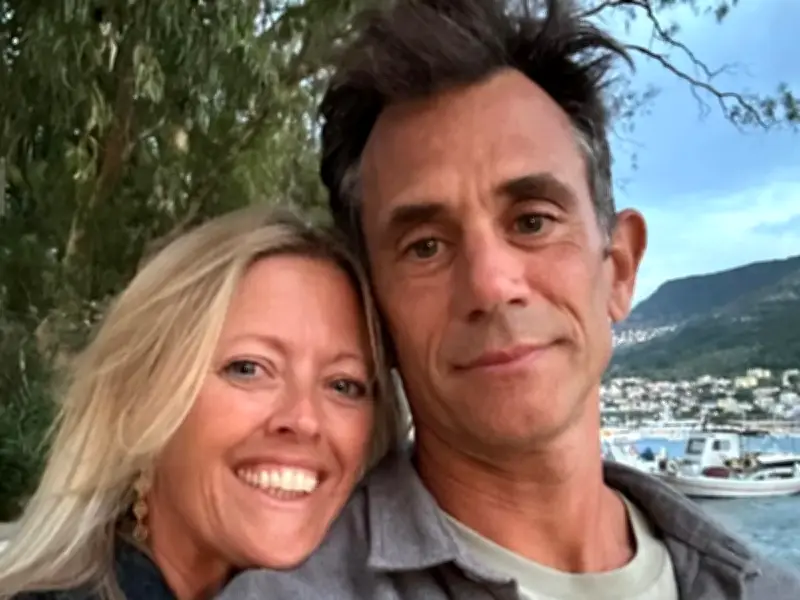
Robert Blades, a 47-year-old father-of-two from The Witterings, Sussex, is the longest surviving child liver transplant patient in Britain, now 36 years after his operations. He enjoys rock climbing, swimming, surfing and sailing with his family.
Early diagnosis and childhood struggles
At 18 months old, his parents were told he had Alpha 1 antitrypsin deficiency, a deadly liver disease that would kill him by age nine. At that time, there were no liver transplants for children and no organ donor register existed. Medics first noticed a problem when Rob, now a shipping consultant, was four weeks old and suffered internal bleeding that nearly killed him.
Rob recalls childhood hospital visits, including a large needle pushed between his ribs to obtain liver biopsy tissue. He said: “That was painful, but necessary, and the only way of assessing how much damage was being caused to my liver. Despite everything my family made a conscious decision - we were going to live as normally as possible.”

His parents took him rock climbing in Dorset and sailing in Cornwall. During one memorable sailing visit to the Isle of Wight, he suffered a severe internal bleed and was rushed to St Mary's Hospital in Newport, where surgeons operated and cauterized the bleeding.
Two transplants in less than a year
By 1988, at age eight, Rob was getting weaker, became jaundiced, struggled to eat, and had little energy. His parents received a call to go to Addenbrookes Hospital in Cambridge, where they met Sir Roy Calne, the eminent adult liver transplant surgeon. Rob said: “It was suggested, in a casual way, that a treatment might happen sometime in the future. It was that vague.”
His mother, Heather, 75, said: “When we went to Cambridge we had very little knowledge of transplants. We knew that they had been done in adults, but not, as far we knew, in children. Sir Roy was a brilliant man but a bit of an old-fashioned doctor.”
In February 1989, Rob underwent a nine-hour operation after a liver was found. His donor was a 13-year-old girl killed in a car crash. The liver started to reject despite anti-rejection drugs, and by late summer Rob was sick again. In September, another liver was found—again from a young girl killed in a car crash—and the second transplant was a success, with medics assuming a five to ten year survival rate.
Life after transplant and advocacy
Rob is now married to Emma, 46, and has two daughters, Megan, 16, and Marilda, 12. He said: “At the time I wouldn’t have appreciated how lucky I was. Now I realise that in the absence of a national donor register other children would have died. Yet I got two transplants in less than a year.”
He plays rugby despite medics' concerns about contact sports, saying: “The doctors would rather you were risk adverse but there’s no point in wrapping yourself up in cotton wool.” Rob is an advocate for Liver UK and takes daily medication, including cyclosporin, which Sir Roy Calne helped develop.
He said: “You always remember your donors. I wrote to both of mine and got a thank you back from one. While there have been few problems with liver number two, it has started to show signs of rejection which can’t be controlled. I’ve had 36 years thanks to this liver but in recent years my body has started to reject it despite my anti-rejection drugs. You worry that should I need a third transplant, I might not get one. After all, I'm nearly 50. But I wouldn’t have been here today without that second transplant. And for that I am eternally grateful.”