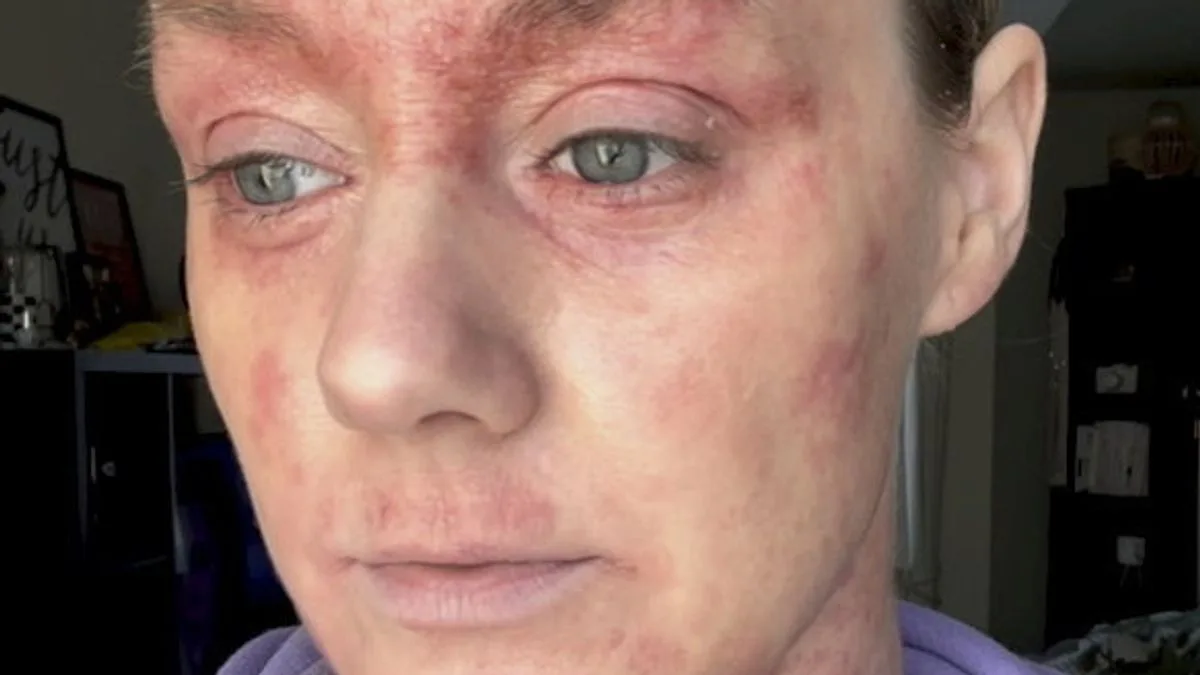
Hundreds Report Severe Skin Condition TSW as Medical Community Remains Baffled
A significant number of individuals across the country have reported suffering from a poorly understood but severe skin condition known as Topical Steroid Withdrawal, with many describing devastating symptoms and a struggle to find medical professionals who believe their accounts.
What is Topical Steroid Withdrawal?
Topical Steroid Withdrawal, commonly abbreviated as TSW, is a medication-induced condition that occurs when users of anti-inflammatory corticosteroid creams experience severe adverse reactions upon cessation of treatment. These creams are frequently prescribed for common skin conditions including eczema, psoriasis, and various forms of dermatitis.
The withdrawal symptoms can include intense itching, burning sensations, and widespread redness of the skin. In numerous reported cases, these symptoms have become so severe that they surpass the original conditions the creams were intended to treat, leading to hospital admissions and prolonged suffering.
Patient Experiences: Agony and Medical Disbelief
Bethany Norman, a 36-year-old mother, represents one of the many patients who have contacted media outlets about their harrowing experiences with TSW. She recalls screaming in agony from the extreme pain caused by the condition, which she believes developed after using prescribed corticosteroids for lifelong eczema.
"I've been told by countless medics that all I have is a severe flare up of eczema and steroid creams will sort it," Norman revealed. "They just made it worse."
Her experience has been so traumatic that she has vowed never to allow her baby son to use corticosteroid creams, stating: "Look at what this medication has done to me? Why would I put it on my own son?"
Norman's struggle for recognition was particularly challenging, as she reported consulting approximately thirty different doctors, none of whom initially believed her claims that the creams had ceased to be effective.
"I was being prescribed the strongest potency, I was rubbing it on the affected areas but within minutes the inflammation was back," she explained, highlighting the frustrating cycle of treatment and reaction.
Medical Perspective: Recognition and Caution
Jenna Crosbie, a trainee general practitioner based in north Wales, provided insight into the medical community's perspective on TSW. She acknowledged that doctors are traditionally taught that corticosteroids represent the first line of defence for conditions like eczema, making recognition of withdrawal symptoms particularly challenging.
Crosbie recalled encountering a patient with TSW while working in accident and emergency, initially questioning why they would refuse steroid treatment given its proven benefits. "I remember thinking it looked like the most severe full-body eczema I'd ever seen, and I couldn't understand why the patient was refusing steroids," she admitted.
Her perspective changed dramatically when she personally experienced skin changes after using corticosteroid creams for periodic eczema outbreaks. Noticing that treated redness began spreading, she decided to cease using the creams with support from an understanding GP.
Growing Medical Acknowledgement
Despite initial scepticism within some medical circles, TSW is increasingly being acknowledged as a genuine condition. Medical professionals have begun warning that general practitioners may be too quick to prescribe corticosteroids without sufficient consideration of potential withdrawal effects.
Dr Dean Eggit, a general practitioner from Doncaster, explained the diagnostic challenge: "Unfortunately the beginnings of TSW can look like the original eczema rash in the first place. So when it comes to treating those patients, there is a risk we keep prescribing them with the creams that might be causing the condition."
This recognition represents a significant step forward for patients who have long struggled to have their symptoms taken seriously, though many report that widespread understanding and appropriate treatment protocols remain limited within the healthcare system.






