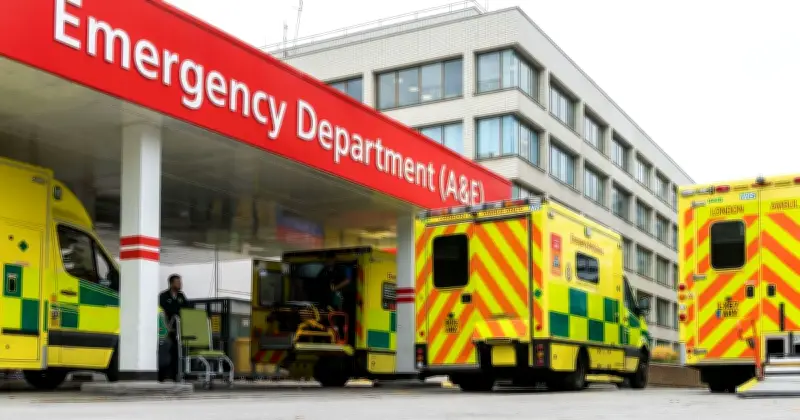
Half a million patients waited more than 24 hours in A&E last year in England, a damning report reveals. The National Audit Office (NAO) estimated that a further 1.2 million waited between 12 and 24 hours from arrival to be discharged, transferred or admitted.
Report findings
The report found that NHS England had increased resources and made improvements after the severe impact of Covid-19, but these were “smaller and slower than hoped for”. Medical leaders and experts urged the Government to reform social care and reduce discharge delays which cause bottlenecks for patients arriving at hospitals.
Caroline Abrahams, charity director at Age UK, said: “It’s terrible that delayed discharges are so high and continuing to rise, this is truly a crisis hiding in plain sight. They do enormous harm to older people and cost the NHS and the taxpayer an absolute fortune.

“What’s more, we will never end the horror of corridor care at the front door of hospitals, for as long as we fail to get a grip on the problem of delayed discharges at the back door.”
Experts respond
Dr Ian Higginson, president of the Royal College of Emergency Medicine, said the NAO’s findings “will come as little surprise to those working in emergency departments”.
He added: “It confirms what we’ve been saying for years. The system is in a state of permacrisis. Our hospitals do not work efficiently seven days a week, and services aren’t open when they are needed.
“Delayed discharges — where patients who have no medical need to stay in hospital cannot be discharged, largely due to the unavailability of follow-on services — result in a log jam effect that causes overcrowding in emergency departments and puts lives at risk.”
The NAO report cited previous research which suggests that people who endure waits of 12 or more hours are “twice as likely to die within 30 days of leaving A&E, compared with those who only wait two hours”.
Impact and costs
It also noted that hospital trusts reported spending £6.6 billion on emergency services in 2024-25, while NHS England has estimated that delayed discharges cost £2 billion between August 2025 and April 2026 alone.
A record of more than 14,000 patients on average were experiencing delayed discharges in July, and 2,300 patients received corridor care per day.
Professor Nicola Ranger, general secretary and chief executive of the Royal College of Nursing, said there had been “precious little improvement to the serious pressures” staff have been facing for years.
She blamed an “unacceptable” lack of funding for social care, adding: “The real human cost of long waits and overcrowding is patients languishing in corridors, going into cardiac arrest, receiving intimate care, or being given end-of-life news in full view of others.
“Now more than ever, we need ministers to make good on delivering a national care service and to recognise how investing in the nursing workforce closer to peoples’ homes, like those in the community, can improve hospital performance.”
Demand and performance
The NAO report acknowledged that demand on A&Es has hugely increased in recent decades. There were 28 million attendances in 2025-26, up from 21.5 million in 2011-12.
A long-standing target for 95% of patients to be discharged, transferred or admitted within four hours has not been met since 2013-14. A new, lower target of reaching 85% by 2028-29 was set in 2023.
The NAO found there had been a gradual improvement post-pandemic. The NHS met the four-hour standard for 74.9% of attendances in 2025-26.
Meanwhile, the cost per patient for a single A&E attendance has increased by a third when adjusted for inflation, from £211 in 2018-19 to £280 in 2024-25.
Recommendations and response
The report recommended that health officials look at successful approaches from high performing trusts and try to replicate them elsewhere.
It called for trusts to be supported “to more consistently use end-to-end hospital flow management tools and reduce discharge delays caused from within hospitals”.
And it said patient feedback and other measures of their experiences should be included in routine performance monitoring.

Gareth Davies, head of the NAO, said: “Despite significant efforts to improve A&E performance, patients continue to experience long waits and delays in care.
“NHS England and DHSC need to understand more fully why improvements have been slow and ensure successful approaches are adopted more consistently across the system.
“A stronger focus on patient flow, timely discharge and patient experience will be vital to improving outcomes for patients.”
A Department of Health and Social Care spokesperson said the Government "inherited an NHS under huge pressure particularly in emergency care".
They added: "While there are encouraging signs of progress, including the best ambulance and A&E performance in four years last winter, we know too many patients are still waiting too long for urgent care.
"We are taking action to improve patient flow through hospitals, tackle corridor care and cut delays, including deploying expert teams into the most challenged trusts, publishing corridor care data for the first time and investing £450 million to improve urgent and emergency care.
"Alongside this, we are expanding urgent care centres and mental health A&Es, shifting more care into the community and working with social care partners to help people leave hospital safely and on time, supporting a more resilient NHS for the future."