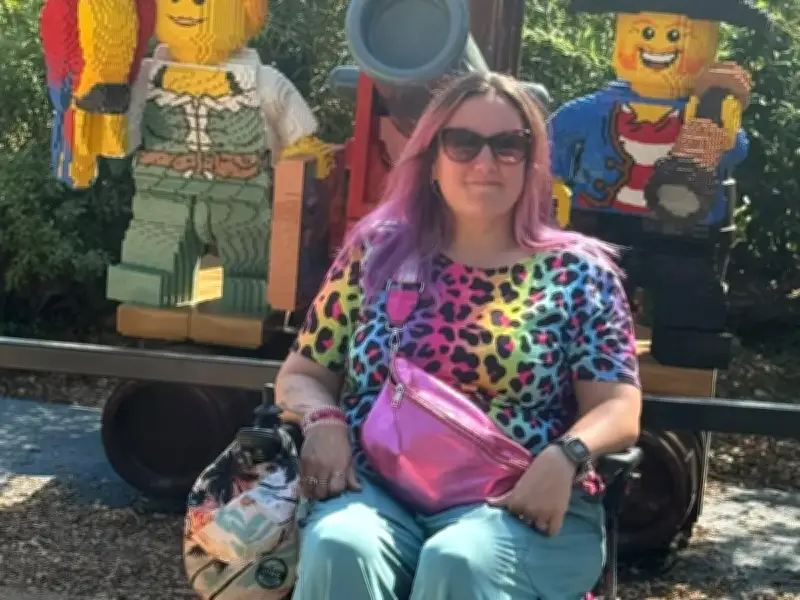
Maddy Alexander-Grout, a 42-year-old from Southampton living with multiple health conditions, says she has been left scared to claim Personal Independence Payment (PIP) because she fears the 'PIP police' will target her if she orders a takeaway or gets her nails done.
Maddy, who uses a wheelchair and lives with Hypermobile Ehlers-Danlos syndrome, says she has been branded a "benefits scrounger" by strangers who tell her to "get back to work" – despite still working and paying for her own holidays. On her worst days, she struggles to move or walk because of severe pain in her back, hips and legs.
Fear of online abuse
"I flit between wanting to claim PIP and being absolutely terrified of it," Maddy, a disability advocate and ADHD coach, told NeedToKnow. "I get a lot of abuse online already. Trolls call me a benefits scrounger – despite the fact I work – and accuse me of 'spending taxpayer money' on enjoying myself. Most days, I can’t walk or stand, which rules out any job that isn’t online – but I also can’t sit at a desk for eight hours straight anymore."
She added: "Not claiming benefits has become armour – like a layer of protection against people who will use this ‘status’ to attack me. Went to a festival? Fraud. Got my nails done? Call the DWP. Bought a takeaway? Straight to jail. I can laugh about it, but underneath the jokes, I’m actually scared. There are some deeply unpleasant people out there. The thought of making that target bigger genuinely frightens me."
Health deterioration and rising costs
Maddy has lived with disabilities since childhood, but her autoimmune condition was only diagnosed in 2022. Over the past year, her health has deteriorated significantly, and the cost of remaining independent is mounting. Her wheelchair, which she got after an accident in May, cost around £2,000, while mobility equipment including spare batteries brought the total to around £3,000. She also spends £450 a month on medication, treatment for Ehlers-Danlos syndrome and therapy, plus extra heating and cooling of her home to cope with her symptoms.
She often relies on taxis to get around, including for work meetings in London, because the Underground is not reliably accessible for her needs. PIP could cover her extra costs if she applied, but she says potential backlash is a real concern.
Work and daily life
Maddy, an ambulatory wheelchair user who can sometimes walk with a stick, says people question her disability when they see her standing or walking. "Just because I stand or walk sometimes doesn’t mean I am not still in pain. It most definitely doesn’t take away my disability. I am very visible and I am not about to stop living my life to please people who don’t have a clue about how disability works."
She has also delayed applying for PIP because she finds the process exhausting. "It’s horrible that people have to be scared of claiming something they may be entitled to. I don’t have the energy to do it; it is long and dehumanising."
Maddy, who has worked since she was 14, insists that if she receives support, she will not give up things that bring her joy. "I’ll still go to gigs and festivals. I’ll still get my nails and eyelashes done, get takeaways when I can’t cook and dance when my body lets me. Getting disability support does not require you to surrender your right to have a life. People need to stop judging others. The whole point of PIP is to help people with personal independence so they can enjoy their lives. Most disabled people would hand back their benefits if they could hand back their disability. Disabled people are still allowed to have a bloody life."