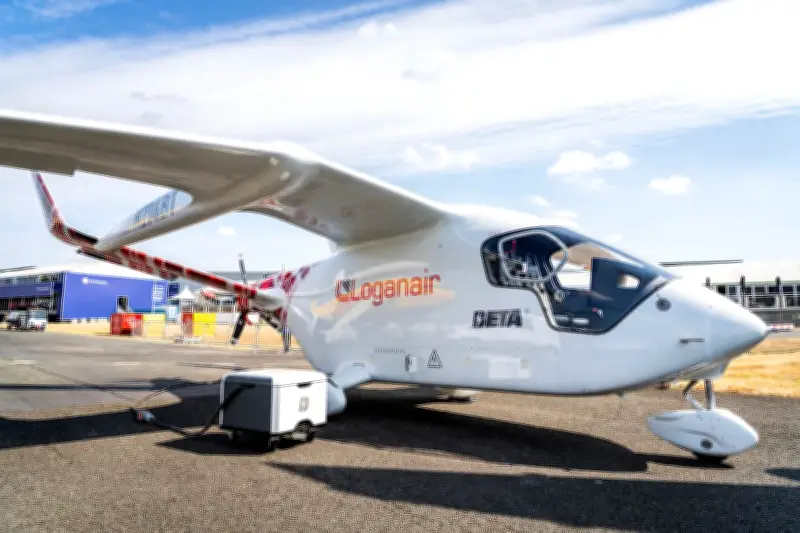
Loganair has announced plans to operate a fleet of at least five electric aircraft for passenger and cargo services starting in 2029, marking a historic step for European aviation. The Scottish regional airline confirmed it will be the first commercial carrier in Europe to deploy an all-electric fleet, following a successful trial earlier this year.
Purchase Agreement at Farnborough Airshow
At the Farnborough International Airshow, Loganair signed a purchase agreement for Beta Alia CX300 all-electric planes, with an option to acquire an additional five aircraft. The CX300 is designed for short-haul routes, aligning perfectly with Loganair's operational profile: most of its flights are under 100 miles. The aircraft can operate from existing runways and recharge in 20 to 40 minutes.
CEO Highlights Viability and Cost Savings
Luke Farajallah, chief executive of Loganair, described the announcement as a "truly historic moment" for both the airline and European aviation. "Our demonstration programme earlier this year proved that electric aviation is no longer a future concept, it is a viable commercial opportunity," he said. Farajallah noted that the aircraft demonstrated potential operating cost reductions of up to 80% while maintaining reliable regional connectivity. "Signing this agreement is the natural next step in that journey. It reflects our confidence in the technology, our partnership with Beta, and our ambition to remain at the forefront of sustainable regional aviation," he added.
Beta Technologies CEO on Rigorous Testing
Kyle Clark, founder and chief executive of Beta Technologies, emphasized the thorough evaluation process. "Loganair has spent six decades connecting communities that rely on air travel, so their standard for new technology is appropriately high. We met that standard the only way it can be met, by flying more than a thousand nautical miles across their network, on their routes, and in their conditions," he stated.
Impact on Regional Aviation
The move positions Loganair as a leader in sustainable regional aviation, potentially inspiring other carriers to adopt electric technology. With short routes and frequent flights, regional airlines are ideal candidates for electrification, offering significant environmental and economic benefits. The aircraft's rapid recharge time and compatibility with existing infrastructure reduce barriers to adoption.