Proposals to designate land for nearly 300 homes have raised concerns over the potential impact on one of Wales' most important bat roosts. The inclusion of an 11-hectare site at Leasbrook, Monmouth, in a proposed development plan has drawn opposition from environmental regulator Natural Resources Wales (NRW) due to uncertainties surrounding its effect on a protected bat roost.
The land has been identified as suitable for the potential development of up to 270 houses in Monmouthshire County Council's replacement local development plan, which pinpoints potential new housing sites throughout the county. Public hearings scrutinising the council's proposed planning blueprint through to 2033 have been ongoing this week, with independent inspectors examining the plan and hearing from objectors during online meetings.
Concerns over protected bat habitat
On Tuesday, October 6, concerns regarding sites in Monmouth were put forward, with some objectors gathering at a Baptist Church in the town to listen to and address the hearing. Inspectors Claire MacFarlane and Julie de-Courcey will hear objections to proposed sites at Mounton Road, Chepstow, as well as former Ministry of Defence land at Caerwent on Wednesday, October 7. They will also examine the allocation for employment use at Newhouse Farm Industrial Estate and the use of land near Piercefield Public House, St Arvans.
Proposed allocations for sites accommodating up to 700 homes east of Caldicot and north of Portskewett will be considered on Thursday, October 8.
Council and NRW disagree on evidence
At Tuesday's hearing, the council acknowledged it accepted "some scientific uncertainty around" the contribution made by the Leasbrook site to the Forest of Dean and Wye Valley Bat Sites Special Area of Conservation (SAC), though it stated it believed this does not indicate an adverse effect, as it considers only a modest portion of the bats' foraging area would be lost. Council officers, alongside a representative for the landowner who has proposed the site, told the hearing they did not accept NRW had identified a "reasonable scientific doubt".
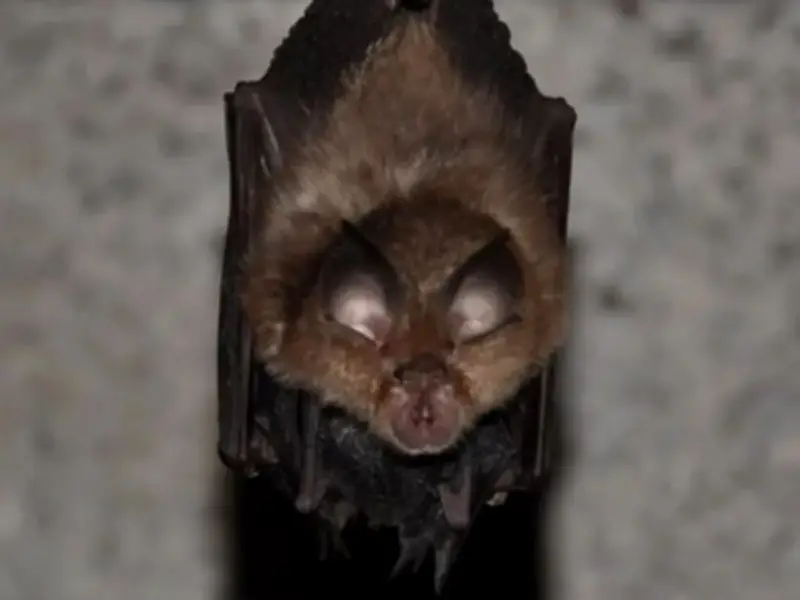
Monmouthshire council ecologist Kate Stinchcombe said case law confirms the authority is entitled, with justification, to overrule NRW's objections. She said there was insufficient evidence the site is "critical" to the landscape supporting the nearby Newton Court stable block, which has the highest level of protection as a Site of Special Scientific Interest (SSSI) for its maternity bat roosts of the endangered Greater and Lesser horseshoe bats. She said NRW has not had a "clear plan" for the site and stated: "There is an 18-year-old core management plan based on maintaining a site of 80 bats. We now have a population of 317 Greater horseshoe bats at that site."
Importance of grazing land for bats
Council director Craig O'Connor said there is no mechanism for the authority to ensure a site remains in use as grazing land, but inclusion as a development site would enable it to require mitigations are in place and balance protections with the need for affordable housing. Sam Dyer, NRW's national specialist for bats, explained the fields are vital to the protected area and the neighbouring stable block with its young population, which he noted is already affected by other factors seemingly hampering its development.
Juvenile bats depend significantly on dung beetles generated by cattle-grazing pasture, Mr Dyer stated, and losing that land at Leasbrook would be considerable given its proximity to the roost for younger animals. He also observed that while the population at Newton Court had expanded, it was at a slower pace compared to other regions. He said: "Compared to regions such as Pembrokeshire the rise is quite small the numbers there are now up to three times found at Newton Court. Obviously it is coping with something sub optimal already."
Campaigners highlight roost's significance
Monmouth-based campaigner Jonty Pearce revealed the Dixton Bat Project, Gwent Wildlife Trust and three bat specialists have objected to incorporating the site in the plan. He explained Newton Court is amongst only five known maternity roosts in Wales and the sole one in Monmouthshire, and a Freedom of Information request he had submitted revealed last year's population was 330, indicating there may already be a decline.
Mr Pearce described Newton Court as "one of the most important population of Greater horseshoe bats in Britain" and noted that while the species was formerly widespread across Britain and northern Europe, it is now regarded as extinct or exceptionally rare in nations including the Netherlands, Belgium and parts of Germany. Inspector Ms MacFarlane stated the "matter of uncertainty" is an issue she must establish during her examination of the plan, on behalf of Welsh Government body Planning and Environment Decisions Wales (PEDW), to assess whether it is "sound" and can be adopted as the council's planning policy until 2033.