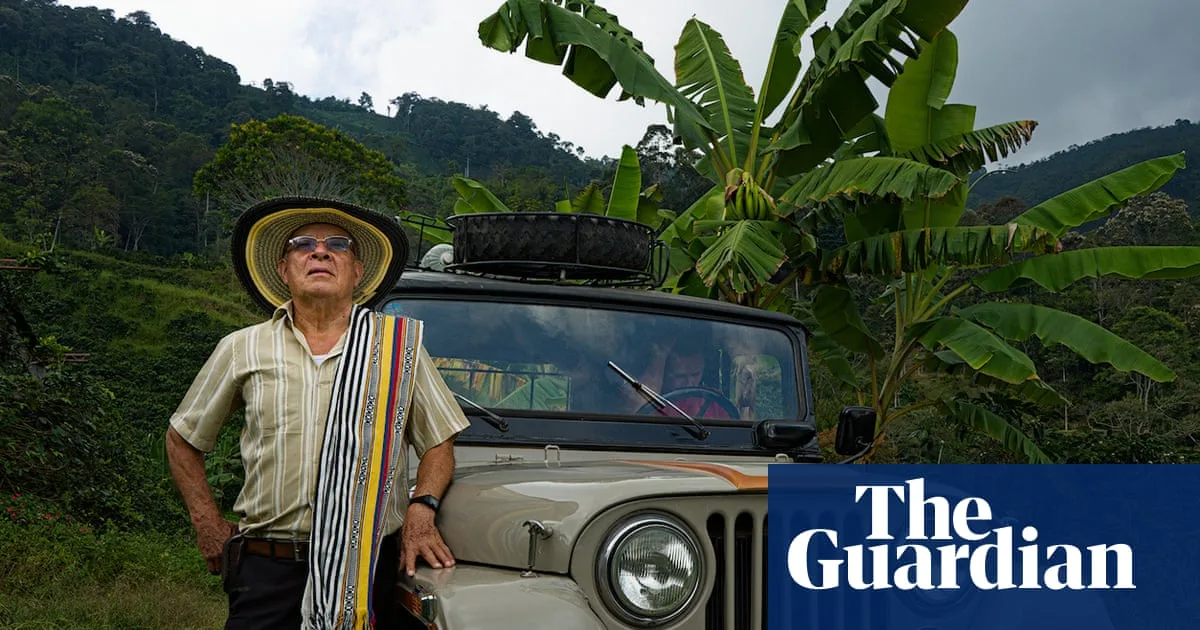
Colombian coffee farmers are facing an extraordinary paradox: historic harvests and record prices, yet a severe shortage of labour is leaving part of the crop to rot on the ground. Fourth-generation growers Mary Luz Pérez Arrubla and her brother Rodrigo, who cultivate coffee on steep Andean slopes near Líbano in Tolima, lost 10% of their harvest this year. “We could not stop. All week, every week, for two-and-a-half months, we picked coffee,” Mary said. “I had to gather the coffee from the ground. It seemed that there was more of it lying on the floor than still on the branches.”
The surge in global coffee prices, which hit record highs for a second consecutive year in 2025, was driven in part by severe US tariffs imposed on Brazil and Vietnam, the world’s two largest producers, as well as poor harvests there. Both countries were hurt by the El Niño phenomenon, a cyclical weather pattern marked by dry spells and aggravated by the climate crisis. Those same conditions favoured many of Colombia’s high-altitude coffee-growing regions, making the labour shortage all the more frustrating.
Colombian coffee production is increasingly vulnerable to climate change. Average mountain temperatures have risen by about 1.2C since the 1980s, while hours of sunlight have fallen by roughly 19%. Farmers link these shifts to more droughts, heavier rains, and a rise in pests and diseases. Studies suggest that between 2041 and 2060, yields could fall by about 8% in lower-altitude areas but rise by 16% at higher elevations, pushing cultivation further upslope.
The scramble for pickers has become desperate across the country. According to the national Coffee Growers Federation, the number of people working in Colombia’s coffee industry has shrunk by a quarter in a generation, while the proportion aged over 60 has more than doubled. Decades of conflict have driven millions from the countryside, and young people continue to leave for cities where wages are traditionally higher. Farm manager Wilder Gomez, who struggles to hire 10 to 20 workers when he needs 30, said: “It’s brutal. It’s hard to find people.”
Even higher pay has failed to attract enough workers. Jacqueline Mazza, a professor of labour markets and international development at Johns Hopkins University, said pickers are drawn to cities by better access to services, opportunities for growth, formal work and stability. Mechanisation, which has helped Brazil cope with rural abandonment, is not an option in Colombia’s rugged terrain. “Brazil’s flat fields and distinct seasons let machines work. But our mountains? Every slope is different,” said Yinson Javier Díaz, an agronomist with the growers’ federation in Tolima. Machines also cannot distinguish between ripe and unripe coffee cherries, a particular problem in the Andes where cherries on the same branch can ripen at different times.