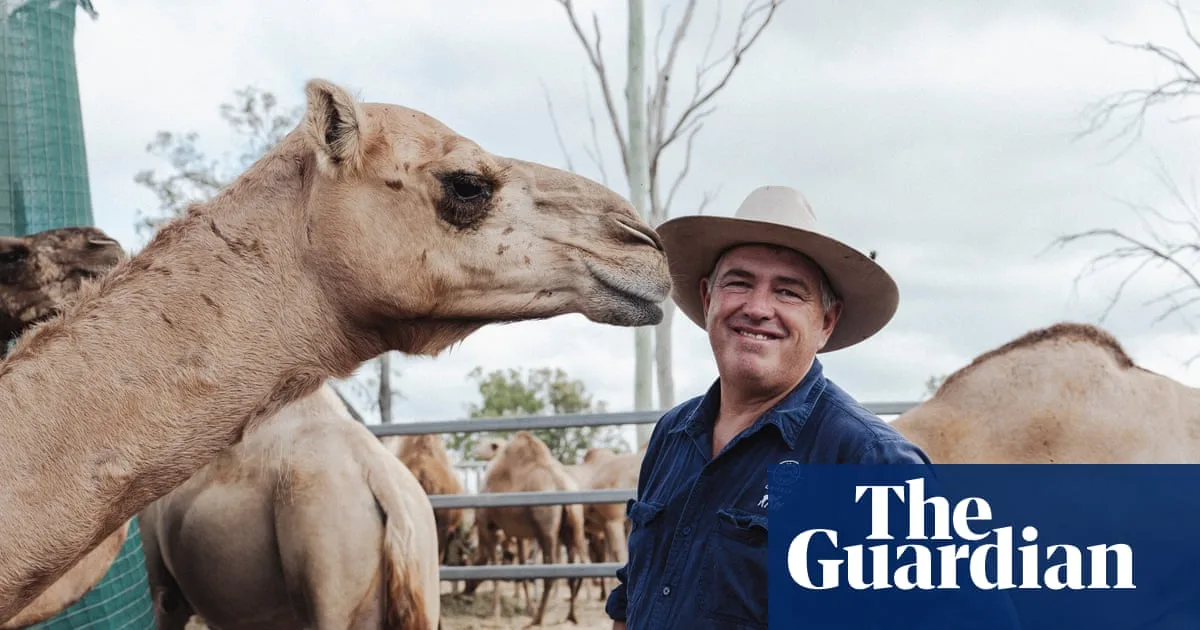
An Australian farmer is planning to export camel milk to the United States, betting on its appeal as a 'superfood' and its potential to become a major new commodity. Paul Martin, who runs one of Australia's first commercial camel dairies on a 130-hectare farm in Queensland's Scenic Rim, hopes to ship 60,000 litres this year.
Martin's star camel, Caroline, produces more than double the milk of an average wild-caught camel, and he believes her bloodline could help build more productive herds. Unlike cows, camels can 'hold their milk', requiring careful handling and psychological coaxing rather than force. 'Once you do that with these animals, they're like a grass-eating labrador,' Martin said.
Camel milk is naturally homogenised, freezes and thaws well, and lacks the major allergen in cow's milk, making it suitable for people with allergies or conditions like diabetes and eczema. It has been marketed as a 'superfood', attracting interest from wellness enthusiasts. The milk is also a staple in east African and Arab cultures, and Martin sees potential among migrant communities in the US.
Australia's advantage lies in its large population of feral camels, estimated at 300,000 after a culling program between 2010 and 2013. Dr Carol Booth of the Invasive Species Council said culling is the only realistic way to control the animals, which damage desert ecosystems and remote communities. Martin hopes to use the feral herd as a nucleus for the industry, provided they are not all culled.