Michael Sheen's portrayal of Owain Glyndŵr in Welsh National Theatre's Owain and Henry is an in-your-face masterclass bristling with Welsh pride, according to a review that found one thing to rage about: the deliberate mispronunciation of the Welsh prince's name.
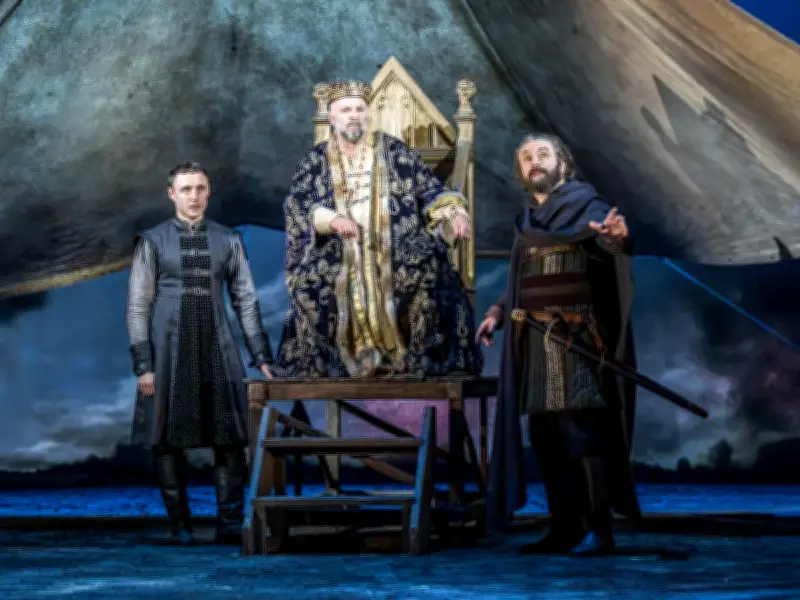
The production, now playing at the Donald Gordon Theatre at Wales Millennium Centre until November 28, 2026, tells the story of the Welsh rebellion led by Glyndŵr, Wales's last Welsh-born prince. Sheen is joined by Nigel Barrett as Henry IV and Ned Costello as Hal, the heir to the English throne.
A Passionate Retelling of Welsh History
The three-hour show, with a healthy interval, is an entertaining telling of the rebellion, featuring rousing speeches from Sheen's titular character and scene-chewing English superiority from Barrett and Costello. Costello is described as marvellous as the malicious, bloodthirsty and spoilt prince, giving shades of panto villain expertly balanced with the utter bastard-ness of Hal.
Costello brilliantly gets under the audience's skin, not least with his spitting out of the name "Owen Glendower" rather than Owain Glyndŵr, which reviewer Kathryn Williams said drove her up the wall the entire production. She described it as a purposeful ignorance of Welsh pronunciation that weaved its way through the play.
Resonating with the Welsh Experience
While acknowledging it is a drama, the review notes the mispronunciations resonate with the Welsh experience of decades and centuries, even now, as part of undermining the validity and confidence of a nation. The utter dismissal of Wales and the Welsh is always front and centre, without the feeling of "oh poor us," and more the feeling of "we'll probably go down, but we've got fire in our bellies so let's go down with a fight."
At one point the rebels are told a people cannot survive through song, and Costello's attempted takedown of "The Walish" is spiked with historical and contemporary slights of Wales, its language and character. He is drowned out by those on stage and the audience.
Humour and Heart in the Performance
Legend has it that Glyndŵr went into hiding after his rebellion ended, and the play heavily leans on the concept that his fire, spirit and passion is something that has carried the Welsh through the ages. The review notes a nod, purposeful or otherwise, to Yma O Hyd in closing monologues, with the proclamation of "we're still here."
The play is also funny, with natural Welsh humour and delivery elevating what could be a dry and heavy historical piece. The lighter moments make the brutal, serious scenes carry more weight. Rakie Ayola, as Glyndŵr's wife Marged, is described as a joy to watch live on stage, and the use of singing and dance performances kept up the tempo, with inventive and captivating staging.
For non-Welsh audiences, the review says it is absolutely a play to revel in, with immense performances and on-stage action that holds attention. The review concludes with a sense of Welsh energy, noting that "we are still here" - living, thriving and beating the All Blacks.