Kelly Gough delivers a mesmerising performance as Abbie in Ebenezer Bamgboye's stylised staging of Eugene O'Neill's Desire Under the Elms at the Almeida theatre, London. Part-Phaedra and part-Medea, Gough is simply astounding as the production reaches the heights of Greek tragedy.
O'Neill's play was originally set on a mid 19th-century farm, but this version brings modernity with its sleek storytelling while nodding to the ancient Greek drama the playwright was emulating in his 1924 work about illicit desire and a father-son fight for land.
A strange mix of styles
The result is a strange mix at first, beguiling and bewildering in equal measure. Bamgboye employs some of the striking theatricality he brought to his magnetic adaptation of The Lonely Londoners two years ago. It is an original refashioning, with the script sharper and less of the exposition that might date it, but the directorial flourishes come so thick and fast that it is stylised to the bone.
Bamgboye has previously worked with Rebecca Frecknall, who staged the leaden O'Neill drama A Moon for the Misbegotten last year, and the first half seems to pay too big a debt to her style of work.
A racial dynamic added
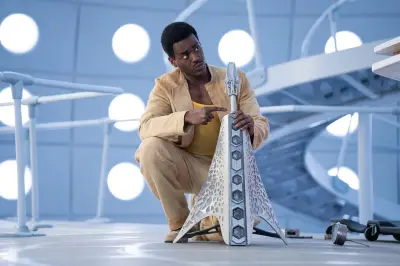
Ephraim (Antony Byrne) is an irredeemably tyrannical father, and Eben (Zackary Momoh) his calculating son. Eben sees off his two half-brothers in hope of claiming this farm, passed down from his late mother, as his own, when Ephraim brings home a young new bride, Abbie. “I can't believe all this is mine,” she says, crowingly, when she sees the farm. So begins the fractious relationship between Abbie and Eben.
There is an attempt to tell O'Neill's story on another level, with a racial element added. Set in the deep south rather than its original north-east, the dynamic is that of a white father and Black son through its casting. Eben speaks of his father's slave-driving and his wrongful ownership of stolen land; Ephraim's iron-rod rule begins to look like that of a plantation owner.
Music and movement interpret emotion
As in Frecknall's production of A Streetcar Named Desire, music interprets emotion, from screams to sexual overtures and angry clashes. A live, roving trumpet and guitar interject in these moments, the musicians stalking the auditorium like musical ghosts, along with the spectre of Eben's dead mother, singing languorously.
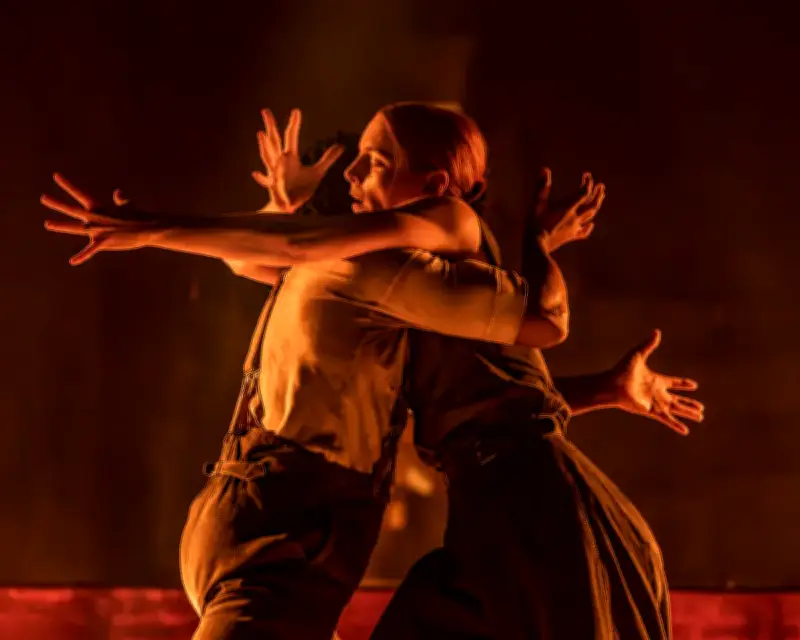
Movement is key, with sex or violence also transposed to dance, or jagged, jittery twitches. The effect is sometimes arresting but also overwrought. The sexual chemistry between Eben and Abbie is so choreographed that it does not give off enough heat. The ghostliness and gothicism seems over-egged with smoke rising from the blank canvas of darkness on Basia Bińkowska's non-realist stage design.
A powerful second half
But it rights itself, and the overload of manufactured expressiveness gives way to something far more elemental in the second half when this production allows its actors simply to act. Momoh is good, but Gough, whose sister Denise played the same role in a production 14 years ago, is off the scale.
The tension takes on a vice-like grip as the music, movement and gothicism come together. This is artistic director Rupert Goold's final production before his departure and is not perfect yet it rises to become incredibly powerful. At Almeida theatre, London, until 23 December.