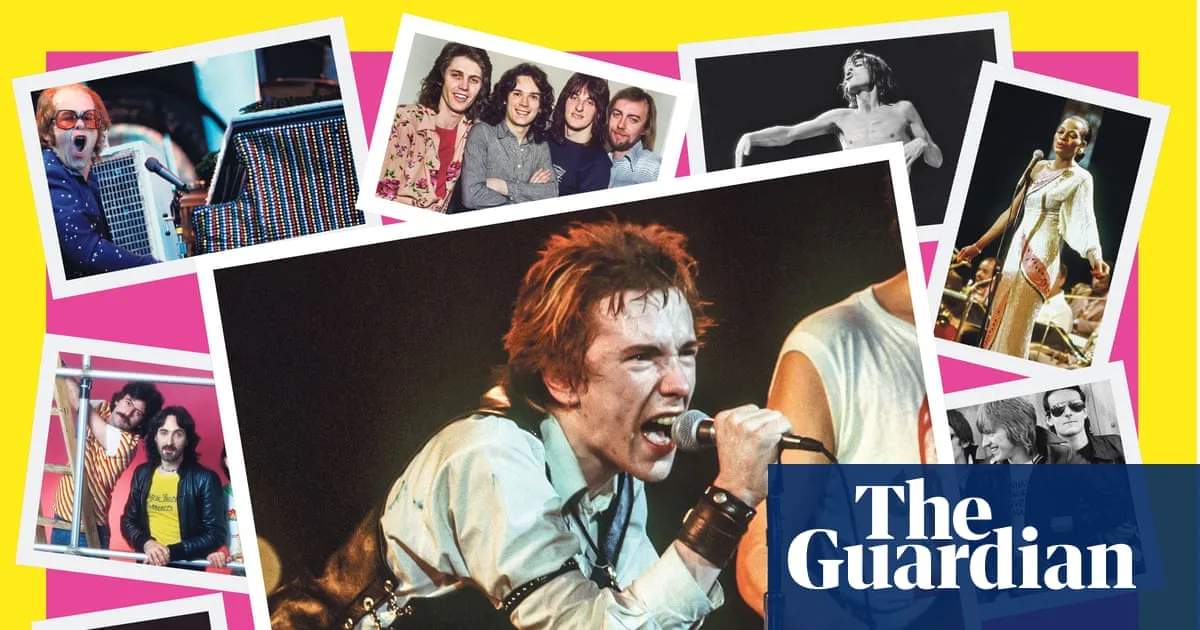
Fifty years ago this week, the Sex Pistols played their first Manchester gig at the Lesser Free Trade Hall, a performance that has since been mythologised as the moment punk exploded. But what was the musical landscape like before that summer of 1976? A new look back at the era reveals a lost world of forgotten bands and genres, from swing to 'spaghetti rock', that were swept aside by the punk revolution.
In January 1976, the NME cover featured a photo of a room damaged by an IRA bomb, with the headline: 'Is rock'n'roll ready for 1976 … Is 1976 ready for rock'n'roll?' Writer Mick Farren complained that rock had 'lost its guts' and was on an 'unalterable course to a neo-Las Vegas', with artists 'totally insulated from the real world'. By June, he reiterated these points in a piece titled 'The Titanic Sails at Dawn', signalling that some new artists agreed with him.
The summer of 1976 saw the live debuts of the Clash, the Damned and Buzzcocks, the arrival of the fanzine Sniffin' Glue, and the first British gig by the Ramones. By September, the Sex Pistols had made their first TV appearance, and Siouxsie and the Banshees and the Subway Sect had played their first gigs. The 100 Club hosted its legendary punk festival, and punk began to obliterate everything that came before it from collective memory.

Reading the weekly music papers from 1976 is a plunge into a past that feels unacquainted. Bruce Springsteen's name was a byword for desperate hype, while Nils Lofgren was tipped for superstardom. The big names—Elton John, Paul McCartney, Queen—were discussed in terms that seem odd today, such as an NME cover asking 'Is Your Fave Rave Rock Star Old Enough to Be Your Father?' and a spread damning stars who would turn 30 in the next year.