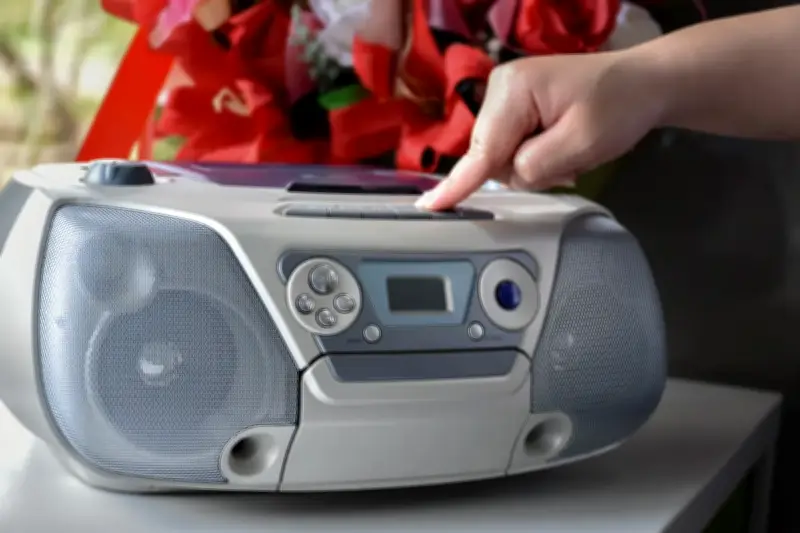
Adrian Chiles blames the shuffle button on his first CD player for starting him on a path to a scattered mind, unable to focus on anything for more than a few minutes or even seconds. He traces this back to 1989, when he bought a CD player and was told by a shop assistant that shuffling tracks could breathe new life into an album.
The moment everything changed
Chiles, who received an ADHD diagnosis later in life, says he used to read books, watch long films and listen to whole records. Now, even a TV drama or football match holds his attention for only a few minutes before he reaches for his phone. He cites a tweet by American writer Delia Cai, who berated herself for "another day of staring at the big screen while scrolling through my little screen so as to reward myself for staring at the medium screen all week."
In 1989, he bought two CDs: an album he did not own and an album he had listened to many times on his turntable. He listened to Edie Brickell and New Bohemians' Shooting Rubber Bands at the Stars from start to finish, but when he pressed shuffle on Bob Dylan's Blood on the Tracks, he found the experience disorientating. "It felt like something had changed beyond the mere order of the tracks – the whole natural order of things perhaps," he writes.
From shuffle to skip
Before that, listening to music meant dropping a needle on a record and hearing the whole side. He notes that enjoyment of a favourite track was enhanced by a preceding song he was less keen on, such as If You See Her, Say Hello following Lily, Rosemary and the Jack of Hearts. The shuffle button led to the skip button, which he says marked the end of music listening as he knew it.
He admits he has not listened to Lily, Rosemary and the Jack of Hearts since, and with Edie Brickell, he only enjoyed track six, Circle, so he skipped to it each time. "Gratification: instant. Music-listening experience: diminished. Ability to concentrate: impaired," he summarises.
Streaming era and skipping statistics
Nearly four decades later, he asks who listens to whole albums now. On his radio show, he wondered whether the question should be who manages to get to the end of a whole song. Spotify's end-of-year Wrapped feature introduced a Top Albums metric in 2025, but the company says albums make the list when a listener has heard at least 70% of an album's tracks, not necessarily all at once.
For individual songs, Spotify does not publish its data, but a peer-reviewed study from 2020 found that a quarter of songs are skipped within five seconds, and only about half are listened to all the way through. Chiles concludes that skipping music, words, pictures, films and anything demanding attention is leading to "species oblivion."