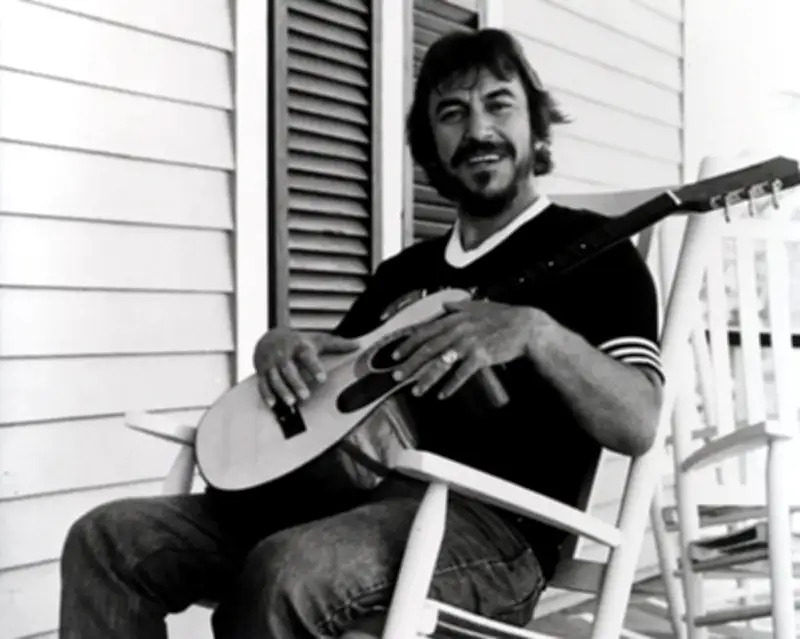
Bobby Charles, the reclusive Cajun songwriter who wrote 'See You Later, Alligator' and whose songs were recorded by Fats Domino, Etta James, and Kris Kristofferson, is the subject of a new career-spanning box set, The Bobby Charles Story. The release aims to establish Charles, who died in 2010, as one of the great American songwriters.
Charles, born Robert Charles Guidry in Abbeville, Louisiana, in 1938, could not play an instrument, yet his compositions were performed by a wide range of artists. After being signed to Chess Records in 1955 at age 17, he was on the verge of becoming a star at the dawn of rock'n'roll, but he chose a reclusive life, which included keeping a pet alligator.
A Unique Songwriting Voice
Those who knew him describe a singular talent. "Bobby's songs sound like him talking to you," says Beth McKee, a New Orleans-based singer-songwriter. "They're conversational, but never ordinary. He had a way of getting right to the heart of something without dressing it up."
Korey Richey, a multi-instrumentalist with LCD Soundsystem, recalls hearing Bob Dylan praise Charles on his radio show. "He said, 'Bobby Charles is best known as a songwriter, but he has one of the most melodious voices ever transmuted into a piece of vinyl.' I thought about it, and I agree: Bobby Charles was something else."
Geoff Muldaur, who played with Charles in the band Better Days, adds: "Bobby had the most beautiful speaking voice. French was his first language and he spoke English in a unique way. Actually, everything he said sounded like a song title."
From Chess Records to the Bayou
Charles's career began when a record shop owner heard the crowd's reaction to his original song 'See You Later, Alligator' at a concert in Crowley, Louisiana. The owner called Leonard Chess, who had young Charles sing the song over the phone, leading to a recording contract and a session in New Orleans.
After 'Later Alligator' (as Chess abbreviated the title) became an R&B hit, Charles was flown to Chicago. He was the only white artist on a Chess package tour headlined by Chuck Berry, and he later recalled the dangers of touring in the segregated South. "A couple of white guys tried to shoot me, 'cos they didn't want to see me hanging out with the Black guys," Charles said in 1995.
This experience, along with Bill Haley's huge hit version of 'See You Later, Alligator', led Charles to stop performing almost entirely. He became a songwriter for other artists, helping pioneer the swamp pop sound, a blend of Cajun, country, and R&B.
Later Life and Environmental Concerns
After a brief attempt at running his own label and a move to Nashville, Charles settled in Woodstock, New York. There, he was signed to Albert Grossman's Bearsville label, and his 1972 self-titled debut album was backed by the Band and Dr John. Charles sang backing vocals on the Band's live Rock of Ages album and appeared at their 1976 farewell concert, The Last Waltz.
Charles did not release new music until the 1987 album Clean Water, which focused on environmental concerns and the pollution of his beloved bayous. He later released albums on his own Rice 'N' Gravy label, rarely performing or giving interviews.
In his final years, Charles lost his bayou house to fire and then, in 2005, Hurricane Rita left him homeless. He spent his last years living in a trailer. "Bobby would get angry at the corporations and people who dump shit in the Mississippi river," says Richey. "Louisiana's losing its coastline and, as the oil companies employ so many, people are scared to speak up. Not Bobby: he was furious at those who kill our habitat."
Malcolm Mills of the UK's Proper Records, who developed a friendship with Charles and produced the box set, says, "I wanted to honour his life and career." The Bobby Charles Story is out now via the Last Music Company.