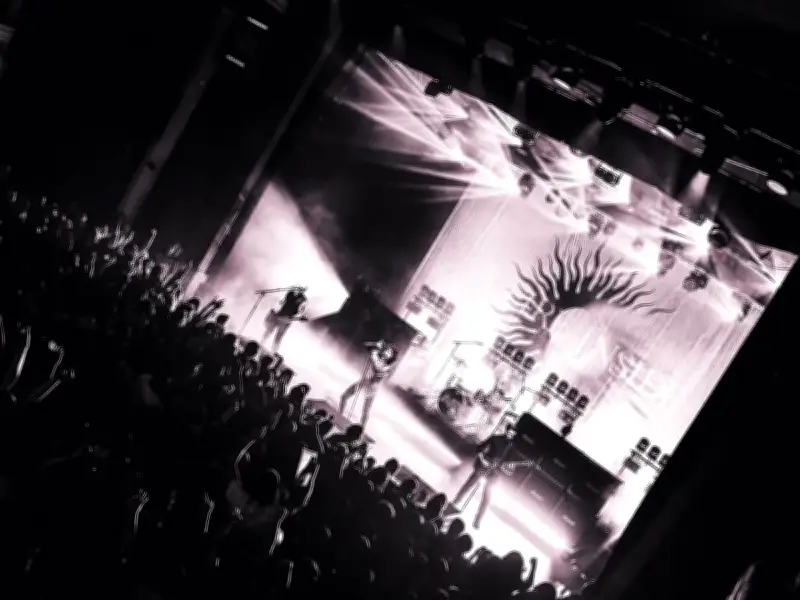
AFI (A Fire Inside) played their first UK headline show in nine years at London's O2 Shepherd's Bush Empire on August 20, delivering a theatrical performance that one fan described as a destiny-fulfilling encounter with the band that "rewired my brain."
The band, known for their cinematic and dramatic live shows, did not disappoint. Frontman Davey Havok, sporting a high-volume fluffy afro with long braided sections and a thick handlebar moustache, transformed the stage into a theatrical spectacle. He stripped down to a tight black sleeveless vest, threw himself into the audience, and climbed onto the venue's bar while singing, commanding the crowd with intense, theatrical hand gestures like an opera diva.
A Decade-Long Anticipation
The fan, Andréa Oldereide, first discovered AFI through the iconic teen drama One Tree Hill. The song that hooked her was Prelude 12/21 from AFI's 2006 album Decemberunderground. In the show's Season 4, Episode 6, the track plays over a dramatic scene where character Peyton Sawyer, dealing with trauma after being attacked by a stalker, learns to fight back in a boxing ring. The scene's emotional peak, accompanied by the song's build, left a lasting impression.

Opening act Choir Boy set the mood with darkwave sheen and melancholy, a fitting prelude to AFI's gothic/new wave era. The band, with the same four-man lineup since 1998—Havok, guitarist/keyboardist Jade Puget, bassist Hunter Burgan, and drummer Adam Carson—proved they don't just play songs; they perform them with maximum drama.
Wild Mosh Pits and Chaos
The mosh pits were described as "beautifully wild and chaotic." When the set leaned into the heavier punk catalogue, the drop in The Days of the Phoenix opened the pit into a full circle rush, while constant waves of crowdsurfers kept security busy at the barrier. In the tight, historic theatre with limited floor space, the pit swallowed the room, turning the whole place into a moving, high-intensity organism.
For the fan, standing in that packed theatre, the performance was a reminder of why AFI felt like more than just a band—they were a narrated part of her adolescence.