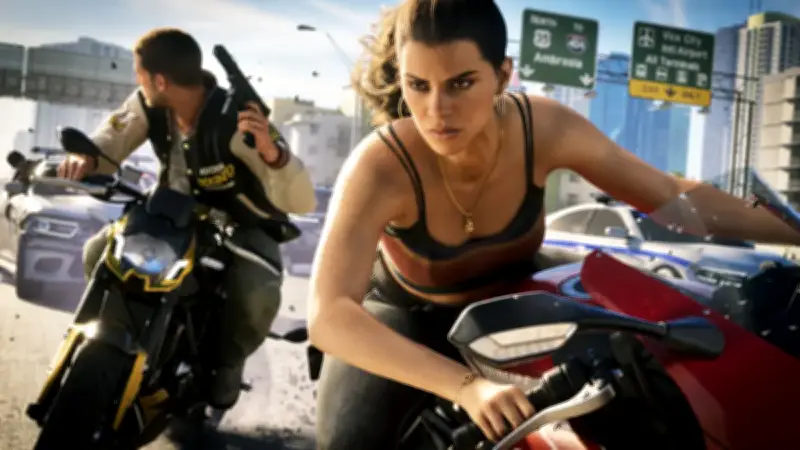
Grand Theft Auto VI presents the most extraordinarily, indulgently detailed virtual world yet seen, pairing its trademark foul-mouthed chaos with a surprisingly empathetic love story at its centre. Rockstar's latest instalment, out 19 November, places players with fugitive couple Jason and Lucia as they navigate the sun-drenched state of Leonida.
The game's realism defies belief, offering a multiplicity of experiences that make it difficult to define. It can be an interactive crime movie, a city simulator, a driving game, or an absurdly expansive version of The Sims where the people you dress up and look after happen to be professional criminals. It will be different for everyone – that is the beauty of it.
A Fugitive Couple at the Heart of Leonida
Jason is muscular, handsome, ex-military, steady and unflappable, sincere but spare with words. Lucia has been boosting cars since the age of 14, has a wicked sense of humour and takes zero bullshit. Lucia is the scarier one, with the player finding themselves turning much more quickly to violence when playing as her.
At the start, Lucia is incarcerated and Jason is working for a dodgy guy down on the marina, renting a run-down house on stilts with a pet snake. When Lucia gets out of prison, the two try to make a life for themselves, but before long they get caught up with the wrong people and have to flee the cosy life they have just started building.
For a long time, players are two-bit criminals on the run, getting in with every dirtbag petty thief and drug-runner to scrape cash together and stay under the radar. You meet hillbilly pill-heads and biker gangs, friendly conspiracy theorists, a shady doctor, Lucia's former prison friends and their lowlife boyfriends. By the time the player gets to Vice City – a glitzy den of sin where gangbangers hustle on social media – they have been playing for 30 hours. It took 70 hours to finish the game, and it could have taken longer.
Unmatched Detail and Occasional Frustration
Leonida is so lifelike that at times it beggars belief, so vast that it feels overwhelming. Outside the story missions, players can do whatever they please: nightclubs, gyms, flea markets, malls, restaurants, clothes shops, basketball courts, shooting ranges, aircraft hangars, projects and mansions, places to hunt and fish or go kayaking, gas stations and thousands of individuals engaged in conversation. Interesting things are always happening in the peripheral vision, from cops chasing someone down to plant drugs on them to overhearing an interesting confrontation.
All this detail and realism comes with disadvantages, namely complex controls and a tendency for the game's systems to collide with player intentions in unexpected ways. Missions can go south very quickly and for reasons that aren't always obvious. In every street race, the player wiped out spectacularly by crashing into something they couldn't properly see, while opponents magically recovered from every collision. This can be a frustrating game at times: unpredictable, laborious, unwieldy and, occasionally, unfair, because the player is not the master of the game world – they simply exist within it.
An Emotional Bond with the Protagonists
The key to the game's emotional impact is the bond formed with Jason and Lucia. After tens of hours in their company, watching them together – how she smiles fondly at him when they dance together, their playful banter, the stick-ups they pull off as a duo, their resilience and faith in themselves and each other in the face of escalating disaster – it becomes impossible not to care for them. They are avatars, but not blank stand-ins for the player: you decide their actions but not their personalities. They feel like real people rather than puppets dancing to your whim.
This is indicative of a tonal shift for Grand Theft Auto. The series is famous for its violence, misanthropy and pitch-black humour. This is the first GTA that wants to encourage some measure of empathy alongside its trademark violent chaos. The game offers small incentives for acts of kindness, such as texting your partner a selfie, doing your neighbour a favour or throwing your rubbish in the bin rather than dropping it on the ground. Jason and Lucia are not extravagant caricatures, but two people trying to make it in a world totally stacked against them.
If you thought this newfound heart might tone down GTA's 18-rated provocativeness, you would be very wrong. The protagonists may be surprisingly relatable, but they exist in a world that is absurdly foul-mouthed, filthy and over-the-top offensive in every imaginable way. Barely a half-hour ever goes by without someone snorting coke off a knife blade, or some full-frontal nudity. There are missions set inside a pornographer's mansion and a small-town strip club; you can visit those clubs and get a private dance. At one point Lucia opens the wrong hotel room door to see a woman in a corset wielding a golf club, thwacking balls at a guy's testicles. It does not so much push the boundaries of taste as ignore the existence of taste.
A Shift in How Women Are Portrayed
Lucia – Grand Theft Auto's first female protagonist – changed how a lot of this landed for the reviewer. There is still a lot of sexism in GTA VI's world, but now there is Lucia to react to it. This is the first GTA in which the women are treated as people, not only Lucia but also the many other female characters in the story, from up-and-coming rappers to Lucia's mother, from a jaded strip-club worker to a badass middle-aged drug-runner whose custom purple carbine rifle is her prized possession. This is a game in which women can be as violent, visibly tough and deeply messed-up as the men. There are male strippers in Leonida, too.
The reviewer does not make a case for GTA VI as a feminist game, but notes that as a woman who has played and enjoyed every GTA game while often rolling her eyes at their casual sniggering misogyny, GTA VI hits different. She liked it more because the women aren't always the butt of a joke. Also for the first time, she did not find the violence gratuitous or overblown, despite the fact that this is a story about crime and criminals. There is nothing here like GTA V's infamous torture mission, which made her feel sick. Of all the immoral opportunities afforded in Vice City, the only thing she straight-up said "no" to was getting involved in a metaverse scam.
The nightclubs sum up GTA VI at its most extravagant: hundreds of virtual people under the pulsing lights, all dressed up to go out, dancing to a fastidiously curated soundtrack featuring some of the real world's most famous artists as the controller pulses to the bassline in your hands. These big nights out are the game's most ostentatiously expensive and showy scenarios. But at the centre of it all, there are Jason and Lucia, dancing together, focused on each other in the midst of all this chaos and excess.