A wave of new films is revisiting Nazi-occupied Europe from the perspective of collaborators, moving away from the traditional focus on resistance heroes. These productions, including the Golden Lion-winning 'Woman Unknown' and 'Rays and Shadows,' explore the moral grey zones of wartime conduct, prompting questions about how history is portrayed on screen.
New Films Explore Collaborators' Perspectives
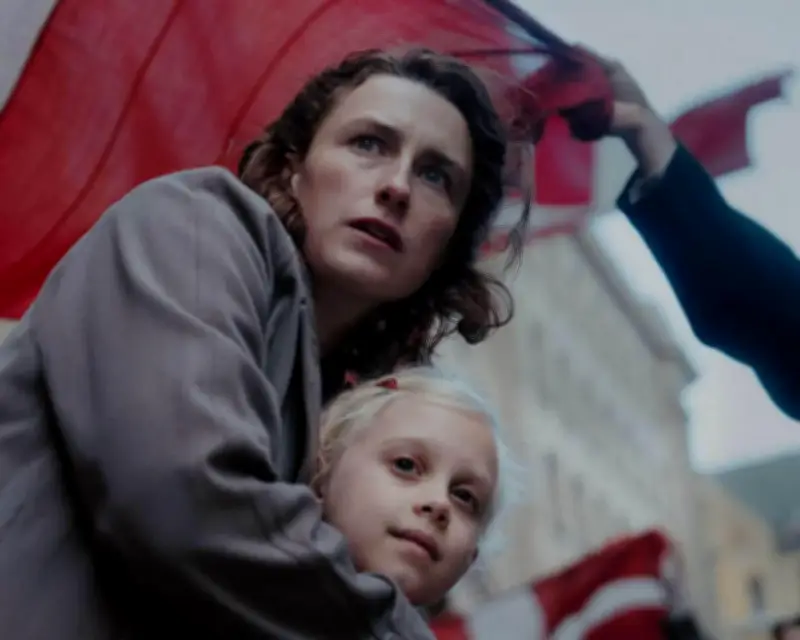
'Woman Unknown,' which won the Golden Lion at the Venice film festival this year, is set in the immediate aftermath of Denmark's liberation. The film follows Marie, a maid who had a sexual relationship with an occupying German officer and lives in fear of the ritualised humiliation of female "horizontal collaborators" on the streets of Copenhagen. For her, liberation day is not the end of the terror but its start. The film asks whether her wartime conduct was any more shameful than that of her factory-owning employer, who continued doing business with the Germans.
Other films in this vein include Emmanuel Marre's 'A Man of His Time,' released in France in September, which tells the story of a careerist bureaucrat in the Vichy regime. Xavier Giannoli's 'Rays and Shadows' paints a controversially sympathetic portrait of Jean Luchaire, a pacifist advocate of Franco-German reconciliation who became a fervent pro-collaboration propagandist.
Historical Context and Moral Ambiguity
For decades, films about Nazi-occupied Europe focused on resistance fighters, from Roberto Rossellini's 'Rome, Open City' to François Truffaut's 'The Last Metro' and Paul Verhoeven's 'Black Book.' When Louis Malle made 'Lacombe, Lucien' in 1974, about a 17-year-old who joins the Gestapo, it scandalised France.
Historian Halik Kochanski, author of 'Resistance: The Underground War in Europe 1939-1945,' notes that armed resistance was "generally much smaller than people tend to think," actively pursued by "no more than 5% of the population in most countries." The willingness and ability to fight back varied by country, with Poland's recent history of uprisings making resistance a matter of survival, while in the Netherlands, a flat geography made armed resistance a logistical challenge.
Resistance Was Often Subtle
Resistance could be subtle and still effective. "One mistake people make," says Kochanski, "is that they see resistance as meaning armed resistance. I see it in its broadest sense, which is really anything to harass or hamper the enemy." This could be as simple as a farmhand keeping a record of milk deliveries to a German military unit, or mass resignations among judicial and church authorities in Norway.
One of the most extraordinary acts of non-violent resistance took place in the Netherlands, where a group of artists called Persoonsbewijzencentrale, or Identity Card Centre, forged 80,000 documents and ration cards for people in hiding. The group was eventually exposed and most of its members executed.
Contemporary Relevance
Bernhard Fulda, a professor of modern history at Cambridge, is sceptical of those who claim they would have joined the resistance. "I have a problem with that kind of moral grandstanding," he says. "If you haven't lived under a dictatorship, how do you know what you would have done?"
Fulda suggests that in the contemporary context, "the moral righteousness that is required to say, 'You guys would have supported the fascists and I wouldn't' came much more easily to people" in the 1980s. "But in the contemporary context, shaped by the climate crisis, finger-pointing is much harder because we know our own lifestyle choices contribute to the problem. Many people try to be eco-friendly but still fly with easyJet. Perhaps collaboration is no longer such a useful concept when everyone is complicit."
'A Man of His Time' and 'Rays and Shadows' are both screening at the French film festival in London. 'Woman Unknown' is out in UK cinemas in March 2027.