A Government minister has called for the use of non-disclosure agreements (NDAs) to be reviewed, as women in the media industry speak out about the use of the so-called gagging orders.
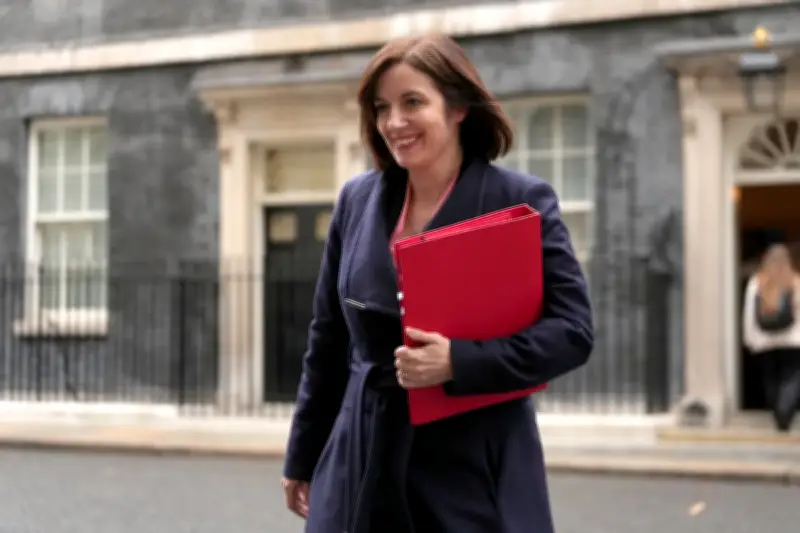
Women and equalities minister Bridget Phillipson said there is “scope to go further” in restricting the use of NDAs, to ensure the legal system is not abused “to silence women”.
Allegations against David Walliams
Allegations made against author and TV personality David Walliams were reported by The Guardian and ITV News on Tuesday after he launched an unsuccessful bid to obtain an injunction to prevent their publication.
One woman described her alleged encounter with Walliams, when she was 15, as a “sexual assault”, while multiple women accused him of “grooming” them when they were teenagers. Walliams, 55, denies any wrongdoing.
The allegations – together with the sentencing of rapist comedian Russell Brand, who was jailed for 10 and a half years at Southwark Crown Court on Monday – have prompted a wider discussion around abuses of power by high-profile figures in the media industry.
Industry voices speak out
Make-up artist Lou Teasdale said it is “open and standard protocol for girls to sign NDAs and and have their phones taken from them before they’re left alone with a famous man”.
In an Instagram post shared on Wednesday, the stylist – whose celebrity clients have included the likes of boyband One Direction – said: “I’m not accusing any of those I worked with of any wrongdoing.
“I’m talking about a culture that exists and is completely legal that treats a celebrity man’s privacy as more important than a woman’s safety.
“How can a man be expected to behave with any accountability when there is an agreement in place beforehand to remove the woman’s voice and the device that would keep her safe?”
Comedian Lucy Beaumont, who has alleged that a young person working in the TV industry once shared concerns with her about Walliams’s conduct, said she did as much “as I could do privately”.
She told Sky News: “Whenever I’ve heard a rumour about anyone, I’ve done everything I can.
“There’s only so much I can do, I’m not the police… but I was one of the whisteblowers, and I was one of the people to let The Guardian know.”
Beaumont added: “The reason high-profile people are not saying anything is because they’ll lose work, because you’re seen as you might be a trouble-causer, and it does need to be said that there needs to be some intervention.
“How can there be an NDA taken against someone who feels that she was groomed as a child and is not allowed to speak to even a therapist or a friend?”
Minister's response
Giving evidence to the Digital, Culture, Media and Sport Committee on Wednesday, media minister Ian Murray said he was “deeply saddened and also angry” to see the prevalence of abuse by men in the media industry. NDAs, he added, are “a major part of the problem”.