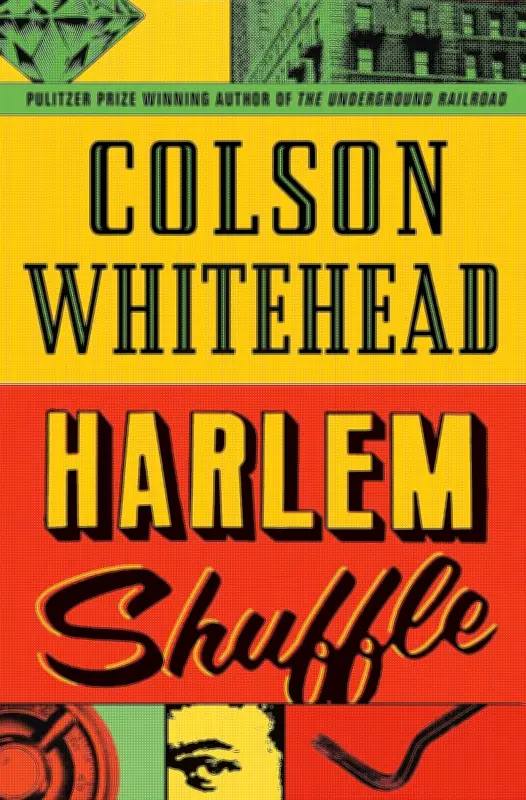
After reading thirty pages of Colson Whitehead's magisterial 2021 crime novel Harlem Shuffle, I felt as though I were reading a particularly operatic story by Damon Runyon, complete with molls, dolls and Broadway-laden side-eyes.
Set in and around the famous Hotel Theresa in the early 1960s — a centre of the social life of the black community of Harlem, and once called the Waldorf of the area — Harlem Shuffle is the kind of widescreen social drama that immediately reads like a screenplay. With its pitch-perfect colloquialisms, local colour and deadpan humour, I felt grateful that this massively enjoyable book had been rereleased; I missed it the first time around, the post-Covid fug offering enough of a smokescreen to obscure it from view, mine at least.
Plot and Setting
Set in Harlem between 1959 and 1964, Harlem Shuffle tells the story of Ray Carney, a furniture salesman striving to provide a stable, respectable life for his wife, Elizabeth, and their family. Despite his outward appearance as an honest businessman, Ray supplements his income by discreetly fencing stolen goods — a connection to the criminal world inherited from his family's past. This carefully balanced life begins to unravel when his cousin Freddie draws him into the robbery of the Hotel Theresa, pulling Carney into a colourful network of gangsters, corrupt police officers, and street hustlers.
Told in three interconnected sections, the novel follows Ray as he navigates the uneasy divide between respectability and crime, with a propelling narrative that is never less than cinematic. Against the backdrop of a changing Harlem in the early 1960s, he is forced to make difficult choices about ambition, loyalty, family, and survival. That he discovers that the boundaries between legality and corruption are often far from clear is hardly surprising, and yet the writing is so engaging that you quickly forget the occasionally generic nature of the plot.
Themes and Style
Combining the pace of a crime novel with a richly detailed portrait of Harlem, the book is a proper social drama, a fiction with a non-fiction spine. It is based on a piece the double Pulitzer winner Whitehead initially wrote for The New Yorker in 2021, although there is something innately tabloid about it. The book has shades of Tom Wolfe about it, if Tom Wolfe had been a very different writer, that is. Whitehead explores themes of race, class, identity, and social mobility, and Harlem Shuffle is both an engrossing heist story and a nuanced examination of the moral compromises people make in pursuit of a better, or at least more fully funded, life.
It is also extremely, comprehensibly funny. One critic said Harlem Shuffle was an extraordinary story about an ordinary man, and yet I think it's sort of the opposite, and the lightness and deftness of Colson's writing makes for a hugely entertaining read. One of my favourite lines comes early in the book, when Carney enters a neighbourhood bar: "The atmosphere in Nightbirds was ever five minutes after a big argument and no one telling you what happened." How good is that?
Ending and Final Thoughts
Because Harlem Shuffle is essentially a crime story, it ends strong, unlike a lot of books like this which attempt to define a broader social milieu. It has a cracker of a final line, too, and one which won't affect your enjoyment of the book, should you decide to jump in: "It was such a pretty block and on certain nights when it was cool and quiet it was as if you didn't live in the city at all."
Harlem Shuffle by Colson Whitehead is published by Fleet Books.