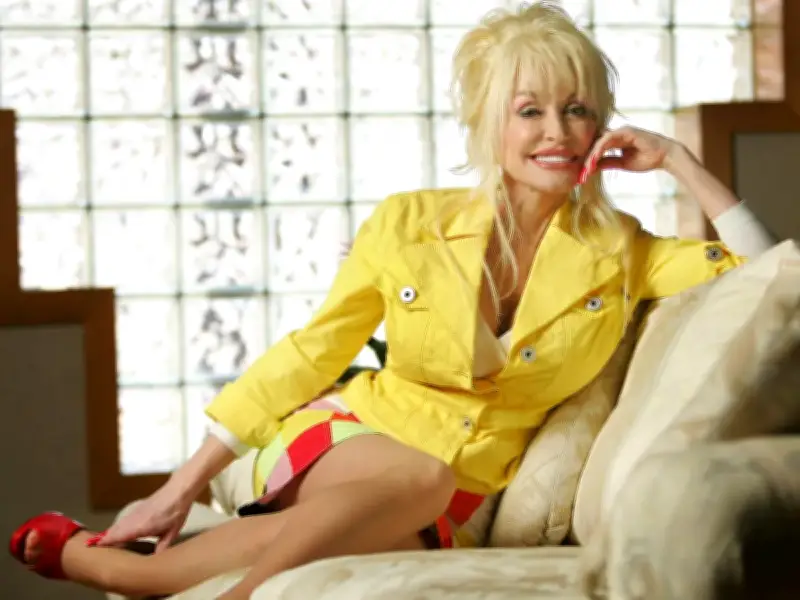
Dolly Parton, the country music icon who sold more than 100 million records and became one of America's most beloved entertainers, has died at the age of 79. Her publicist confirmed she passed away on August 25, 2026, at Nashville's Vanderbilt-Ingram Cancer Centre after a brief battle with cancer, surrounded by loved ones. The type of cancer was not disclosed.
Born Dolly Rebecca Parton on January 19, 1946, near Sevierville in eastern Tennessee, she rose from grinding Appalachian poverty to become one of the most recognisable people on earth. She wrote thousands of songs, conquered Hollywood, and built a business empire, all while maintaining a carefully crafted public image of rhinestones, towering wigs, and self-deprecating humour.
From one-room cabin to Grand Ole Opry
Parton was the fourth of 12 children born to Robert Lee Parton and Avie Lee Owens Parton. The family lived in the Great Smoky Mountains in a cramped one-room cabin with no electricity. Dolly later described them simply as "dirt poor," recalling that they had "running water, if you were willing to run and get it."

Her father, who could neither read nor write, farmed and took whatever labouring work he could find. Her mother supplied much of the music, singing old mountain ballads and church songs, and writing down the lyrics Dolly invented before the little girl could write them herself. One of the first, Little Tiny Tasseltop, was composed about a corncob doll her mother had made for her.
Her uncle, Bill Owens, recognised her talent and helped open doors. By ten, she was performing on Knoxville television and radio. At 13, she appeared at Nashville's Grand Ole Opry, introduced by Johnny Cash, and won three encores. After finishing high school in 1964, she left for Nashville the next morning.
A marriage and a mentor
On the very day she arrived in Nashville, she met Carl Dean, the publicity-shy businessman who would remain her husband for almost six decades. They married quietly in Ringgold, Georgia, on May 30, 1966. Dean, who ran an asphalt-paving business, wanted almost nothing to do with showbusiness, attending one industry awards ceremony and apparently deciding that was enough for a lifetime.
Parton was diagnosed with endometriosis and had a partial hysterectomy in her 30s, which affected her ability to have children. She became "Aunt Granny" to younger relatives and godmother to Miley Cyrus.
Her first years in Nashville were less glamorous than the legend later suggested. Then came Porter Wagoner, the flamboyantly dressed country star who hired her for his television programme in 1967. He championed her, helped her secure an RCA recording deal, and became her duet partner, producer and mentor. Their relationship was productive, loving and frequently combustible. When Parton wanted independence, she wrote him a song: I Will Always Love You, a farewell to a professional partnership rather than the romantic break-up millions later assumed.
Jolene, 9 to 5 and a business empire
I Will Always Love You also produced one of the best examples of the steel beneath her southern sweetness. Elvis Presley wanted to record it, but his manager insisted on receiving half of the publishing rights. Parton refused. Nearly two decades later, Whitney Houston recorded the song for The Bodyguard and turned it into one of the biggest-selling singles in history. Parton's response to people calling it Whitney's song: "She can have the credit, as long as I get my cash."
Jolene, released in 1973, came from another collision between life and imagination. Its title belonged to a young red-haired fan, while its jealousy was inspired by a red-haired bank teller who had been paying rather too much attention to Carl. "He just loved going to the bank because she paid him so much attention," she recalled. "I was saying, 'Hell, you're spending a lot of time at the bank. I don't believe we've got that kind of money.'"
Her appearance was deliberately outrageous. Executives advised her to tone it down; she did the opposite. "I'm not offended by all the dumb blonde jokes," she said, "because I know I'm not dumb. And I also know that I'm not blonde." Her most famous explanation: "It costs a lot of money to look this cheap."

Jane Fonda cast her alongside Lily Tomlin in the 1980 workplace comedy 9 to 5. Parton had never acted in a film, but played Doralee Rhodes, the secretary patronised and sexually harassed by her dreadful boss, and supplied the film's anthem too. She devised its clattering rhythm by tapping her long acrylic fingernails together like typewriter keys. The song became a rallying cry for working women, and Parton received an Oscar nomination for it and two Grammys.
She simply reinvented herself again in later life, returning to Appalachian sounds, recording acclaimed bluegrass, working with everyone from Kenny Rogers and Emmylou Harris to Beyoncé, and eventually making a rock album after initially protesting that she had not earned her 2022 induction into the Rock and Roll Hall of Fame. "I had no fear of change," she once said. "I expected success, but I was braced for failure."
A legacy of books and charity
Her greatest business gamble was made back home. In 1986, she joined the owners of a Tennessee theme park called Silver Dollar City and put her name on it. Dollywood became one of the region's biggest attractions and employers. Forbes estimated her personal fortune in 2025 at about £330 million.
Yet the richest part of her legacy may be where the money went. Her father's inability to read inspired her to launch the Imagination Library in Sevier County in 1995. The scheme sends children a free book every month from birth until the age of five, whatever their parents earned. It expanded across America, then into Canada, Australia and Ireland, eventually sending more than three million books every month. She brought the scheme to Britain in 2007, and by the start of the year it was delivering books to around 45,000 children in England every month.
Parton also supported scholarships, hospitals and disaster victims. After devastating Tennessee wildfires in 2016, her foundation made monthly payments to families who had lost homes. During the pandemic, she donated $1 million (£734,000) to research at Vanderbilt University Medical Centre, which contributed to work behind the Moderna Covid vaccine.
She was far more comfortable doing that than becoming anyone's political mascot. Donald Trump twice offered her the Presidential Medal of Freedom during his first administration; she declined. Joe Biden's administration also approached her. "I feel like if I take it, I'll be doing politics," she explained.
She could nevertheless be direct when something mattered. In 2020, she backed Black Lives Matter with unmistakable bluntness: "Do we think our little white asses are the only ones that matter? No." Two years earlier, she had dropped "Dixie" from the name of her Civil War-themed Stampede dinner attraction after criticism of the word's Confederate associations. Her reasoning was characteristically uncomplicated: when you discover something is hurting people, fix it. "Don't be a dumbass."
Her support for gay people was equally rooted in her faith rather than party politics. Asked in 2009 whether she supported same-sex marriage, she replied: "Sure, why can't they get married? They should suffer like the rest of us do."
Britain understood the joke. She performed at Wembley during the great international country boom of the 1970s, toured British arenas repeatedly, and then in 2014 walked on to Glastonbury's Pyramid Stage in a white rhinestone trouser suit before a crowd estimated at around 100,000. "I know it was corny, but it was fun," she told the crowd.
Off stage, the pace scarcely slowed. Parton was famous for rising at around 3am, praying, thinking, writing and working while everyone else slept. She wrote on whatever was available - envelopes, scraps of paper, even tissue boxes - because a song could arrive without warning.
Carl's death on March 3, 2025, aged 82, brought one of the hardest periods of her later life. "Carl and I spent many wonderful years together," she said. "Words can't do justice to the love we shared for over 60 years." She continued working, although health problems forced the postponement and later cancellation of a planned Las Vegas residency.
Her final physical public appearance came in June 2026, when she attended the opening of Dolly's Tennessean Travel Stop in Cornersville. On August 19, she appeared by video to accept the Academy of Country Music's Poet's Award, telling viewers that songwriting had been her "therapy", her "release", and her joy.
Six days later, her publicist said she died surrounded by loved ones. At her request, her family said, there would be a small private funeral for immediate relatives, with admirers encouraged to donate to the Imagination Library instead of sending flowers.
She was survived by six of her brothers and sisters and a huge extended family. There had been 10 competitive Grammys, a Lifetime Achievement Award, two Oscar nominations, membership of the Country Music, Songwriters and Rock and Roll halls of fame, an honorary humanitarian Oscar and a stack of trophies large enough to fill another Tennessee cabin. "At the end of the day, I hope that I will be remembered as a good songwriter," she once said. "The songs are my legacy."