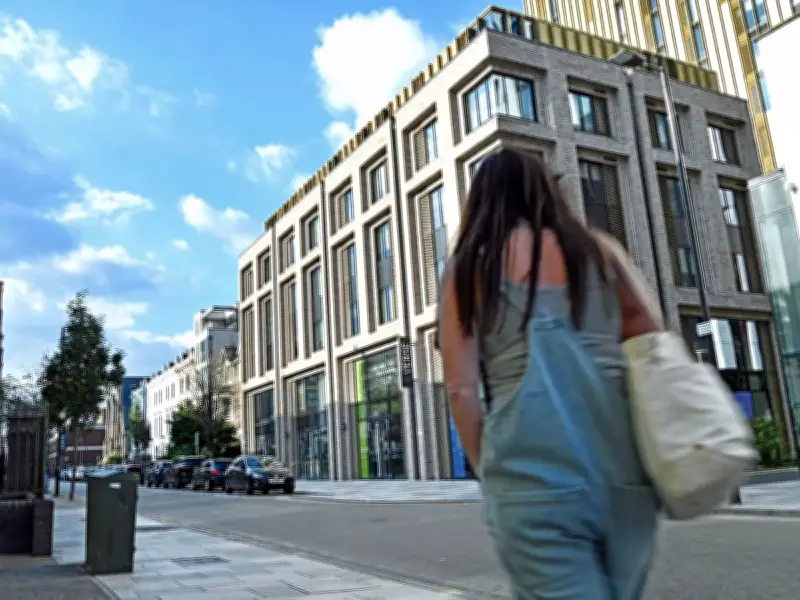
Charles Street in Cardiff, once the heart of the city's LGBT+ nightlife, has undergone a dramatic transformation. Where neon signs once flickered and crowds queued outside venues like Minsky's, Club X, Exit, Icon, the Locker Room, WoW Club and Eagle, today only one dedicated LGBT+ venue remains: Eclipse. The street, now mostly apartments and offices, has seen its vibrant nightlife scene replaced by residential developments.
Originally laid out in the 1840s by pharmacist and two-time mayor of Cardiff Charles Vachell, the street was designed as an affluent, fashionable residential area, reflected by the grand Georgian townhouses that lined it. In the late 19th and early 20th centuries, it began to transform into a commercial area as stately homes gave way to tailors, jewellers and charities. Local artists and creatives later made their mark with galleries, bookshops and music venues, paving the way for Charles Street to become a lively nightlife scene and a social hub for the LGBT+ community.
Memories of a 'gay village'
For historian and principal curator of collection development at Amgueddfa Cymru, Mark Etheridge, Charles Street represents a defining chapter in Cardiff's LGBT+ history. "My memories of Charles Street are from the early nineties onwards," he said. "I remember the venues going across the street and how those have changed through the years. Charles Street was the closest that Cardiff ever came to having a gay village, where there were a lot of venues all side by side in one place, whereas today the venues are spread all over Cardiff city centre."

Club X, tucked beneath street level, was a labyrinth of dancefloors, bars and changing spaces. "It was two dancefloors underground. At one point upstairs there was another venue like a bar which you could access via a flight of stairs on Charles Street or through the interior of Club X itself," Mark recalled. Across the road, Exit offered a similar underground experience. "Exit – which is now where Porter's is located – was a similar thing, where you went down stairs to an underground dancefloor and bar."
The end of an era
Exit closed in 2011, and Club X followed in 2014, signalling the end of Charles Street's reign as the heart of Cardiff's LGBT+ nightlife. Residential developments increasingly replaced entertainment venues, and the concentration of queer spaces that had made the street so distinctive gradually disappeared.
Former Eagle owner Haydn Price witnessed the transformation closely. He returned in 2011 to open Eagle after spotting an empty unit. "It was the place to be," he said. "Probably the busiest LGBT street in the city, and maybe even Wales. It was the focal point of LGBT events. We had the Mardi Gras in the back of Charles Street - it was fantastic." But gradually, businesses closed as opportunities for residential developments grew. "When I spent all my life savings building a new basement style bar, there was no indication that the whole street was going to become a residential street," Haydn reflected. "It was soul destroying really."
Eclipse carries the legacy
Today, Eclipse, co-owned by Michael, is the final dedicated LGBT+ venue on Charles Street. He took over the former Eagle almost four years ago, investing his inheritance following his father's death. "The Eagle had traditionally been an all-male venue. Since taking over, we've opened our doors to everyone," Michael said. "We welcome drag queens and drag kings, gay, lesbian and bisexual people, transgender and non-binary people, those who are questioning their identity, and anyone who simply wants to enjoy a friendly, inclusive and safe environment."
Michael acknowledges the challenges of operating on the street, citing the shift towards residential development and occasional noise complaints. "Charles Street was once the heart of Cardiff's LGBT+ nightlife," he said. "It's incredibly sad because those venues weren't just bars. They were places where people met lifelong friends, found acceptance and built a real sense of community."

Since 2019, Amgueddfa Cymru has been collecting objects connected to Wales' LGBT+ past, including Eagle 50 staff T-shirts, original Locker Room signage and promotional leaflets from Exit. For Mark, preserving these objects is about documenting far more than nightlife. "Pubs and nightclubs were important safe spaces for the community," he said. "They tell the story of how LGBTQ+ people met, celebrated, found friendship and, for many, found acceptance at a time when those spaces were harder to come by."
A spokesperson for Cardiff Council said: "Cardiff has been seeking to promote a thriving city centre economy, with a mixture of employment, retail and leisure uses, as well as housing, for many years, and this is reflected in both Cardiff and Wales-wide planning policies. This has resulted in more people choosing to live in the city centre, which can help support the daytime and evening economy, and provide a wider range and choice of accommodation for people of all ages and incomes across the city. High-density city centre living can also bring wider benefits, helping to reduce congestion and car dependency, while meeting city-wide housing need."