At-home teeth whitening kits promise professional results in as little as seven days. After months of testing, one kit stood out for ease of use, efficacy and gentle formulations: The Icy Bear dental 14-day smile transformation kit, priced at £64.99.
How the kits were tested
Before-and-after photos were taken with each kit to examine changes in brightness. Each product was incorporated into a daily oral hygiene routine, with whitening toothpaste used daily alongside powder and strips. Other products required only evening use.
Teeth colouring was measured after the recommended course, while paying close attention to new sensitivities, whether teeth felt cleaner, and if products left any unpleasant residue. Recommended usage, ingredients and price were also compared.

The top performers
The Icy Bear kit includes a diamond whitening toothpaste, a teeth whitening powder and 28 whitening strips, all using PAP+ to lift stains while protecting enamel. Visible results appeared within three days, with discoloured canines appearing whiter. The strips were gentle on sensitive teeth and easy to remove.
Rapid White's 1-week tooth whitening power set, priced at £9.59, delivered the whitest results. The process takes 10 minutes twice a day for one week, but requires careful preparation to mould the dental trays. The kit cannot be used more than six times a year.
The Smile Pro advanced teeth whitening kit, at £49, uses a tray with 16 built-in LED lights delivering blue for whitening, red to alleviate sensitivities and a hybrid mode. It is safe to use twice a day for 10 to 30 minutes and promises results within one week.
Budget and specialist options
ISOHEALTH carbon teeth whitening strips, priced at £9.99, are cruelty-free, vegan and peroxide-free. They have a strong hold but are messy and stubborn to remove, leaving charcoal residue. The clear version is recommended as a mess-free alternative.
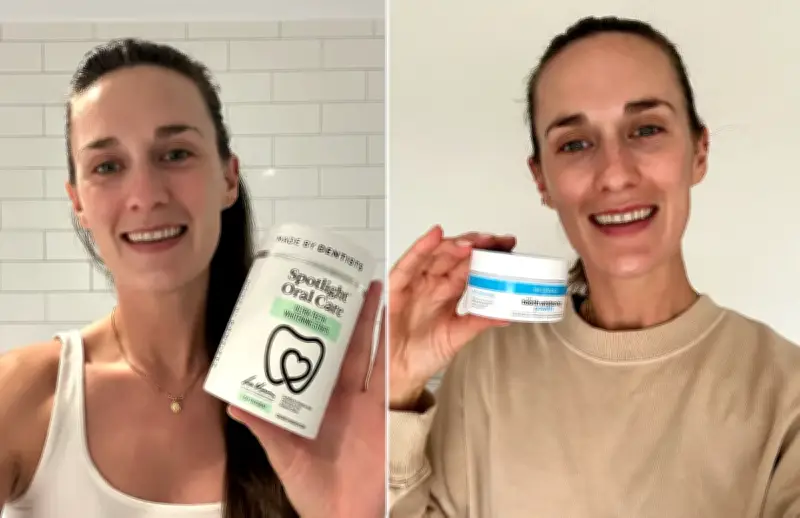
Spotlight Oral Care ultra teeth whitening strips, at £44.95, are dentist-developed and suitable for sensitive teeth. They are worn for an hour, longer than other strips, and the brand recommends a 14-day course for best results. They are travel-friendly, fitting neatly into a pouch.
Colgate's max white overnight wand, at £10, is an easy-to-use, travel-friendly pen applied to clean, dry teeth. It leaves a crispy, PVA glue-like film that can be stubborn to remove, but the formula is gentle and causes no sensitivities.
Hismile V34 strips, at £29, combine PAP+ whitening with colour correction technology. After two weeks, the smile was slightly whiter and brighter, though the strips left some purple formula that required a quick brush to remove. They contain menthol for fresher breath.
Smile Science PAP teeth whitening powder, at £19.99, is gentle and longlasting, formulated with menthol and claiming to strengthen enamel. Whitening results were not prominent, and the powder proved messy to use.
Expert advice on whitening
Dr Sam Jethwa, founder of Bespoke Smile, explains: “Whitening should generally be used in moderation rather than continuously. Most people will top up their whitening periodically to maintain results, rather than whitening constantly throughout the year. Overuse is where problems tend to arise, particularly with sensitivity.”
On home versus in-clinic whitening, Dr Jethwa says: “In-clinic whitening is performed under professional supervision using stronger whitening agents and tailored treatment plans, so results are often faster and more controlled. Home whitening kits are typically lower strength and more gradual.”
Dr Hanna Kinsella, founder of Icy Bear Dental and Kiln Lane Clinic, warns that some unregulated kits are available online. She advises: “If you're prone to tooth sensitivity, pay attention to the whitening technology used. Some people find peroxide-based whitening products can increase sensitivity, so peroxide-free alternatives, such as PAP, may be a better fit.”
Dr Jethwa adds that whitening treatments only work on natural tooth structure and won't whiten composite bonding, crowns or veneers. The claim that whitening destroys enamel is, he says, “one of the biggest myths around whitening”.