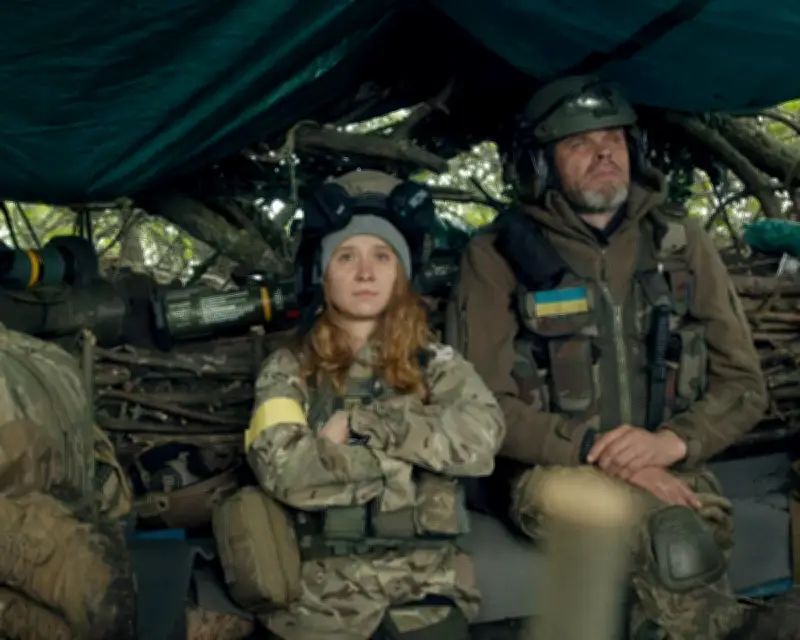
Artists and writers are finding new ways to tell stories about war that defy the dominant narratives of heroism and sacrifice, from Ukraine to Gaza. The classical scholar Alice König argues that the way war is depicted and narrativised influences how wars are actually conducted, generating images and expectations that shape real-world behaviours.
The war correspondent Christina Lamb has connected this to sexual violence in conflict, noting that depictions of war from Homer onwards have taken for granted the trafficking and rape of women, whose bodies are made battlefields. Rape was only recognised as an independent war crime and a tool of genocide in 1998, and it remains a brutal and cheap weapon in every new war.
War and power
The powerful create wars, and wars create power, unless the wars go wrong and reality intrudes on the intended narrative. The most bald contemporary example is Russia, where the second world war is constantly invoked by Vladimir Putin, and the invasion of Ukraine is claimed as its extension, described as a “denazification”.
New stories about war are needed, ones more truthful and complete than the dominant patriarchal narratives of heroism and sacrifice. As Wilfred Owen knew, the old lies do no one any good, and poets like him have been the real truth-tellers in war, bringing the truth of men on the battlefield instead of invulnerable warriors.
New forms of storytelling
The artist Bohdan Bunchak, a veteran of the Russo-Ukrainian war, described how he and his fellow soldiers stayed up for hours into the night talking about what had happened after returning from a dangerous task in 2023, telling stories to prove they are alive and to mourn the dead.
Ukrainian artists and writers are finding new forms. The writer Sasha Dovzhyk, in her new book Apocalypse Baroque, melds tales of real people with folklore motifs in what might be described as “documentary fairytale”. Alisa Kovalenko’s films, including Traces about survivors of wartime sexual violence and My Dear Theo, made as a letter to her son, are intimate first-hand records of war, shorn of false heroism.
Acts of remembrance
The artist Dasha Chechushkova has been making “situational gardens” – humble flowerbeds made in honour of the dead – and her etchings after Goya’s Los Caprichos are on show at Edinburgh’s Talbot Rice Gallery in an exhibition titled The Rupture. Also in the show is a work by Taysir Batniji, a Palestinian artist born in Gaza, consisting of a stack of bars of soap engraved with the Arabic phrase “dawam el hal men al mahal”, meaning “nothing is permanent”, or “this too shall pass”.
The soap and its motto wear down over time, its small message that nothing will last being both a promise and a threat.