The London Museum is preparing to open its doors to visitors this weekend following a £437 million transformation. The museum brings 2,000 years of London's history together under one roof, from Elizabethan jewellery and remnants of the Great Fire of London to The Clash's smashed Fender guitar and the Whitechapel fatberg.
A Decade-Long Makeover at Smithfield
Having moved from its former London Wall home to the historic Smithfield site, the museum's decade-long makeover marks a cultural milestone as it celebrates its 50th anniversary. Chris Haywood, policy chairman of the City of London Corporation, described the museum as "completely unique to anywhere in the world", predicting it will draw around two million visitors a year.
"It's going to be absolutely mind blowing, not only for the whole of the City of London, not only for the whole of the United Kingdom, but for the whole of the world," he said.
Exhibits Spanning Real Time, Our Time and Past Time
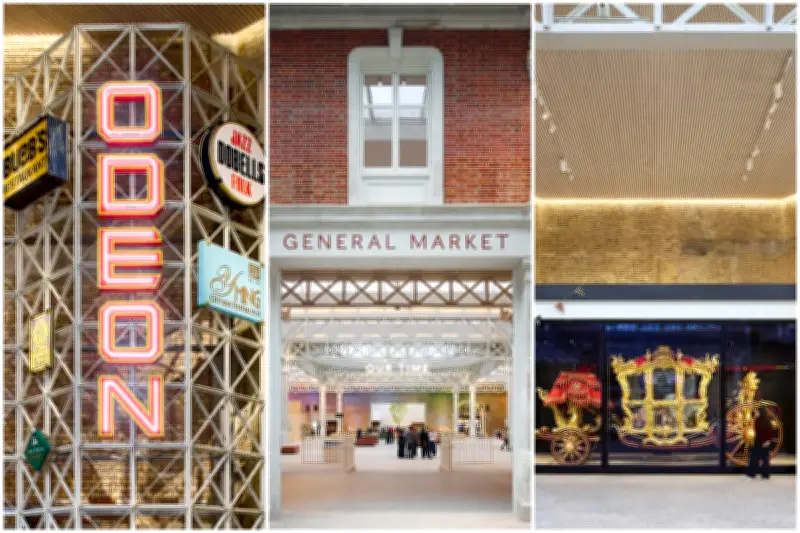
Divided into three sections – Real Time, Our Time and Past Time – the museum takes visitors through the capital's iconic moments. Upon entering, visitors are greeted by Banksy's Piranhas police box, relocated from Ludgate Hill where it had stood since the 1990s, alongside a bell from the Whitechapel Bell Foundry that chimes every hour, complete with dancing pigeons.
The exhibition space includes the Lord Mayor's Coach, a Grenfell memorial honouring the 72 people killed in one of Britain's worst modern disasters, and South London's Morley's Fried Chicken signage alongside a tribute to Oxford Street's Topshop flagship. EastEnders fans will recognise the Walford Laundrette sign, made famous by Dot Cotton, played by the late June Brown.
In the 'Past Time' section, visitors are taken back 2,000 years to Roman London. Illustrations of the Great Fire of London show how the disaster unfolded, while coins belonging to victims of the Black Death offer insight into the plague's impact. Also on display are remnants of the Cheapside Cross, a monument targeted during the Reformation.
Why the Museum Matters to London
London Mayor Sadiq Khan said: "One of the reasons why we invested record sums in this museum is because it's important to tell our story in our own words. There's a reason why we are the cultural capital of the world. There's a reason why more tourists come to London than any city in the world. It's really important to our economy, but also to who we are and our history matters."
"We've gone through some ups and downs in this city," the mayor added, but "every time we've gone through a down we've bounced back [...] better and stronger." He said he expects to see more artefacts, objects and stories told in the London Museum over time.
Museum director Sharon Ament said: "After all this time, it's quite emotional, welcoming people into what has been a place of dreaming, a place of planning and imagining. Whether it's seeing people sitting on our sheep seats or seeing Sadiq Khan diving in and going 'I really want to learn about that', that is what our job at the museum is about. It's about opening people's minds to the stories of London."
Ten Must-See Exhibits
Highlights include Charles I's execution vest, said to have been worn at his execution in 1649, on display for six months only; the Cheapside Hoard, the largest collection of Elizabethan and Jacobean jewellery ever found; and Queen Victoria's mourning dress worn in 1892 for her grandson, Prince Eddy, who died during an influenza pandemic at age 28.
Other exhibits include Syd's Coffee Stall, which served Calvert Avenue for over a century before closing in 2019; Paul Simonon's smashed Fender Precision Bass Guitar, immortalised on the cover of The Clash's 1979 album London Calling; and Tom Daley's London 2012 diving trunks designed by Stella McCartney for Team GB.
The Whitechapel Fatberg, a 130-tonne monster of oil and wet wipes stretching 250 metres, discovered in the city's sewers in 2017, is also on display, alongside a Selfridges art deco lift installed in 1928, Emmeline Pankhurst's hunger strike medal from 1912, and Roman painted wall plaster and mosaic on display for the first time in almost 2,000 years.
The London Museum will open to visitors this Saturday, November 28. The adjacent Poultry Market will open in 2028, with two temporary exhibition spaces, a dedicated learning centre and a collections store.