The Football Art Prize returns to the National Football Museum this month, featuring a broad range of entries that demonstrate the enduring resonance of football as an artistic subject. The exhibition, arriving from the Sheffield Millennium Gallery, includes works that explore football culture as much as the game itself.
A Revival of Football's Artistic Tradition
Football has been a rare subject for artists in its early decades, with notable exceptions like Umberto Boccioni's 1913 painting Dynamism of a Soccer Player and Kazimir Malevich's abstract Painterly Realism of a Football Player – Color Masses in the 4th Dimension. The Manchester Art Gallery holds one of the earliest fine art depictions of a match, a smoggy scene called Any Wintry Afternoon in England.
In 1953, the Football Association launched an art prize backed by the newly formed Arts Council. The winning works included LS Lowry's Going To The Match, with crowds heading to Bolton Wanderers' then home ground, Burnden Park. The FA secretary, Sir Stanley Rous, hoped the exhibition, Football and The Fine Arts, would break the barrier between the two worlds.
Diverse Entries Reflecting Football Culture
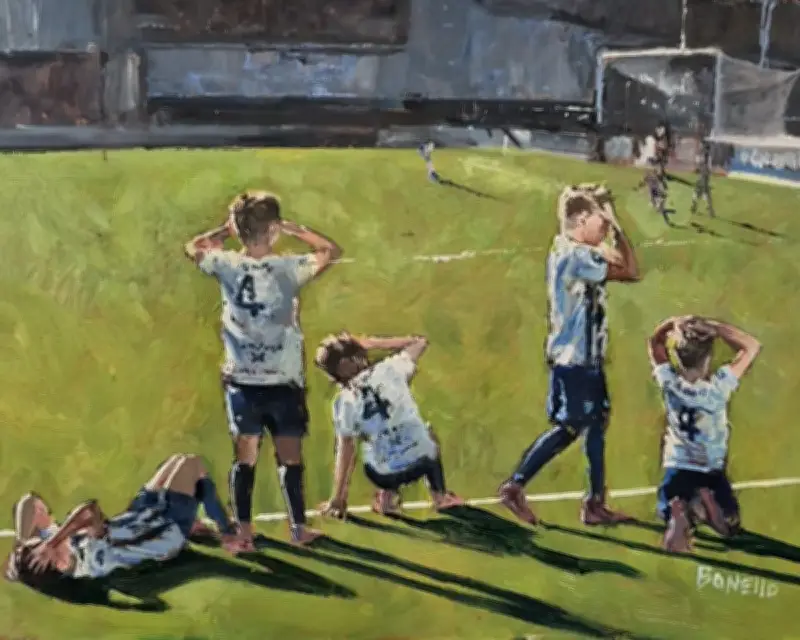
This year's prize, the third in the past 20 years, includes meticulous still lifes of battered balls and boots mid-clean, as well as haunting photo-documentary of Bangladeshi youths playing pickup games in a rubbish dump, with pitches affected by climate change. "You see the whole gamut of footballing experience on display," said the museum's exhibitions director, Pip Diment. "Pretty much every one of the artists is expressing how football matters to them, but they're responding and reacting in such different ways."
Some works feature famous faces: a hyper-realist charcoal bust of N'Golo Kanté, and Roy Keane appearing twice, once proffering prawn sandwiches and another time in a diptych with Micah Richards. The latter, by Conor Rogers, whose satirical series on abandoned betting slips took second prize, includes an image of Sheffield United's manager Chris Wilder with a repurposed bookmaker's logo asking "Lad r u ok?"
Winning Work Explores High and Popular Culture
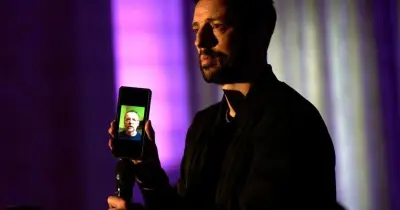
The winning work, a video by Alina Akbar, explores the connection between "high" and "popular" culture. In Footwork, the multimedia artist blends keepy-uppy skills with the choreographed movements of Kathak, an Indian classical dance style. The piece reflects on identity and the northern South Asian community where Akbar grew up.
Akbar said football is a post-migration culture whose value is sometimes overlooked. "Whenever I went to my great-grandparents' house, football was on TV all the time and I'd be on their street, trying out tricks," she said. "My grandad and his brothers were really excited when I started playing, because they'd gone through the more racist era of the 70s, and they never went to games."
Artists as Spectators and Fans
Tim Marlow, director of the Design Museum and chair of the judging panel, noted that "artists today have unashamedly adopted the position of the spectator or the fan" and that works trying to get inside the footballer's experience are rare. He cited the 2006 film Zidane: A 21st Century Portrait as a favorite exception, calling it "a great piece of conceptual art" and "a really intimate study of the game."
Historic football art is also rising in value. Four years ago, Lowry's Going To The Match sold for £7.8m at auction, a record for the artist. In 2022, one of Nicholas de Staël's Parc des Princes 1952 abstract series became the most expensive football artwork, selling for £16.7m. Collectors in the football world include Fabio Capello, David Beckham, and Michael Ballack, reflecting a growing appreciation for the painted canvas.