The Department for Education has confirmed changes to free school meals eligibility, following a parliamentary question. The update, issued this week, affects a scheme that supports more than three million children in the UK.
State-funded schools, academies, free schools and non-maintained schools often run by charities all have a duty to provide free school meals to children who meet the criteria. Previously, a threshold meant pupils in homes receiving Universal Credit with annual earnings of £7,400 or less were eligible.
Changes to eligibility from September
The rules changed in September to include 500,000 more children, although some others will now miss out who were previously entitled. Now all children in households receiving the Department for Work and Pensions benefit Universal Credit are eligible for free school meals. The government says the change will bring “significant relief” for families.
Under the new rules, if your home gets Universal Credit, you could save as much as £495 a year per child on school lunches. For families with multiple children, officials say the savings could make a “substantial difference to household budgets”.
End of transitional protection
However, the changes in September also meant some homes getting free school meals will have their entitlement withdrawn. This is due to the end of something called transitional protection. This was a policy that had been in place since April 2018 that meant pupils kept on getting free school meals even if their household circumstances changed.
The government announced the switch to end this policy when it expanded free school meals to all Universal Credit households. Details in a government document online say: “From the start of the 2026 to 2027 academic year, transitional protections for free school meals will end. Households must meet the FSM eligibility criteria from the start of the 2026 to 2027 academic year to continue receiving provision.”
Automatic enrolment calls
The issue was put into the spotlight after Washington and Gateshead South Labour MP Sharon Hodgson asked the department what assessment it “has made of the potential merits of introducing an automatic enrolment system for free school meals.” Such a system has long been pushed for by campaigners.
The Food Foundation has said the current registration system for free school meals “is regularly described by schools and local authorities as cumbersome, and financially and administratively inefficient.” The organisation says around 11 per cent of eligible children miss out - about 250,000 youngsters.
It says that some parents struggle to fill complex forms to apply for the meals. It also says language barriers for some parents can be an issue. It says some parents may be unaware of entitlement. And it says stigma or embarrassment may also lead some parents to not apply.
The Local Government Association has said it “strongly supports national auto-enrolment of eligible children for free school meals”. But such arguments have yet to lead to a change in the law. And the response issued this week by the Department for Education offers little to encourage such campaigners that such a change will be brought in.
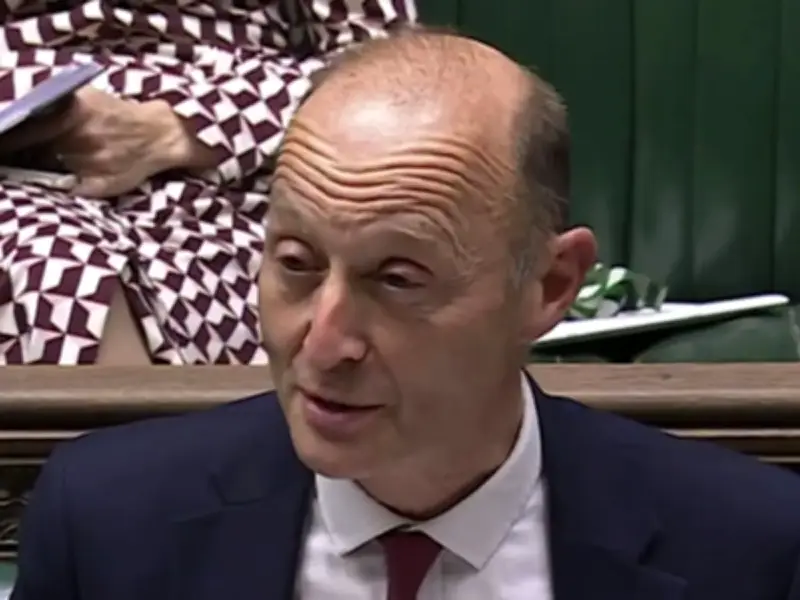
Paul Waugh, Parliamentary Under-Secretary at the department, said on Monday in response to Ms Hodgson’s question: “We want every family entitled to free school meals and wishes to claim that support to receive it. From September 2026, eligibility for free school meals was extended to all children in households receiving Universal Credit, making over 500,000 additional children eligible.
“The department has improved eligibility checking processes and continues to work with schools and local authorities to maximise take-up among eligible families. We will continue to monitor take-up and keep arrangements under review to ensure that support reaches the children who need it.” For more on applying for free school meals, visit the government web page on the subject.