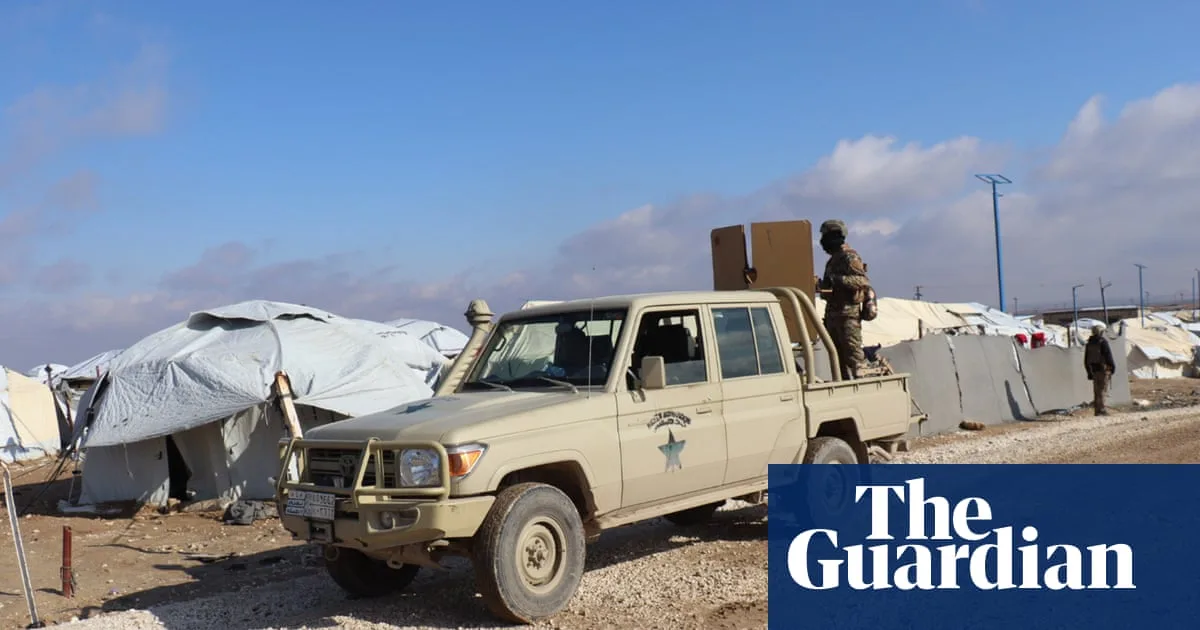
Donald Trump has thrown into doubt the security and administration of the two main detention facilities in north-east Syria that hold thousands of Islamic State fighters, according to Richard Barrett, former counter-terrorism director of MI6. The US president's unexpected 90-day suspension of all USAid funding has caused a state of limbo, compounded by long-term uncertainty over his willingness to retain troops in Syria.
Security and administration around the al-Hol and al-Roj camps were withdrawn for several days after funding for humanitarian and security work was suddenly cut. Although stopgap funding has been transferred from the frozen US aid budget to the Global Coalition to Defeat Isis, Barrett cautioned that the mainly Kurdish Syrian Democratic Forces (SDF), responsible for guarding IS fighters, faces a long-term threat. The SDF has not reached an agreement with the de facto government in Damascus about any future role in the Syrian national army.
Barrett told the UK foreign affairs select committee that IS sees an opportunity to engineer the escape of as many as 9,000 of its fighters. A 2,000-strong group has already had a resurgence in the past 18 months and could launch a “Breaking the Walls” campaign similar to one in Iraq. He questioned whether Trump, due to his isolationist policies, would continue to fund US forces in north-east Syria or security around the camps.
Blumont, a US aid organisation managing the camps, halted operations on Friday after Trump's cuts but restarted on Tuesday after receiving a 14-day waiver from the US state department. The organisation provides water, food, shelter and cooking gas for thousands, including several Britons whose citizenship has been removed, such as Shamima Begum. Officials warned of dangers if the programme is halted permanently, with hostile forces possibly stepping in.
Paul Jordan, a specialist on the camps at the European Institute of Peace, told the committee that Blumont's withdrawal led to nothing being delivered in the camps, with no administration and very little security. Dan Dolan of Reprieve described it as a slow-motion crisis suddenly on fast-forward, warning that the camps could collapse and urging repatriation of nationals.