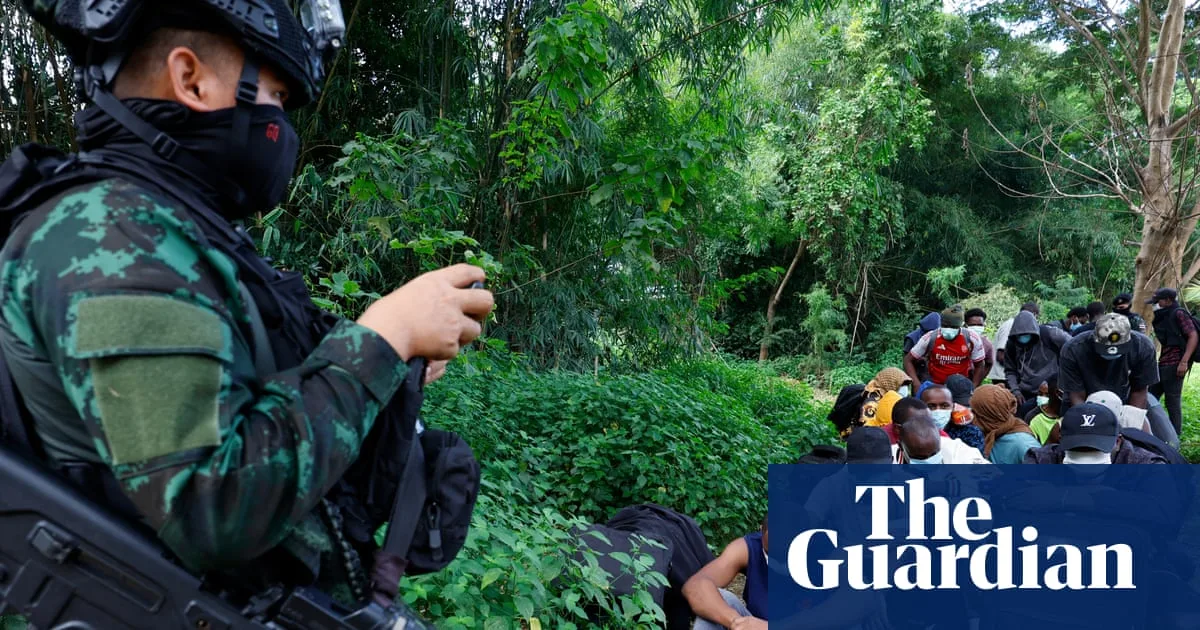
Charities and aid workers have called for urgent international government support for victims of Southeast Asia’s deadly scam compounds, following a damning report by Amnesty International. The numbers of survivors of cyberscam “farms” left destitute and abandoned on the city streets of Cambodia and Myanmar is an “international crisis”, according to the research published in January.
Aid workers say not enough humanitarian organisations are stepping up to support survivors of the scam farms, despite the mounting number of foreigners sleeping on the streets and in need of food. Hundreds of thousands of people from more than 50 countries are estimated to be trapped inside vast compounds in Cambodia, Myanmar, Laos, the Philippines and Malaysia. Most are enticed to the region by the promise of a well-paying job but are instead trafficked across borders and forced by criminal gangs into catfishing unsuspecting victims out of money. To refuse is to risk torture, sexual assault, or even death.
Amnesty’s research identified a growing number of traumatised individuals stuck in Cambodia, homeless and without passports or money, as “an international crisis on Cambodian soil”. “We don’t see the Cambodian state offering victim screening for these individuals or other support that you’d expect in a situation like this: a humanitarian crisis,” said Montse Ferrer, the group’s regional research director. “And NGO support is insufficient, especially in the wake of widespread aid funding cuts over the past year.”
In Cambodia, many who have escaped are sleeping on the streets; in Myanmar, those rescued by authorities are held in car parks, military camps or detention centres for weeks at a time while they wait to be processed, said Amy Miller, southeast Asia director of aid agency Acts of Mercy. In the past year, Thailand and Cambodia’s governments, as well as Myanmar’s military junta, have begun a crackdown on the operations that have become permanent fixtures along borders since the Covid pandemic.
More than 7,000 people were rescued in an operation in Myanmar last February and a further 2,000 in October. But if more operations are planned then support needs to be available for the thousands of survivors, who may have physical and mental health needs, said Andrey Sawchenko, the International Justice Mission’s (IJM) vice-president for programme impact in Asia-Pacific. Smaller aid groups and local shelters are overwhelmed and underfunded, said Miller, and large aid organisations such as the Red Cross are not engaged. “There is very little humanitarian assistance across the board for this issue,” she said.