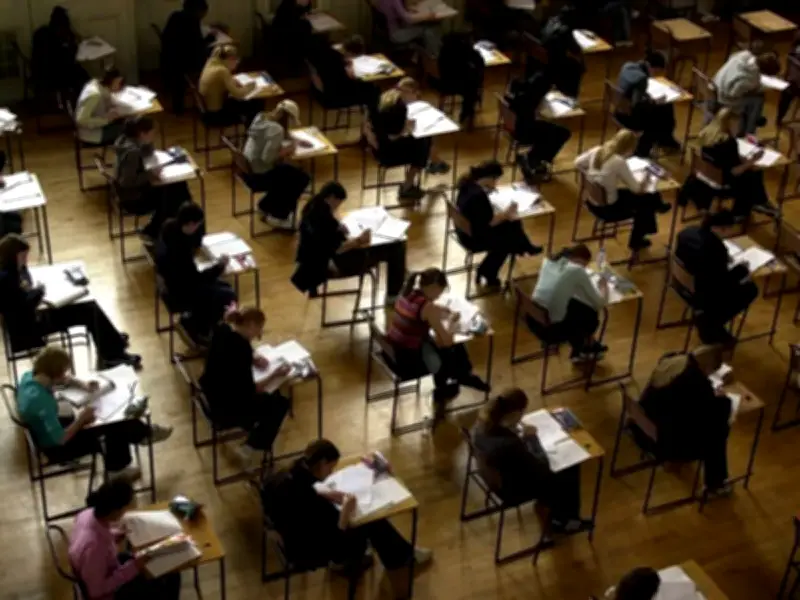
Students who use artificial intelligence to cheat on their GCSE or A-level coursework could lose their entire qualification, with England's exams watchdog warning of potentially “life-altering” consequences.
Sir Ian Bauckham, chief regulator of Ofqual, has warned pupils against submitting AI-generated work as their own without declaring it, saying the consequences could have a lasting impact on their futures.
Regulator considers tougher coursework rules
The regulator is now considering changes to coursework assessments in subjects such as A-level English and History, where students complete written assignments without supervision.
Possible changes include greater supervision of coursework and more emphasis on pupils referencing the sources used in their work.
Ofqual is also launching a campaign during coursework season to warn secondary school pupils that submitting AI-generated material without declaring it will “not be tolerated”.
Teachers seen as key to detecting AI misuse
Sir Ian told the Press Association that teachers remain the “most powerful weapon” against AI cheating because they can recognise when a pupil's coursework differs significantly from their usual standard.
But the Ofqual boss warned that detecting AI misuse in coursework is going to become “more difficult to do” as artificial intelligence is “getting better at covering its own tracks”.
A survey of more than 4,500 teachers in England, carried out by Teacher Tapp earlier this month for Ofqual, found that 70% do not think unsupervised written coursework should count towards final GCSE and A-level grades, and 83% think it should be carried out with greater supervision or other controls.
Rise in proven AI plagiarism cases
On coursework, Sir Ian told PA: “We will need a radical rethink of the conditions under which it is done and the design of that coursework to make sure it is secure for the future and remains fit for purpose.”
He added: “Unsupervised extended essays, with no other forms of assessment associated with them, I'm afraid that the time for that is likely to be quite short now.”
There were 100 proven cases of plagiarism involving the misuse of AI in GCSE, AS and A-level qualifications in England in summer 2025, which represented 75% of all student plagiarism cases, according to data from Ofqual. This was a rise on the previous year, when there were 85 proven cases of AI-related plagiarism, which represented 55.4% of all student plagiarism cases.
Sir Ian said: “If you are caught committing malpractice with an important high-stakes qualification, an A-level or a GCSE or any other qualification, in extreme cases you can lose the entire qualification which, as I am sure you can imagine, can be life-altering for somebody's future.”
He added: “I'm not going to be complacent and where we do have extended writing being completed in unsupervised, uncontrolled conditions, that is counting for coursework, counting for qualifications, I want that to be strengthened, and I want routes to malpractice, routes to cheating, to be closed down.”
When asked what reforms could be introduced to A-level coursework, Sir Ian told PA: “That could be, in some cases, about greater supervision. It could be greater emphasis on authorship, so referencing where students are getting material from. It could mean linking the coursework in some formal way to the examination, whether that's a written or a spoken examination, to make sure that we have a guarantee that students have genuinely done the work and genuinely understand it.”
Wearable tech risks in exams
In a speech on Wednesday, the Ofqual chief will warn that pupils can also cheat in supervised exams through wearable technology and micro-devices.
Sir Ian will tell the School and Academies Show in Birmingham: “It is completely unacceptable for any retailer, online or otherwise, to market items explicitly for the purpose of exam cheating. This has to be challenged.”
The Ofqual boss has written to exam boards this week to set out his expectation for invigilators to be given training to respond to the “emerging risk” of wearable tech ahead of the 2027 exams.
Sir Ian said he is “increasingly concerned” about the challenges that wearable tech presents for exam security, particularly as devices become AI-enabled. His comments come after education minister Josh MacAlister said last week that smart glasses should not be allowed in schools, and he told MPs he would issue advice to headteachers on wearable tech.
Smart glasses have become more common in recent years, and some models can record video, take photographs, show text on the lenses for the wearer, and play music. Earlier this week, the Tories pledged to minimise the amount of coursework in a bid to limit the use of AI by pupils in England if the party returns to power. A consultation on education technology and AI product safety was launched by the Government last week, with the aim of establishing a product certification scheme.