In 2019, a series of vigilante-style murders in Bangladesh left the bodies of men accused of rape with chilling notes tied around their necks, signed by an unknown figure calling themselves "Hercules." The killings occurred within weeks of each other amid public anger over rising rape cases.
Bodies Found with Notes
The first body was found lying face down with a note that read: "I am Sajal. I am the rapist of [victim's name]. This is my punishment." Mahmud Hasan, chairman of Shaulakania Union, Bangladesh's smallest local government unit, told Al Jazeera: "The body was found lying face down. There was a wound near his left eye. It seemed like a bullet wound. But strangest was the note that hung around his neck."
Hasan added: "It felt strange and scary to see this happen in my area … but it also felt like justice." The man, Sajal, had been accused of raping a teenage student.
Multiple Victims Across Districts
A week before Sajal's death, two other bodies were discovered. One man's body was found in a village in the southwestern district of Jhalakathi. Police found the second victim with what they thought was a bullet wound in his head in Savar, almost 200 miles away. This dead man bore a similar note reading: "I am the prime accused in a rape case." The body was identified as Ripon, 39, a key suspect in the gang rape and murder of a female garment worker.
A third victim, Rakib Molla, 28, accused of being Sajal's accomplice, was found near a brickfield in Jhalakathi with multiple wounds to the body and head. His note read: "I am Rakib who raped [victim's name]. This is the fate of the rapist. Rapists be aware … Hercules."
Police Investigation and Family Accounts
Police were unable to identify who "Hercules" or the people behind the murders were. Sohel Rana, Additional Inspector General of Police Headquarters, told Al Jazeera: "Local police are investigating. We don't see any need for further investigation from headquarters. At this point, we are not even sure that the same person or the group is doing these murders. This Hercules could be anyone."
Family members of two of those killed said they had been picked up by plain-clothed people before they were found dead. Abul Kalam, Molla's father, said after the rape allegations, Molla left the village for Nabinagar near the capital. He was drinking tea with a friend when a black microbus stopped and picked them both up. "His friend was later released and he told us that Rakib was picked up by the police. His mother tried to file a general complaint of a missing person but the police station didn't take it," Kalam said. "His dead body was later found. I believe the police killed him."
Shamsun Nahar, Sajal's wife, said her husband left home after the rape allegations. "On the night of January 22, he called me and told me that he was heading towards the port city of Chittagong. That was the last call. There was no trace of him until January 26 when we found his body near our village," she said. Ripon's wife, Rikta Begum, said her husband was picked from his home in Ashulia near Dhaka by plain-clothed people who identified themselves as members of the detective branch (DB) of police. "Six days later, we found him dead," said Begum.
Context of Rising Rape Cases
An 18-year-old female garment worker was found dead in her house just hours after she had filed a case against Ripon and three others. Shawkat Alam, inspector of Savar police station investigating Ripon's murder, denied the possibility that the teenager had any role in the murder. "As far as we have found, Ripon went into hiding after there was a case filed against him for rape and murder," Alam said.
Mohammad Zahid Hossain, officer-in-charge of Rajapur police station investigating Rakib's murder, said: "We are still investigating," but ruled out the possibility that the plain-clothed people involved in Rakib's disappearance and subsequent killing were policemen. In Sajal's case, investigating officer Gazi Fazlur Rahman told Al Jazeera: "Sajal had a single wound in the head. He was probably shot in a point-blank range."
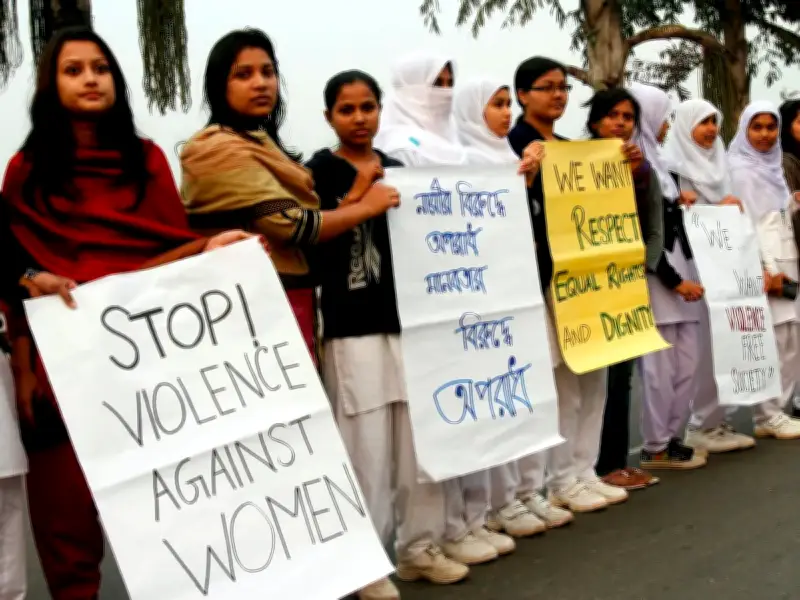
Ain-o-Salish Kendra, a Dhaka-based human rights body, said a total of 732 women and 444 children were raped in 2018 – a rise of 18 percent compared with 2017. At least 79 rape incidents took place in January 2019 alone, when these killings began. Asaduzzaman Khan, minister of home affairs, told parliament that 17,289 cases of rape of women and children were recorded between January 2014 and December 2017, with nearly 80 percent still pending.
Liton, a commentator cited by Al Jazeera, said: "All of these incidents had happened during a time when there is serious discontent among the public about rape. The Subarnachar rape incident of a mother of four just after the general elections had enraged the country." Liton added: "The recent killings naturally raise a lot of questions, especially considering the facts that the country has a long tainted record of extrajudicial killings. The government should launch proper investigations to probe these murders. No one should be allowed to be killed extrajudicially."